Portuguese
  Spanish


During COP30, Chief Raoni publicly challenged Petrobras and President Lula by taking a stand against drilling in Block 59, at the Mouth of the Amazon. The statement from the Kayapó leadership exposed government contradictions and mobilized indigenous peoples in the region.
Before a packed audience at the Federal Public Ministry (MPF) during COP30 in Belém, Chief Raoni Metuktire took the microphone and made a compelling appeal against Petrobras and oil exploration. At 93 years old, his strong voice echoed through the room:
“I want to speak once more! Listen to me carefully: let’s unite! We cannot allow this drilling to happen. We must be strong and keep fighting to ensure this drilling does not take place.”
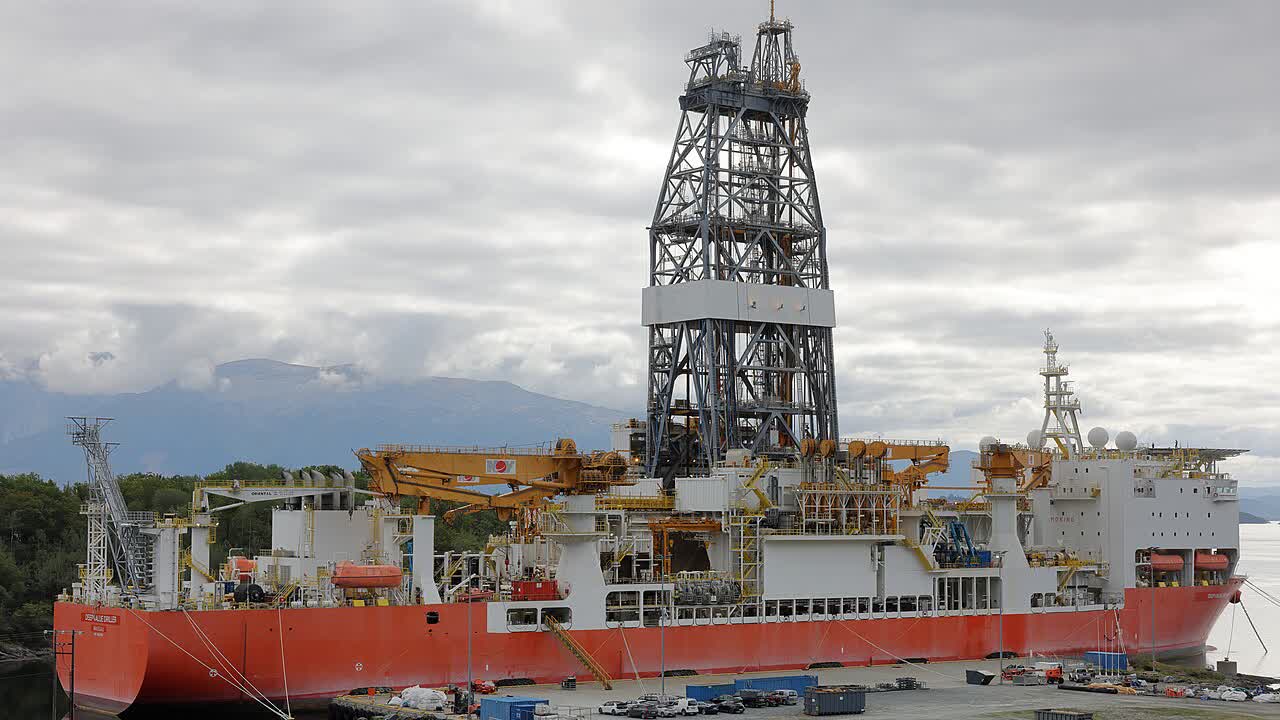
The Kayapó leader, recognized worldwide for his tireless defense of indigenous peoples’ rights, was referring to Petrobras’s oil exploration in Block 59, located 175 kilometers off the coast of Amapá. The area is considered ecologically sensitive and hosts coral reefs that are still little studied, the largest mangrove corridor on the planet, and various traditional communities — including indigenous, quilombolas, artisanal fishermen, and riverside dwellers.
-
OPEC+ Boosts Oil Supply by 188,000 Barrels per Day in July 2026, Leading to Price Drop from $112 to $89 per Barrel in Under Two Months

-
TotalEnergies Signs 20-Year Deal to Purchase 2 Million Tons of LNG from Alaska, Boosting Project Viability
-
Turkey Deploys Çağrı Bey Drilling Ship to Explore New Oil Frontier Off Somalia’s Coast
-
Golden Pass LNG Ships First Liquefied Gas Cargo from the U.S., Completing $10 Billion QatarEnergy and ExxonMobil Investment



Raoni participated in the conference accompanied by a delegation of over 20 Kayapó indigenous people, who came to support their “relatives” from the municipality of Oiapoque, which is directly affected by Petrobras’s decision, authorized to drill after obtaining a license from Ibama days before COP30 began.
The Symbolic Strength of Raoni’s Support and the Political Weight for Petrobras and the Lula Government
Raoni’s gesture had a significant impact. Not only because of the age and historical relevance of the leadership, but also due to his connection with President Luiz Inácio Lula da Silva, with whom he ascended the ramp of the Planalto Palace at the presidential inauguration in 2023.
Now, however, Raoni puts the government in a delicate position. The chief’s support for the people of Oiapoque gives new impetus to the resistance against Petrobras, whose drilling on the Equatorial Margin has been defended by Lula as an economic opportunity capable of “improving the lives of the Brazilian people” and “enabling the country’s independence from fossil fuels.”
For indigenous leaders, this justification is contradictory and dangerous.
“[President] Lula is contradictory and is putting himself in a very risky position,” said Luene Karipuna, executive coordinator of Apoianp (Articulation of Indigenous Peoples and Organizations of Amapá and Northern Pará). “Because while he brings this narrative that we need to make a transition, he uses it as a justification to further explore — in a sensitive area, which is the Amazon.”
Indigenous People Report Pressure and Threats Amid the Dispute Over Oil
The leaders opposing Petrobras report constant pressures and threats.
“We cannot speak publicly. Many leaders cannot even be in Oiapoque because they are targeted, they are threatened. They need to travel in hiding,” declared Lia Karipuna, also from Apoianp.
Raoni’s support thus came as a moral and political reinforcement.
“When we heard Chief Raoni speak out against oil exploration, we felt so welcomed. So welcomed, because everyone turned their backs, because we know oil is a lot of money,” said Renata Lod, a leader of the Kali’na people, who live on the border with French Guiana.
The outcry from the communities reinforces the feeling of isolation among local peoples in light of Petrobras’s advance and the lack of dialogue from authorities.
Indigenous Peoples Assert They Do Not Need Oil and Defend Their Territories
While the government and Petrobras maintain that exploration will bring development and energy sovereignty, local communities question who will truly benefit from this process.
“We will always stand up for our rights, our rivers, our forests, our fields, our lakes, which are where, for thousands of years, we have drawn the sustenance for our families,” said Edmilson Oliveira, chief of the Karipuna people.
He adds: “We want to ensure that the future generation of the Karina people and all indigenous peoples of Brazil can always have a clean river, free from pollution, from enterprises, and from any attacks.”
For Lia Karipuna, the discourse on national sovereignty is unfounded.
“What national sovereignty is this? Who is the nation if not us? Are we not the Brazilian nation?” questions the leader, denouncing the exclusion of indigenous peoples from decisions about the fate of their territories.
Impacts of Petrobras Are Already Felt Even Before Drilling Begins
Although Petrobras has not yet started the actual extraction of oil, the effects of exploration are already beginning to be felt. According to reports from indigenous leaders, the mere movement of personnel and equipment in the region has caused unplanned urban growth in the municipality of Oiapoque, with the emergence of seven new neighborhoods in just a few months.
The presence of companies contracted by Petrobras increases fears of invasions of protected areas and pressures on indigenous lands. Communities demand that the process respect the protocols for prior consultation, guaranteed by Convention 169 of the International Labor Organization (ILO), of which Brazil is a signatory.
“We, indigenous peoples, when we say a word, it carries a lot of weight. The word is very strong. With the white man, it’s the paper. So, we built here on paper the guarantee of our rights,” explains Edmilson, showing the booklet of the consultation protocol created by his people.
Leaders claim that so far, Petrobras has not conducted direct consultations, and that outsourced companies have acted on behalf of the company, trying to convince local communities to support the project.
“We are being heavily pressured here in the coastal area of Pará, especially by Petrobras’s outsourced companies, who come here presenting things that are not reality,” denounces Sandra Regina, a representative of the Extractive Reserves in the region.
Traditional Peoples Say Petrobras Ignores the Right to Consult and Erases Their Existence
During the event in the green zone of COP30, a space that gathers civil organizations and governmental representatives, the voices of indigenous leaders were united: they want to be heard and respected.
“No one here is against progress. We want to be respected and heard,” reinforced Sandra.
According to the indigenous peoples, by proceeding without guaranteeing the right to prior consultation, the Brazilian state and Petrobras are erasing the very existence of these peoples, ignoring centuries of balanced coexistence with the Amazon territory.
They also highlight that Indigenous Lands represent 13% of the national territory and are the most preserved areas in the country, with only 1% loss of native vegetation since 1985, according to data from MapBiomas.
For the indigenous peoples, this is the true symbol of sovereignty: the defense of the forest and of life, not the quest for oil in territories that ensure the planet’s climatic balance.