Portuguese
  Spanish


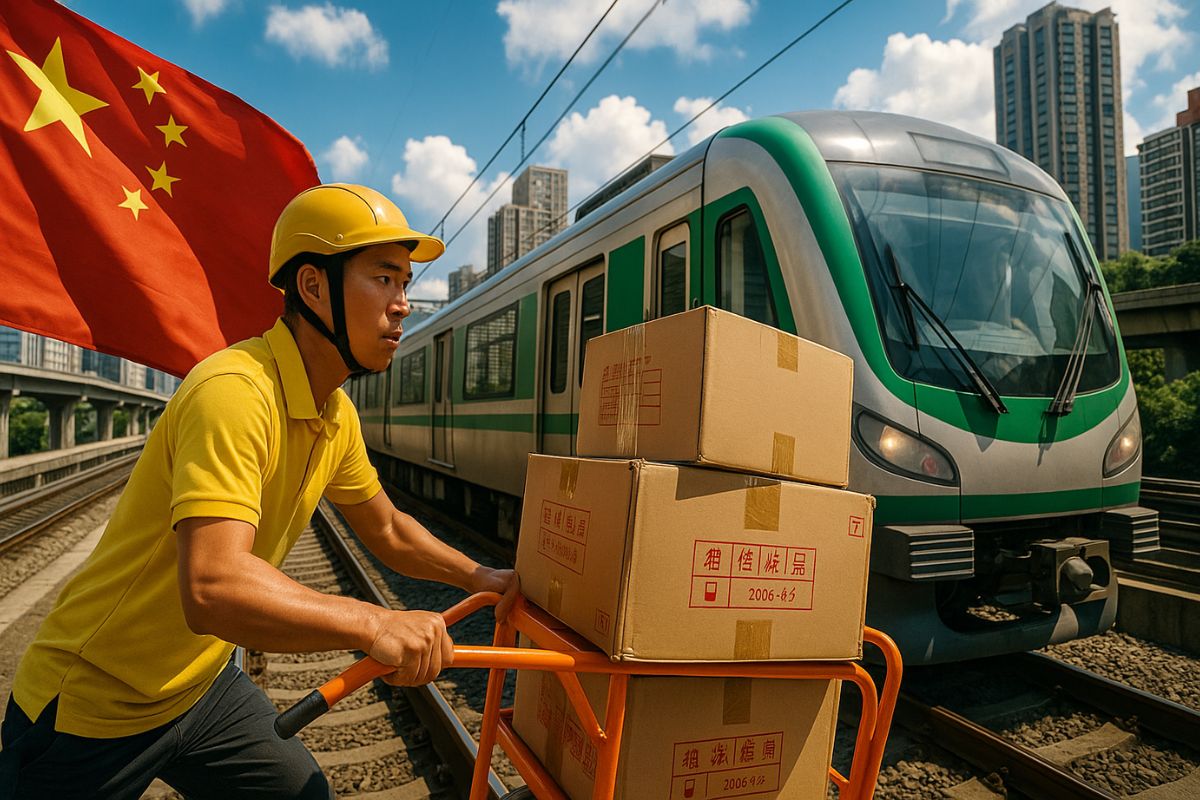

A Chinese City Adopts Robots and Autonomous Vehicles to Transport Goods Through the Subway, Reducing Urban Traffic, Delivery Costs, and Enhancing the Use of Underground Infrastructure During Off-Peak Hours
In Shenzhen, one of the most technologically advanced metropolises in China, the subway has ceased to be merely a means of passenger transport and has become an essential part of the urban logistics network. The Chinese city has implemented a pioneering system that uses robots and autonomous vehicles to carry out commercial deliveries directly through underground lines.
The initiative takes advantage of off-peak hours to move parcels and supply stores with unprecedented efficiency. In addition to reducing traffic on the streets, the model aims to optimize public infrastructure use, making cargo transport faster, more economical, and environmentally sustainable.
Delivery Robots and Intelligent Subway Use


The Chinese city of Shenzhen has adapted part of its subway network to accommodate autonomous robots responsible for transporting packages and supplies.
-
Brazil’s BNDES Funded Metro and Steel Plant Projects in Venezuela with Brazilian Support

-
Abandoned Building in Brazil to Become Biotechnology Unit with $10 Million Investment, Bridging Science, Industry, and Public Health
-
Company Offering “Stones to Diamonds” Scheme Sells Ruined Italian Homes to Brazilians for 1 Euro, Disappears with Promised Renovations, Leaving Buyers in Debt to Italian Tax Authorities Until 2028 Without Property

-
Plastic Packaging Drives Santa Catarina Industry to 230% Growth, Aiming for R$ 500 Million by 2030 Amid Sector Crisis, with New Gearless Line Expanding in Southern Brazil to Compete in South America




These devices, developed by VX Logistics and Neolix, navigate between platforms, elevators, and trains without human intervention, operating fully automated.
The project started with 41 robots capable of carrying up to 500 kilograms each.
They travel in reserved cars during off-peak hours and deliver to over 100 stores connected to the system.
According to company estimates, this fleet is sufficient to meet all the demand of the 7-Eleven network during peak hours.
Cost Reduction and Operational Efficiency
According to executives from Neolix, the new robots have operational costs up to 30% lower than traditional vehicles.
The savings come from the absence of a human cabin, low energy consumption, and the elimination of costs associated with drivers and complex maintenance.
This approach reflects a growing trend in the Chinese city to integrate artificial intelligence into last-mile logistics.
In addition to reducing expenses, the system also aims to decrease surface congestion and pollutant emissions.
The use of the subway for cargo transport represents a new paradigm in urban management, leveraging existing resources and optimizing the usage of the underground network.
Green Logistics and Applied Technology
The operation is controlled by a command center that monitors in real-time the movement of the robots and adjusts their routes according to the subway flow.
Each robot uses sensors and cameras to recognize obstacles, calculate distances, and synchronize boarding in the cars.
The Chinese city aims to expand the project by 2027, including new underground logistical corridors and integration with automated warehouses.
The expectation is that the model will be replicated in other regions of China, serving as a global benchmark for hybrid transport systems between passengers and cargo.
Mobility experts emphasize that adopting this technology can transform how large cities manage product delivery.
The utilization of underutilized structures, such as tunnels and stations, reduces pressure on public roads and allows for a more rational use of energy and urban space.
With the growing demand for fast and sustainable deliveries, Shenzhen’s experience demonstrates how innovation can be applied practically and at scale.
The balance between logistical efficiency and environmental impact reduction is seen as one of the pillars of the next generation of smart cities.
Do you believe that other cities should adopt the subway as part of their urban delivery systems?