






 Portuguese
  Spanish


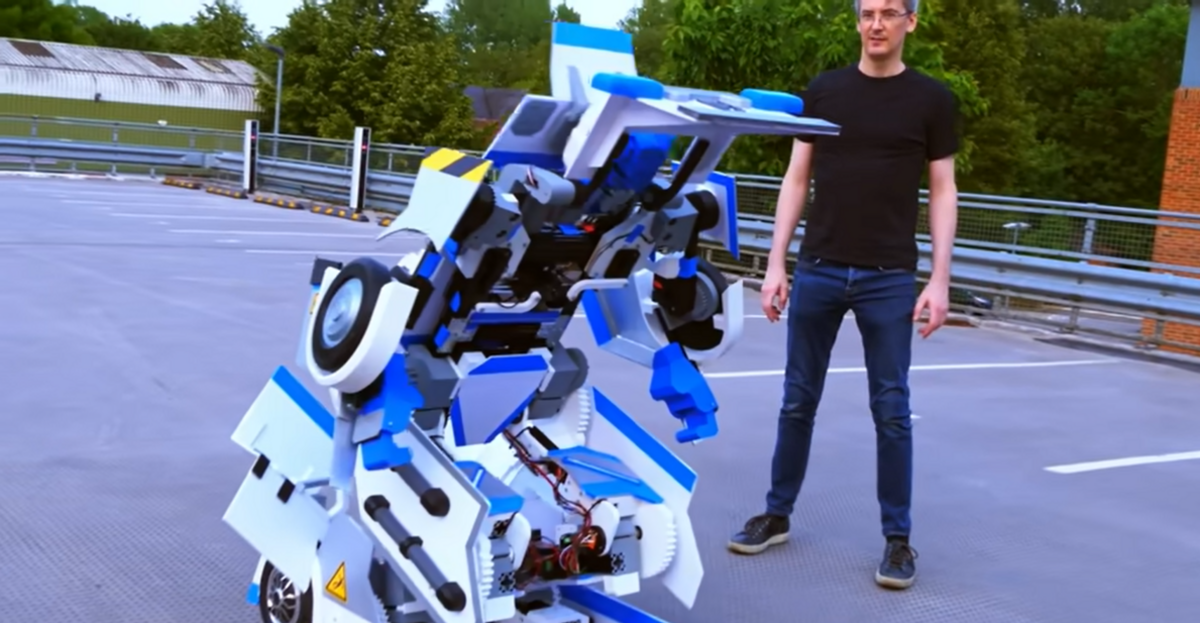


Robot Created By James Bruton Transforms Into A Functional Electric Car And Can Be Driven By An Adult, Bridging Engineering And Science Fiction
The inventor James Bruton surprised once again. Known for his bold creations, he presented a robot that transforms into a functional electric vehicle — and can even be driven. The project is real, works, and looks like it’s straight out of a science fiction movie.
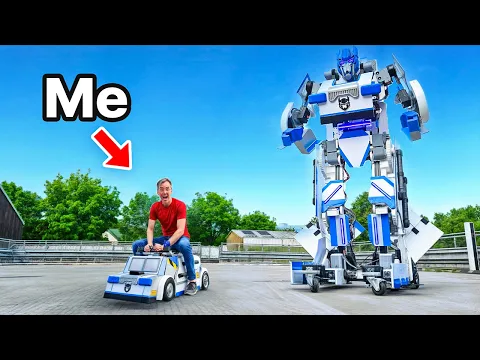
The creation starts with a humanoid shape. It is slightly taller than Bruton himself. The robot’s legs do not serve for mobility. They are decorative but help to compose the futuristic look of the structure.
The transformation is the highlight. The robot mechanically folds and assumes car mode. A real electric car. Although it is not very fast, the vehicle draws attention wherever it goes. And more than that: it can safely carry an adult.
-
Workers Discover 18th-Century Wooden Shipwreck During Routine Pipeline Work in Croatia

-
Scientists Uncover Why Gold Retains Its Shine So Well

-
Japan Allocates Nearly $6 Billion for AI Development, Aims to Deploy 10 Million Robots Across Industries by 2040
-
Nigerian Startup Converts Discarded Laptop Batteries and Broken TV Screens into Solar Lanterns for Off-Grid Areas



The electronic heart of the project is a Teensy microcontroller. It commands the entire transformation, the movement of the wheels, and even the LED lights. The lights add an even more technological look to the set.

The chassis is made with reinforced aluminum profiles. Linear actuators control the movement of the external parts. The result is a smooth and precise shape change, even with all the pieces moving at the same time.
The car mode resembles an electric toy but with high-level engineering. The electric motors allow the robot to move steadily. The internal structure is also made of aluminum. This ensures lightweight and strength at the same time.
Additionally, several parts were made with 3D printing. This facilitates adjustments, allows for quick modifications, and provides ideas for those who want to create something similar.
The choice of a simple microcontroller also helped keep the cost more accessible. Even with fewer resources, the robot’s performance is solid.
One of the major challenges in projects like this is the center of gravity. As the robot changes shape, it becomes unstable. But Bruton solved much of this with a well-thought-out weight distribution. The suspension was also reinforced to withstand impacts and constant movement.
Despite all the advances, the robot has limitations. In humanoid mode, it cannot walk. The legs are fixed. Yet the result is impressive. It is a combination of creativity, engineering, and passion for science fiction that has come to life in the real world.
James Bruton was already known for his inventions. With this robot, he raises the bar. A real, transformable, and functional vehicle that seems to have come straight from the big screen now exists — and drives through the streets.
With information from Nerdizmo.ig.


