Portuguese
  Spanish


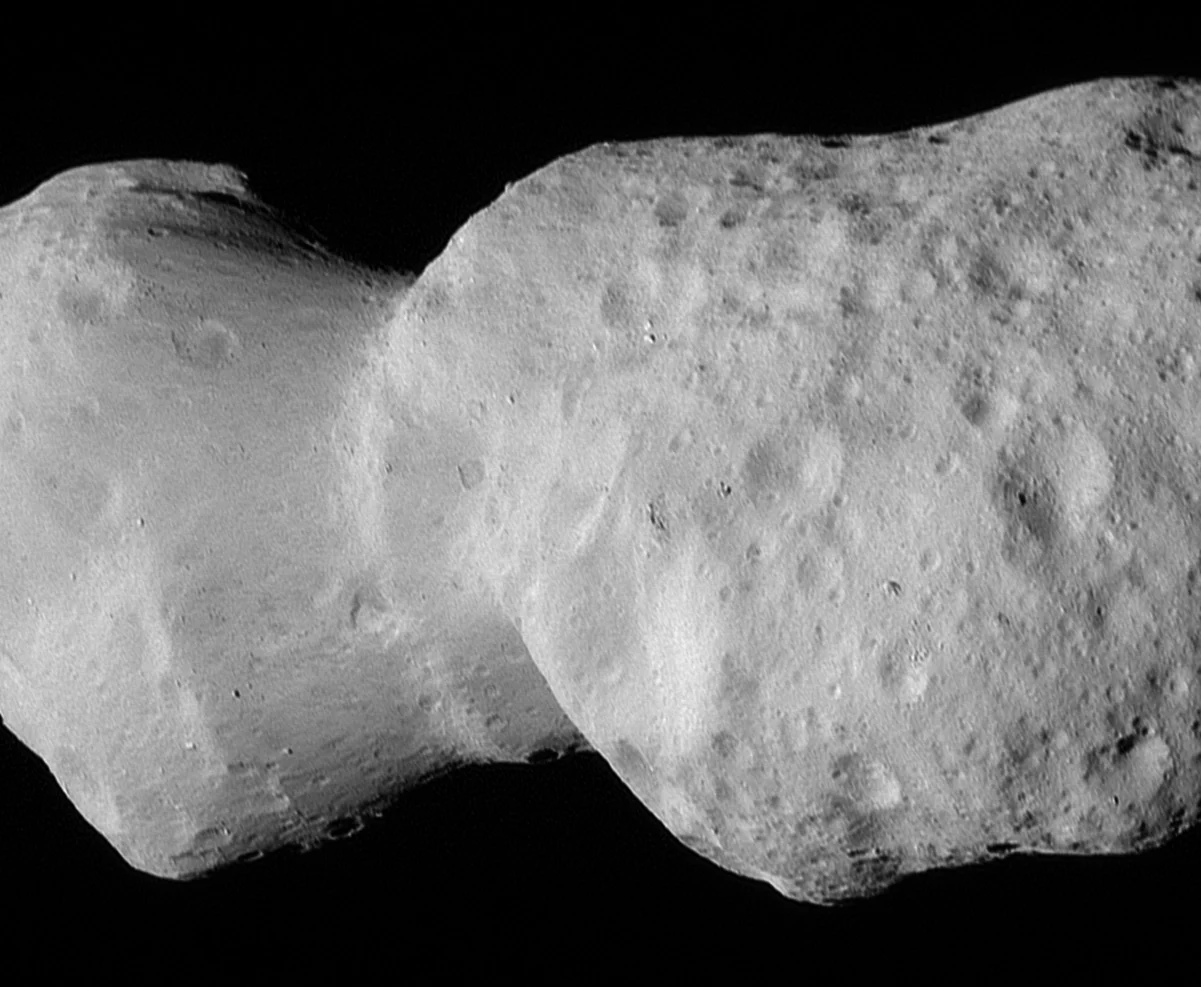

NASA Reveals Unprecedented And Highly Detailed Image Of An Asteroid With A Shape Considered Uncommon By Astronomers. The Irregular Structure Filled With Protrusions Surprised Researchers
NASA Recently Released An Impressive Image Of The Asteroid Donaldjohanson, Captured By The Lucy Spacecraft. The Object, Located In The Asteroid Belt Between Mars And Jupiter, Has A Peculiar Structure.
It Is A Contact Binary, Formed By The Collision Of Two Smaller Celestial Bodies, Which Gives The Asteroid An Appearance That Resembles Two Joined Ice Cream Cones.
Mission Lucy Approaches Less Than A Thousand Kilometers
The Record Was Made On April 20, When The Lucy Spacecraft Came Within About 960 Kilometers Of The Asteroid.
-
World’s First Lithium-Sulfur Battery Factory Launches, Promising to Double Range Without Relying on China

-
AI Data Centers Now Feature Built-In Nuclear Power Plants and Have Ordered Non-Existent Reactors
-
In India, thousands earn about $2.50 an hour cooking and cleaning with a phone strapped to their heads, as every move is recorded to train humanoid robots for jobs they might one day replace.

-
Nuclear Fusion Study Proposes Transforming Mercury into Gold Using Tokamak Neutrons, but Real-World Application Remains Uncertain




During The Approach, The Spacecraft Took Photos Every Two Seconds. The Images Obtained Confirmed The Binary Structure Of The Object And Also Revealed That It Is A Bit Larger Than Previously Estimated. Donaldjohanson Is About 8 Kilometers Long And 3.5 Kilometers Wide At Its Broadest Point.
Name In Honor Of The Discovery Of Lucy
The Asteroid Was Named In Honor Of The Anthropologist Who Discovered The Fossils Of Lucy, An Important Ancestor Of Humanity.
Now, It Also Integrates The Trajectory Of The Spacecraft That Carries The Same Name. For Scientists, The Uncommon Shape Of Donaldjohanson May Help To Better Understand The Collision Processes That Gave Rise To The Planets Of The Solar System.
Encounter Marks A New Stage Of The Mission
This Encounter Took Place Three And A Half Years After The Launch Of The Mission And 17 Months After The Lucy Spacecraft Visited Its First Target, The Asteroid Dinkinesh, And Its Mini-Moon, Selam.
Like Donaldjohanson, Selam Is Also A Contact Binary. Researchers Consider These Two Encounters As Warm-Ups Before The Main Goal Of The Mission: To Explore The So-Called Trojan Asteroids Of Jupiter.
The Trojan Asteroids Are Trapped In Specific Points In Jupiter’s Orbit Due To The Planet’s Gravity. No Spacecraft Has Ever Approached These Objects.
The Lucy Mission, With An Estimated Cost Of US$ 989 Million, Is Expected To Change That. According To NASA, The Spacecraft Is Continuing Its Journey Through The Main Asteroid Belt And Is Expected To Reach Its First Trojan, Named Eurybates, In August 2027. Four More Encounters With Trojans Are Planned By 2033.
In The Coming Weeks, Scientists Will Analyze The Images Taken By Lucy. The Spacecraft Is Equipped With Black And White Imaging Sensors, Color Imaging, Infrared Spectrometer, And Thermal Infrared. This Data May Provide New Clues About The Origin Of Celestial Bodies And The History Of The Solar System.