






 Portuguese
  Spanish


The Flexible Group created through the EVO brand a block and a panel made with 51% recycled polyurethane foam, combining circular economy and thermoacoustic performance
Recycled polyurethane left the waste and entered the construction. The Flexible Group, one of the largest polyurethane manufacturers in Brazil, began transforming the rigid foam leftover from the cold chain, the insulation of cold chambers and refrigerators, into construction blocks and panels through its EVO brand.
The product, named Eco Block and Panel, is made with 51% recycled rigid polyurethane foam and has already been approved by a SENAI laboratory. An industrial waste that was going to the landfill became wall material with a technical report.
From refrigerator insulation to wall panel
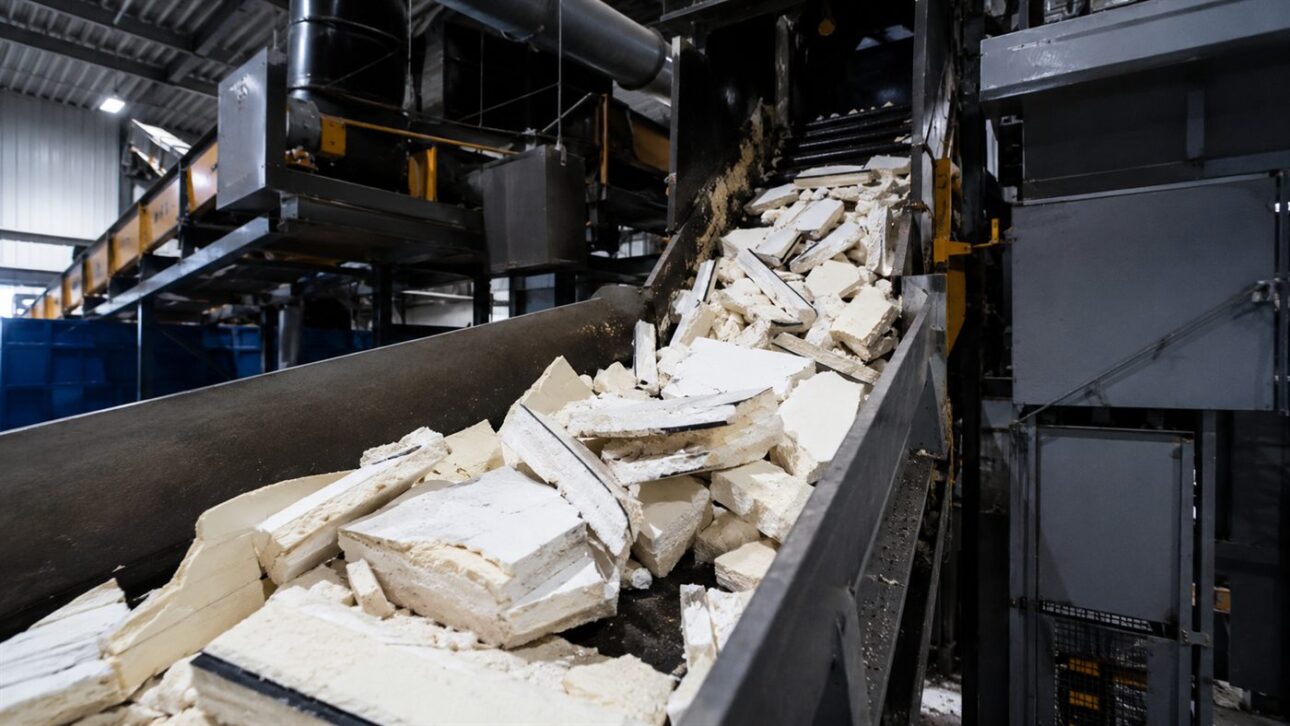
The raw material of this story is a specific and problematic waste: the rigid polyurethane foam used as thermal insulation in the so-called cold chain. It is inside refrigerators, freezers, cold chambers, and refrigerated trucks, ensuring that the cold does not escape.
-
Brazil’s São Paulo Region Unveils Latin America’s Largest Timber Shopping Mall, Built in 7 Months, Capturing Carbon and Preventing 900 Tons of Emissions

-
Danish Island Uses Seaweed for Durable, Centuries-Old Roofing Solution

-
U.S. Organization Builds Sixth Micro-Home Village with Comprehensive Support to Aid Homeless Veterans

-
Engineer from Brazil Develops Eco-Friendly Insulation from Palm Waste, Supporting Quilombola Communities



When these devices are discarded, the foam remains, and it is difficult to recycle through conventional means. Instead of treating this as a problem, the company saw the density of this foam as the ideal quality for a new product. The waste became input.
According to Industriasa, the formulation combines 51% recycled rigid polyurethane foam with 49% renewable source polyols, creating a sustainable material at both ends: in the reuse of waste and in the renewable origin of the rest.
What is EVO’s recycled polyurethane
EVO was born from the restructuring of a Flexible Group company focused on thermoacoustic solutions, in Santa Catarina. It is there that the discarded foam is recycled and transformed into new products, in a process that closes the material cycle within the industry itself.
The Eco Block and Panel are designed for construction, with applications in doors and modular structures. They deliver what conventional polyurethane offers, but with a recycled origin. The idea is not a worse and cheaper material, but an equivalent and cleaner material.
This equivalence is what gives the product a real market chance. Builders do not adopt something that works halfway, but they gladly adopt a material that delivers the same performance with environmental appeal.
Approved by SENAI: the stamp that was missing
The step that transforms a good idea into a sellable product is technical validation. The Eco Block was approved in 2024 by the Laboratory of Technology and Mechanical Characterization of SENAI, LATECME, in Joinville, as a solution with more than 50% recycled polyurethane.
According to the Jornal do Brás, the Flexible Group developed the sustainable thermoacoustic panels precisely to give a noble destination to waste. Having the endorsement of a respected laboratory changes the game. Without approval, the material is an experiment; with it, it can be specified, sold, and used safely in construction. It is the seal that opens the doors of the formal market.
The approval also certifies that the high content of recycled material did not compromise performance, which is crucial to convince engineers and architects to bet on the novelty.
Light, insulating, and fire-resistant
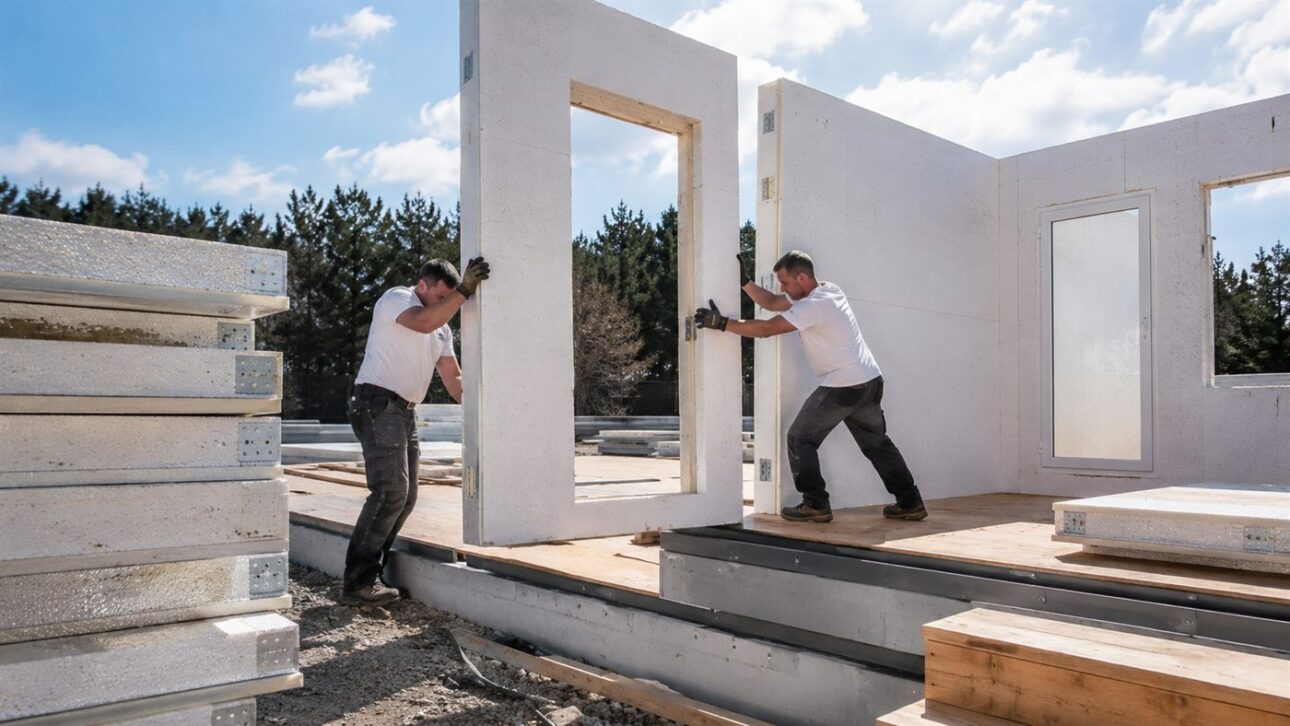
The qualities of the product come from the very nature of polyurethane. The material is light, which reduces weight in the structure, and is an excellent thermal and acoustic insulator, keeping environments more comfortable and quiet.
Moreover, it offers fire resistance compatible with use in construction, an essential requirement for any sealing and structural material. Lightness, thermal comfort, acoustic insulation, and fire safety in a single panel is an attractive package.
These properties explain why polyurethane is already so widely used in construction and industry. The novelty here is delivering all this from recycled material, without sacrificing quality.
From the cold chain to construction
The most elegant in this case is the crossing of sectors. The waste from one industry, refrigeration, becomes raw material for another, construction. It is circular economy crossing borders between different production chains.
This type of bridge is rare and valuable. Closing the cycle within a sector is already difficult; connecting the waste of one sector to the need of another is the most advanced stage of the circular economy. An old freezer can, in the end, become the door or wall of a house.
The more sectors connect in this way, the less waste goes to landfill and the less virgin raw material needs to be extracted, resulting in an environmental gain that multiplies.
Grupo Flexível and the bet on the circular economy
Behind the product is a consolidated company. Grupo Flexível, based in Santa Catarina, is one of the largest manufacturers of polyurethane technologies in the country, and developed the formulation in its technological development center.
That a large and established company bets on recycling is an important signal for the market. When the sector leader treats the circular economy as a product strategy, and not as marketing, the entire industry pays attention. It’s different from an isolated startup testing a niche.
The company treats the recycled line as part of the future of the business, signaling that reusing its own waste has ceased to be a cost and has become a commercial opportunity.
Why this matters for Brazil
Brazil discards a growing volume of equipment from the cold chain, and the rigid polyurethane foam from these appliances is a waste that almost had no noble destination. Creating an industrial use for it addresses a real waste problem in the country.
At the same time, Brazilian construction seeks lighter, insulating, and sustainable materials. Matching abundant waste with a growing demand is the kind of solution that solves two problems at once, without relying on imported technology.
If the model gains scale, it can inspire other industries to look at their own waste as raw material, transforming the logic of disposal in the country.
The challenges of scaling
None of this is automatic. Scaling production requires ensuring a constant supply of discarded foam, setting up collection logistics, and convincing the construction market, traditionally conservative, to adopt a new material.
There is also the challenge of maintaining consistent quality using an input that comes from waste, naturally more variable than virgin raw material. Standardizing the recycled is the maturity test of any circular economy product.
Even so, the starting point is strong and counterintuitive: the foam that insulated the cold from your refrigerator may end up insulating the heat and noise from your home. If recycled polyurethane already raises doors and walls with a technical report, how many other industrial residues are just a good formulation away from becoming building material?


