Portuguese
  Spanish


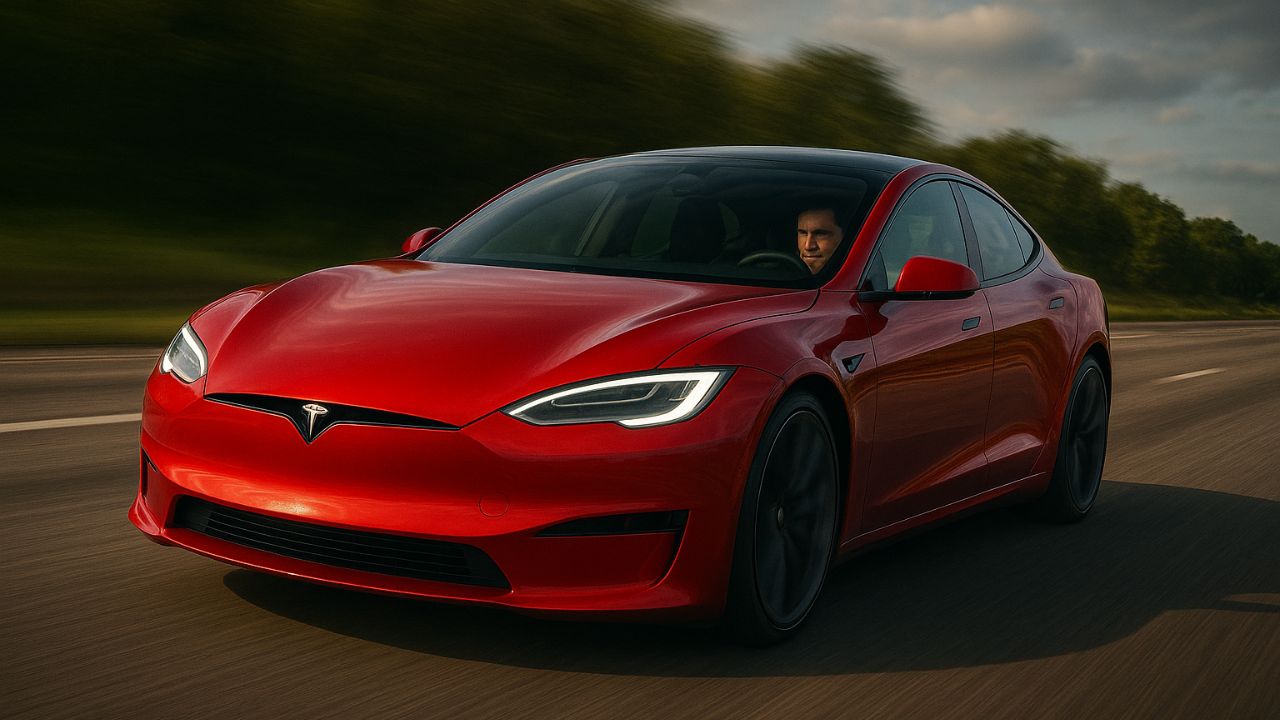

Reports Indicate That Tesla’s New Full Self-Driving System Feature Allows Vehicles to Operate Above Speed Limits, Generating Alert at NHTSA.
Tesla is once again under the spotlight of the National Highway Traffic Safety Administration (NHTSA) of the United States. As reported by InfoMoney, the federal agency confirmed on Friday that it is seeking information about a new driver assistance mode nicknamed “Mad Max.” The main concern is that this version, described as more aggressive than the Full Self-Driving (FSD) system, would be allowing vehicles to operate above the established speed limits on highways.
This new inquiry adds to a series of ongoing investigations into Tesla‘s assistance technology. The NHTSA emphasized that, regardless of the activated system, “the human at the wheel is fully responsible for driving the vehicle and obeying all traffic safety laws”. The controversy arises at a delicate time, as Elon Musk’s automaker faces increasing scrutiny over the actual safety of its FSD systems.
What Is the “Mad Max” Mode and Why Is It Concerning?


The alert about the “Mad Max” mode gained traction after various reports from drivers on social media. According to these posts, Tesla vehicles that utilize the more aggressive version of Full Self-Driving have shown the ability to consistently operate above the speed limits permitted on roads. This feature raises serious questions about the system’s compliance with existing traffic laws.
-
Brazilian Innovator Transforms 1962 Mercury Comet with Nissan Leaf Electric Motor, Achieving 125 km Range for Under $6,000

-
China Tests Giant 582-Ton Magnets to Contain Plasma Hotter Than the Sun’s Core, Aiming to Cut Superconductor Costs and Generate First Electricity from “Artificial Sun” by 2030
-
Seventh Grader Builds Nuclear Fusion Machine at Home, Aiming for Guinness World Record

-
Ancient Ritual Circle, Hidden for 5,000 Years, Discovered in Scotland’s Machrie Moor Using Sensors, Revealing a “Phantom Stonehenge”



Tesla did not immediately respond to a request for comment regarding the NHTSA investigation. However, as reported by InfoMoney, the automaker recently reposted a message on a social media platform that seemed to endorse the functionality. The post described the “Mad Max” mode as being capable of speeding and weaving through “traffic at an incredible pace, all while being super smooth.” The message also suggested: “It drives your car like a sports car. If you are running late, this is the ideal mode for you.”
NHTSA Expands Investigations into Tesla’s FSD
The investigation into the “Mad Max” mode comes at a time when the NHTSA is already deeply analyzing Tesla’s FSD. Earlier this month, the agency opened a formal investigation into 2.9 million vehicles from the automaker equipped with the system. This primary investigation was prompted by dozens of documented reports of traffic safety violations and accidents occurring while FSD was active.
The data underlying this broader investigation is concerning. The NHTSA reported that it is examining 58 reports of serious issues involving traffic safety violations related to the use of FSD. This set of incidents includes 14 confirmed accidents resulting in 23 injuries. The agency highlighted that the FSD system “induced vehicle behavior that violated traffic safety laws.”
A History of Scrutiny and Collisions
Tesla’s Full Self-Driving, which is considerably more advanced than the automaker’s standard Autopilot system, has been under investigation by the NHTSA for at least a year. InfoMoney recalls that in October 2024, the agency had already opened an investigation into 2.4 million vehicles from Tesla with FSD. That previous investigation was triggered by four collisions that occurred under reduced visibility conditions on the road.
The U.S. regulatory agency detailed that in the broader investigation opened this month, it has six specific reports in which a Tesla vehicle, operating with FSD activated, “approached an intersection with a red traffic signal, continued to travel into the intersection against the red signal and subsequently became involved in a collision with other motor vehicles.” Despite the controversies, Tesla officially states that FSD “will drive you nearly anywhere with your active supervision, requiring minimal intervention,” but emphasizes that the technology does not make the car autonomous.
What do you think about this “Mad Max” functionality? Would you trust an assistance system that operates above speed limits? Share your opinion in the comments, we want to know what drivers really think about this new Tesla controversy.