Portuguese
  Spanish


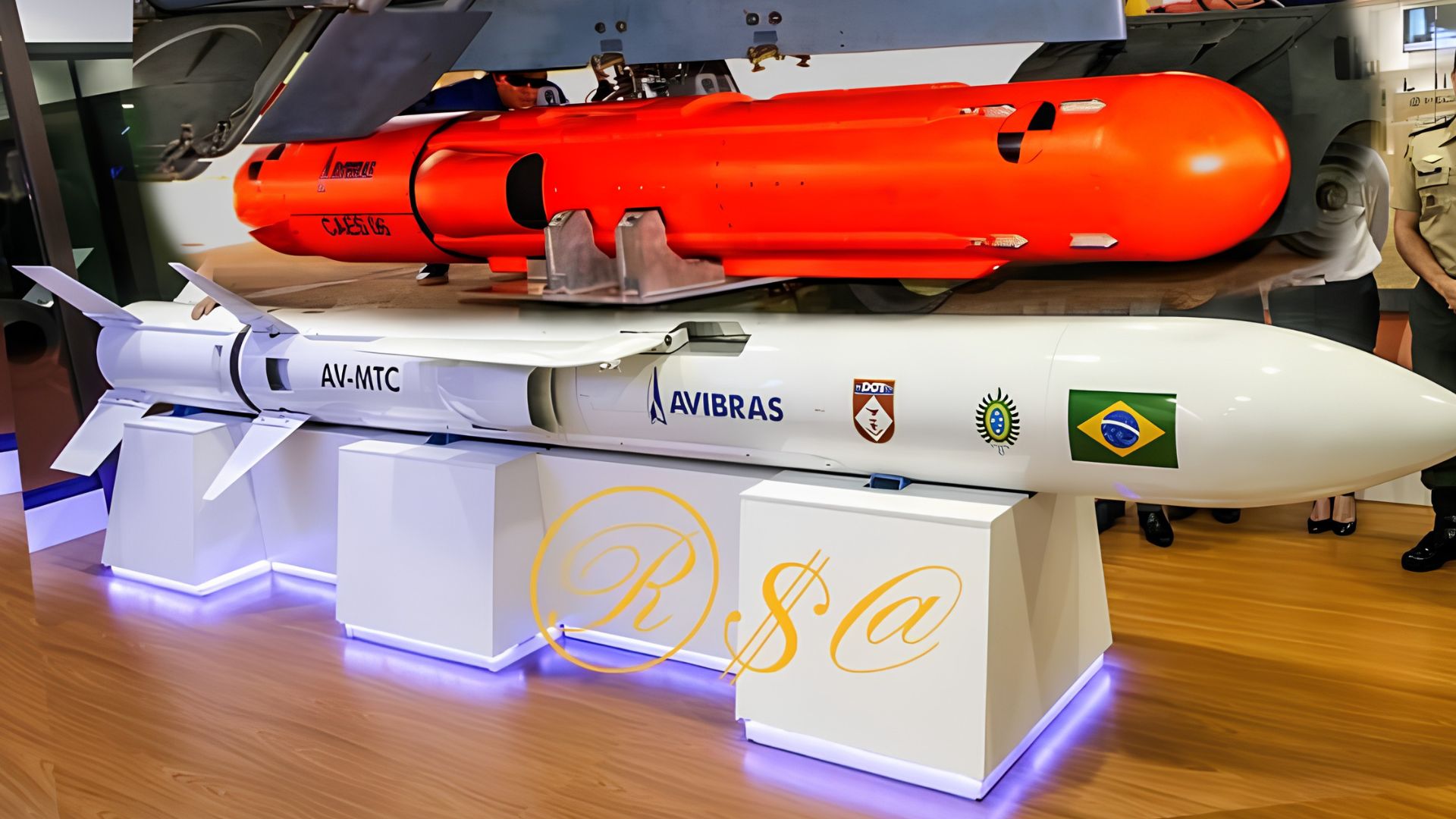

Brazil develops the AV-TM 300 missile, a cruise weapon integrated into ASTROS with a range of 300 km and a focus on national military autonomy.
Brazil has been developing one of the most complex military projects in its recent history for over two decades: the AV-TM 300, a tactical cruise missile integrated into the ASTROS system. Produced by Avibras, the weapon places the country in a select group of nations capable of developing this type of technology independently. The missile was designed to hit long-distance targets with high precision, operating within the concept of strategic deterrence.
Public data from the Brazilian Army indicates that the AV-TM 300 can reach up to 300 km, carrying warheads in the range of 200 kg, parameters aligned with international commitments assumed by Brazil.
AV-TM 300 cruise missile integrates into the ASTROS system and represents a technological leap in Brazilian long-range artillery
The AV-TM 300 was conceived as part of the evolution of the ASTROS 2020 system, the main saturation artillery platform of the Brazilian Army. The integration allows the missile to be launched from mobile vehicles, enhancing operational flexibility and response capability in different scenarios.
-
New Brazilian Frigate Equipped with Advanced Missiles and Radars to Safeguard Strategic Maritime Areas

-
New Brazilian Frigate Equipped with Advanced Missiles and Radars to Protect Strategic Maritime Areas, Including the Blue Amazon and Pre-Salt Reserves
-
China Unveils Laser Weapon Capable of Instantly Neutralizing Military Drones, Marking a Significant Advancement in Air Defense Technology
-
U.S. Navy’s Ticonderoga-class Cruiser Becomes a 9,800-Ton Missile Fortress with Advanced Aegis System Capable of Tracking Hundreds of Targets



Unlike conventional rockets, the cruise missile follows a controlled trajectory throughout the flight. It combines inertial navigation and GPS, along with onboard systems that continuously correct the route, increasing precision even at long distances.
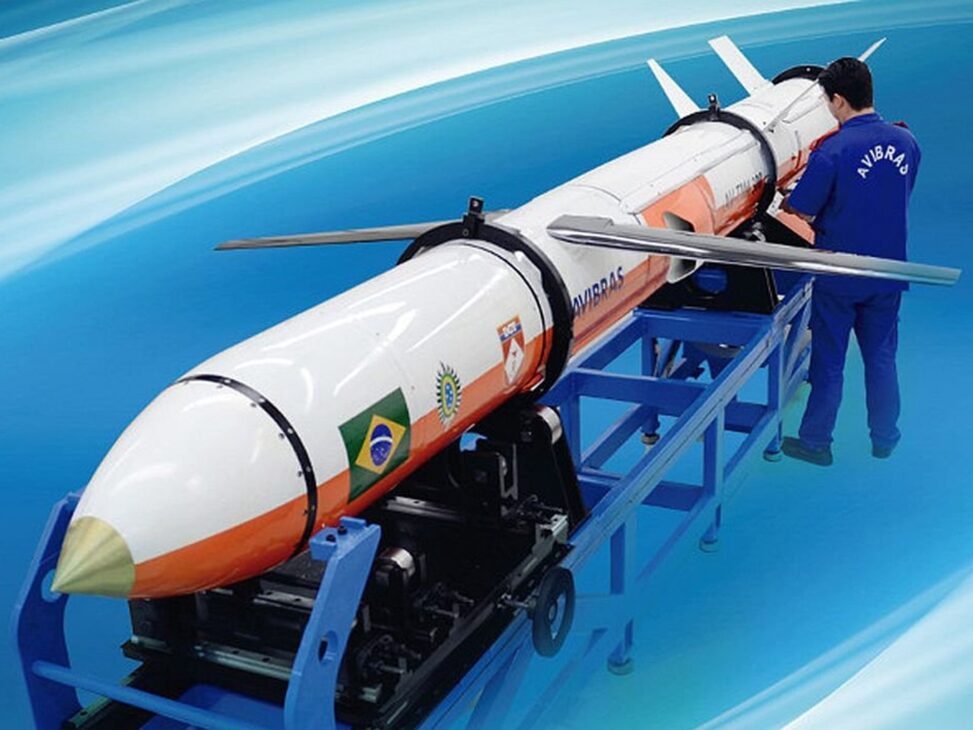
This technological set transforms the AV-TM 300 into a precision attack vector. The ability to hit strategic targets with reduced error is one of the factors that elevate the level of Brazilian artillery to a new level within the regional context.
Low-altitude flight technology and guided navigation make the cruise missile difficult to detect and intercept
One of the main characteristics of a cruise missile, according to the Brazilian Army, is low-altitude flight, known as skimming flight. This profile allows the projectile to use the terrain as natural cover, making it difficult for enemy radars to detect.


In the case of the AV-TM 300, this type of trajectory is combined with navigation systems that keep the missile aligned with the target throughout the journey. The operation occurs in subsonic mode, with jet engine propulsion after the initial rocket launch phase.
This operational model increases the system’s efficiency in missions targeting fixed targets. The combination of low altitude, route correction, and onboard precision reduces the probability of interception and enhances the strategic impact of the weapon.
Official limit of 300 km for the AV-TM 300 is linked to an international agreement and not necessarily to the total technical capability
The disclosed range of 300 km follows parameters established by the Missile Technology Control Regime (MTCR), of which Brazil is a signatory.
The international agreement seeks to limit the proliferation of systems capable of carrying significant payloads over long distances.
Under these rules, countries avoid developing or exporting missiles that combine long range with heavy warheads. In the Brazilian case, the AV-TM 300 was classified within these limits, with payload and range compatible with international guidelines.
Comparison with the Tomahawk shows the difference between the Brazilian tactical missile and long-range strategic systems
The AV-TM 300 is often compared to the American Tomahawk, one of the most well-known cruise missiles in the world. However, this comparison should be made with caution, as the two systems occupy different categories.
The Brazilian missile is classified as tactical by the Brazilian Army, focusing on regional operations and integration with mobile ground platforms. Meanwhile, the Tomahawk is a long-range strategic system, capable of reaching much greater distances and launched from ships and submarines.
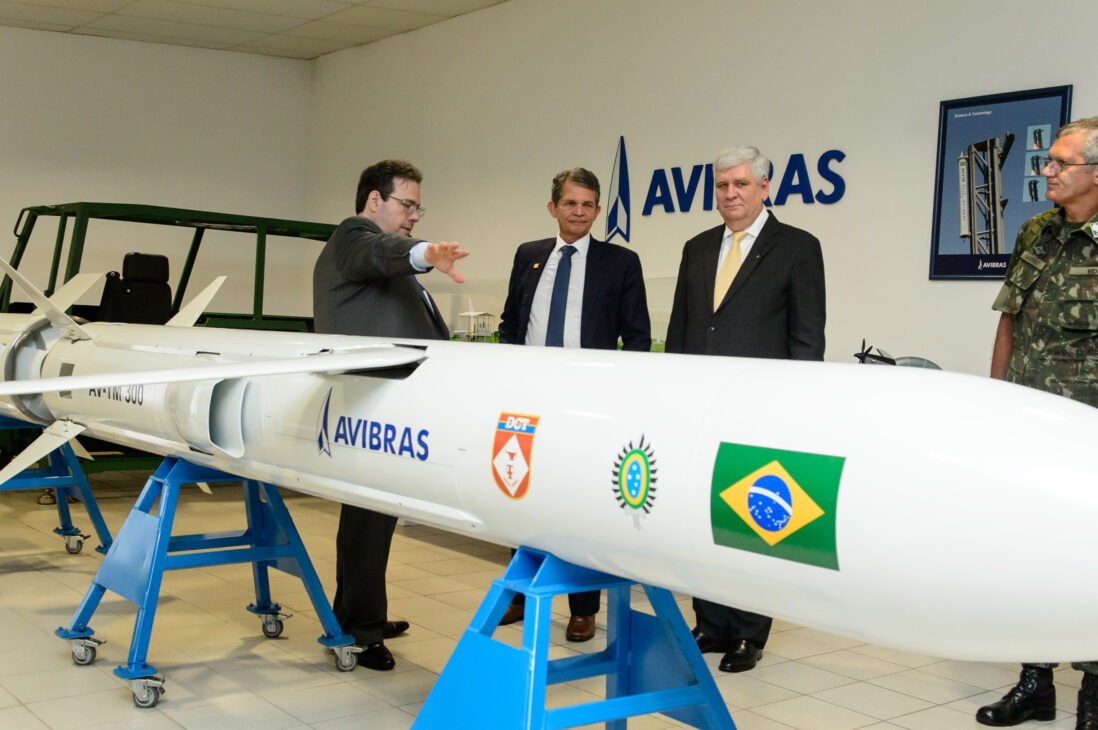
The main advantage of the Brazilian project is not in the absolute range, but in the technological autonomy. Developing a national missile reduces external dependency and ensures operational freedom in scenarios of international restriction or embargo.
Development of the AV-TM 300 spans more than two decades and faces industrial and financial challenges
The development of the missile began in the early 2000s, as part of a continuous effort by the Army to modernize its long-range artillery. Over this period, the project underwent technical adjustments, tests, and component evolution.
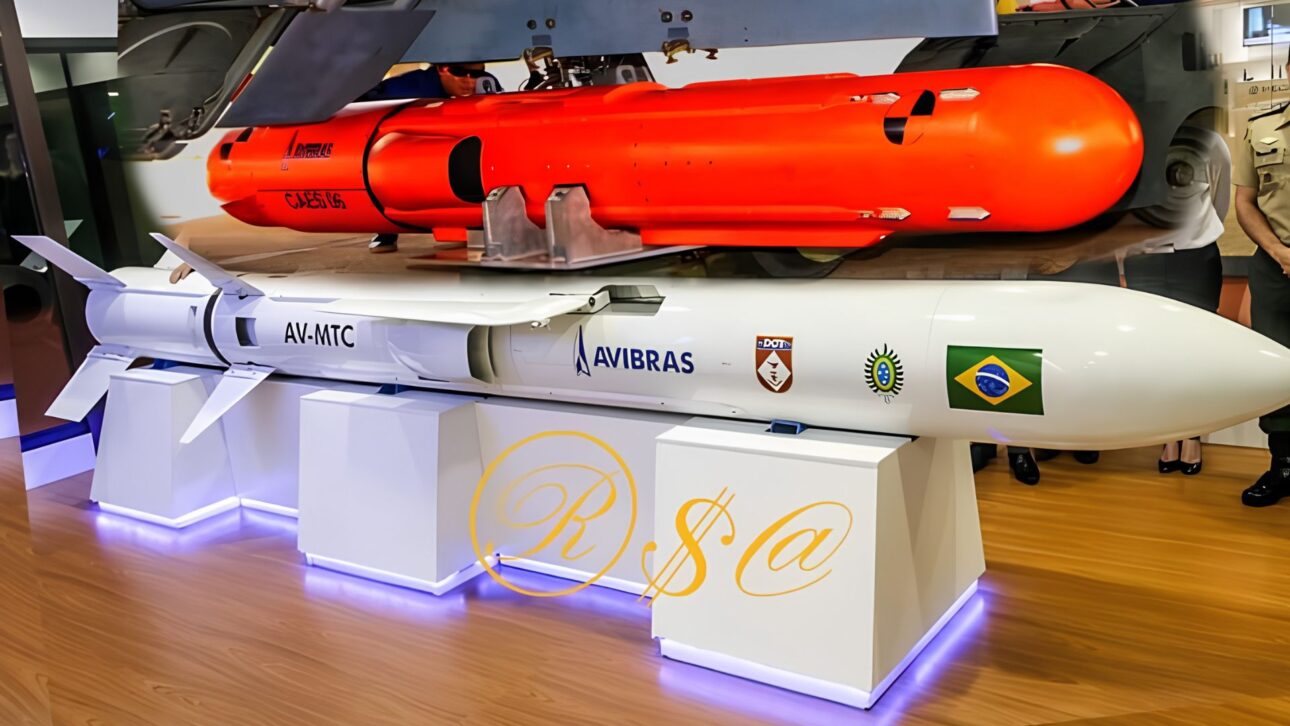
The program also faced significant challenges outside of engineering. Avibras, the main entity responsible for the project, experienced financial difficulties in recent years, which directly impacted the development pace and system delivery.
This scenario highlights the complexity of maintaining advanced defense programs in continuous operation. Besides technology, these projects depend on industrial stability, long-term financing, and coordination between government and companies.
AV-TM 300 is part of a larger strategy for creating a national arsenal and increasing Brazilian deterrence capability
The cruise missile is not an isolated project. It is part of a broader set of initiatives aimed at building a national long-range arsenal, with different types of vectors and platforms.
Within this strategy, Brazil seeks to expand its deterrence capability through systems capable of hitting distant targets with precision. The central concept is to reduce vulnerabilities and increase response capability in crisis scenarios.

The trajectory of the AV-TM 300 summarizes this effort. Even with delays, limitations, and industrial challenges, the project remains one of the main symbols of Brazil’s attempt to master highly complex military technologies and reduce external dependency.