






 Portuguese
  Spanish


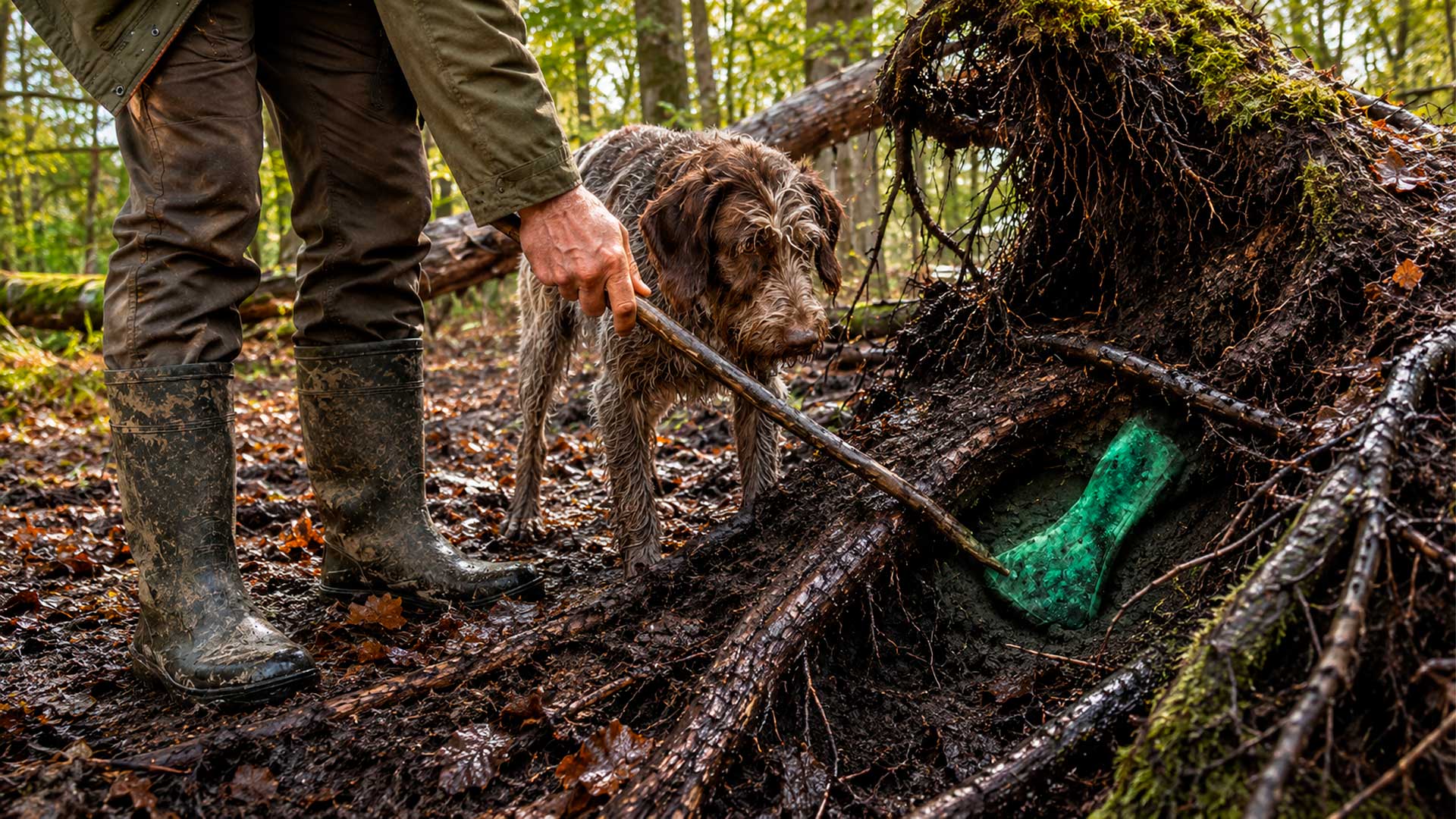

Piece found in the Forest of Dean by John Smith was identified as a palstave-type bronze axe, used in prehistoric Britain, and now undergoes documentation and conservation at the Dean Heritage Centre.
A bronze axe head about 3,400 years old was identified in the Forest of Dean, Gloucestershire, in the southwest of England, and has entered a process of archaeological documentation and conservation. The piece was classified as a palstave type axe, a model associated with the British Middle Bronze Age.
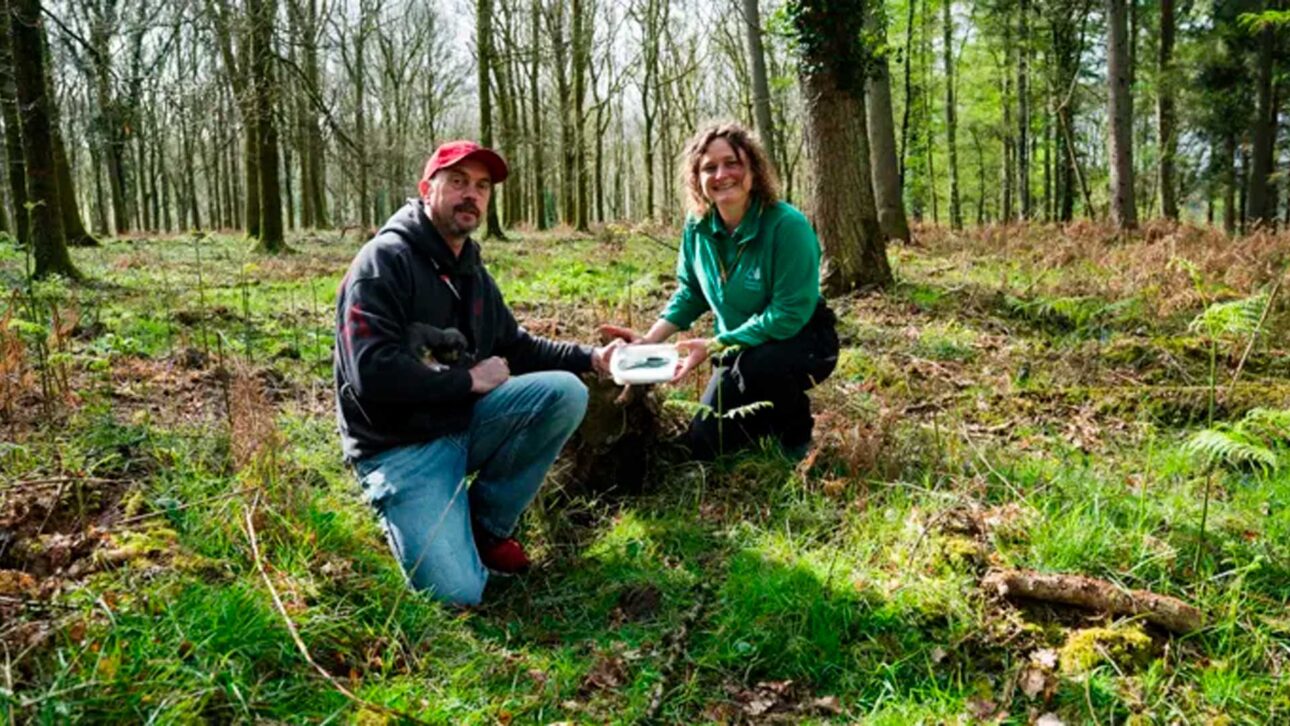
The find was made by John Smith during a walk with his dog in a forest area near Brierley, Gloucestershire.
According to the Smithsonian Magazine, published on April 30, 2026, Smith saw the green sheen of the metal among roots, retrieved the piece, and handed it over to Forestry England, the agency that manages public forest areas in England. After that, experts from Cotswold Archaeology were called in for identification and treatment of the material.
-
Texas Blackout Inspires Student to Develop Bionic Leaf Catalyst for Converting Sunlight, Water, and Bacteria into Fuel

-
Brazilian Students Develop Process to Turn Styrofoam Waste into Water-Purifying Charcoal

-
Study Warns: Wi-Fi Routers Can Act as Invisible Radars, Identifying People with 99.5% Accuracy Without Cameras or Wearable Devices

-
Brazilian Researchers Develop Cost-Effective Method for Key Component of Green Hydrogen Electrolyzers, Enhancing Energy Efficiency and Equipment Longevity



The axe entered a process of registration, analysis, and preservation, an essential step to avoid loss of archaeological context and reduce damage caused by corrosion after thousands of years in the soil.
The green sheen indicated ancient metal, but the shape of the object told the more technical part of the story
The piece found was not a complete axe. What appeared among the roots was the metallic head, a part that would originally be attached to a wooden handle with cord, rawhide, or strong fiber.
According to the Dean Heritage Centre, the artifact is a palstave type axe, a common form in the Middle Bronze Age. The institution reported that the piece likely dates from 1400 BC to 1275 BC, a period when bronze tools already had more complex designs than earlier stone or copper models.


The greenish hue comes from the natural oxidation of the metal alloy over time. In bronze objects, this layer can be visually striking, but it also requires care because exposure to air, moisture, and salts present in the soil can accelerate degradation.
The axe is 146 millimeters and belongs to a model used before the arrival of the Romans
The analysis published in the Cotswold Archaeology virtual museum describes the piece as a copper alloy palstave, 146 millimeters long, 54 millimeters wide, and 25 millimeters thick. The record notes the context of the discovery as the root plate of a tree, in Brierley, in the Forest of Dean.
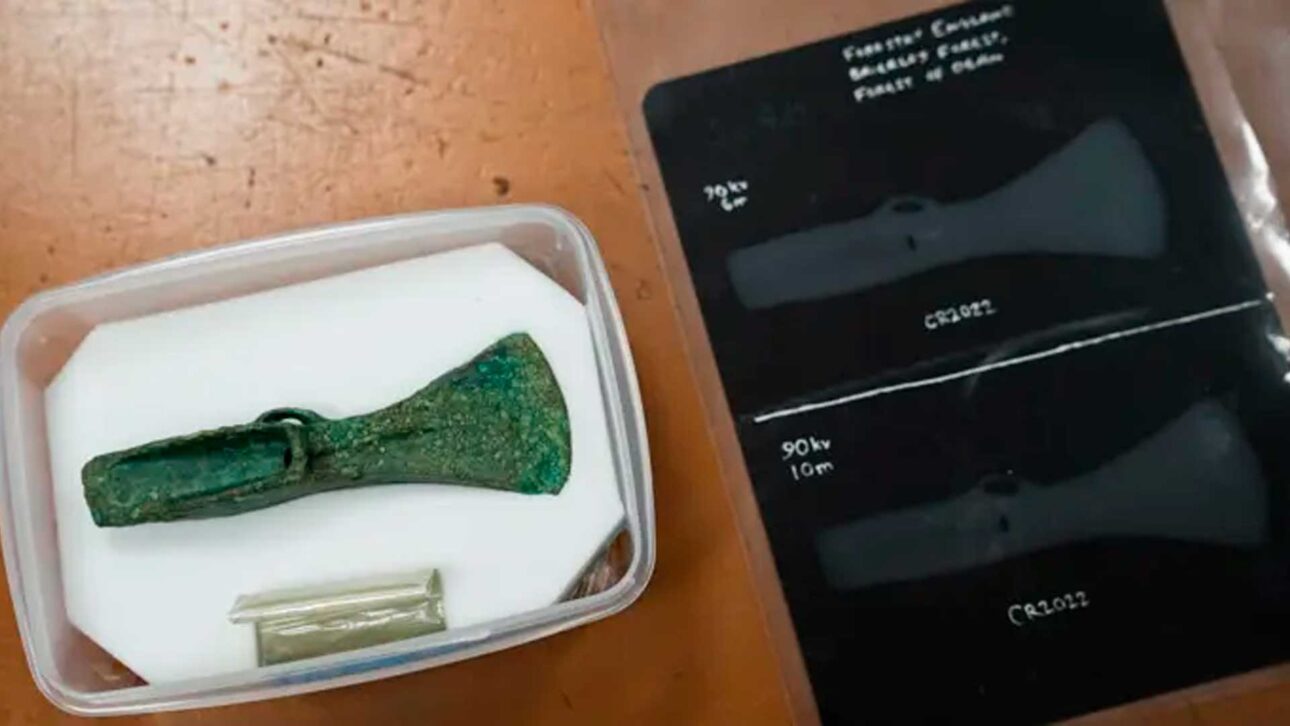
This type of axe was produced by casting. At the beginning of the Bronze Age, simple stone molds already allowed the making of metal blades; later, two-part molds paved the way for more sophisticated shapes, with flanges, central ribs, and areas designed for fitting onto the handle.
The piece from the Forest of Dean has a side handle, a detail that helped secure the blade better to the handle. The edge is blunt, about 3 millimeters thick, which may indicate wear, loss of practical function, or just the preserved state after centuries buried.
Tools of this type could be used for woodworking, clearing vegetation, preparing materials, and, in certain contexts, also serve as valuable objects. The exact use of this specimen, however, cannot be determined solely by its shape. The location where it was found and the conditions of the deposit weigh as much as the piece itself.
Conservation showed why it’s not enough to just find an archaeological piece
After being handed over to Forestry England, the axe underwent specialized evaluation. As reported by SoGlos, conservator Kayleigh Spring stated that the piece was tested for chloride ions, had soil and corrosion removed under magnification, and received an application of Incralac to reduce further corrosion while on display.
This type of procedure shows the difference between a casual find and a useful archaeological record. When a metal object comes out of the ground, it enters another chemical environment. The change in humidity, temperature, and oxygen can accelerate processes that were relatively stable underground.
The axe was sent to the Dean Heritage Centre, where it is on display in Gallery 1 and is undergoing documentation. Cotswold Archaeology has also added a digital 3D model to its virtual museum, allowing for the study of details of the form without frequently handling the physical piece.
Digital documentation does not replace the artifact but reduces risks. In small and ancient pieces, casting marks, worn edges, and ancient damage help specialists compare the object with other axes from the same technological phase.
The Forest of Dean is not just a backdrop, as the territory had human occupation long before the find
The Forest of Dean, in Gloucestershire, lies between the rivers Severn and Wye, near the border between England and Wales. The region is known for its more recent industrial history, but it also holds much earlier archaeological layers.
Historic England published in 2019 the study “Hidden Landscapes of the Forest of Dean” by Jon Hoyle, compiling research on the prehistory and early archaeology of the region. The work cites the use of aerial imagery and lidar technology to reveal archaeological sites hidden by vegetation.
This detail changes the weight of the discovery. An isolated axe has material value, but an axe found in a landscape with ancient traces raises questions about circulation, work, object deposition, and human occupation in western England during the Bronze Age.
The very definition of ancient forest in England also helps to understand the environment. Natural England’s database classifies ancient woodland as an area with continuous forest cover since at least 1600 AD, which does not mean trees that are 400 years old, but rather continuity of use and forest soil for centuries.
The find may have been a loss, discard, or intentional deposit, and this doubt is part of the research
The Dean Heritage Centre stated that there is no way to know for sure why the axe was there. The most prudent hypotheses are accidental loss, discard, fall during use, or deliberate deposition.
In British Bronze Age archaeology, axes often appear as isolated finds, far from houses or burials. Cotswold Archaeology reports that these objects are rarely found in settlements or burials, but sometimes appear in sets deposited in the ground.
The axe from the Forest of Dean does not “prove” alone a ritual, a battle, or a workshop on site, but it provides concrete data on technology, metal, object circulation, and human relationship with a landscape occupied for millennia.
Do you think finds of this type should remain in local museums, close to where they were found, or go to large national centers of archaeology? Leave your opinion in the comments and tell us if such a discovery would change your way of looking at a common trail in the forest.


