






 Portuguese
  Spanish


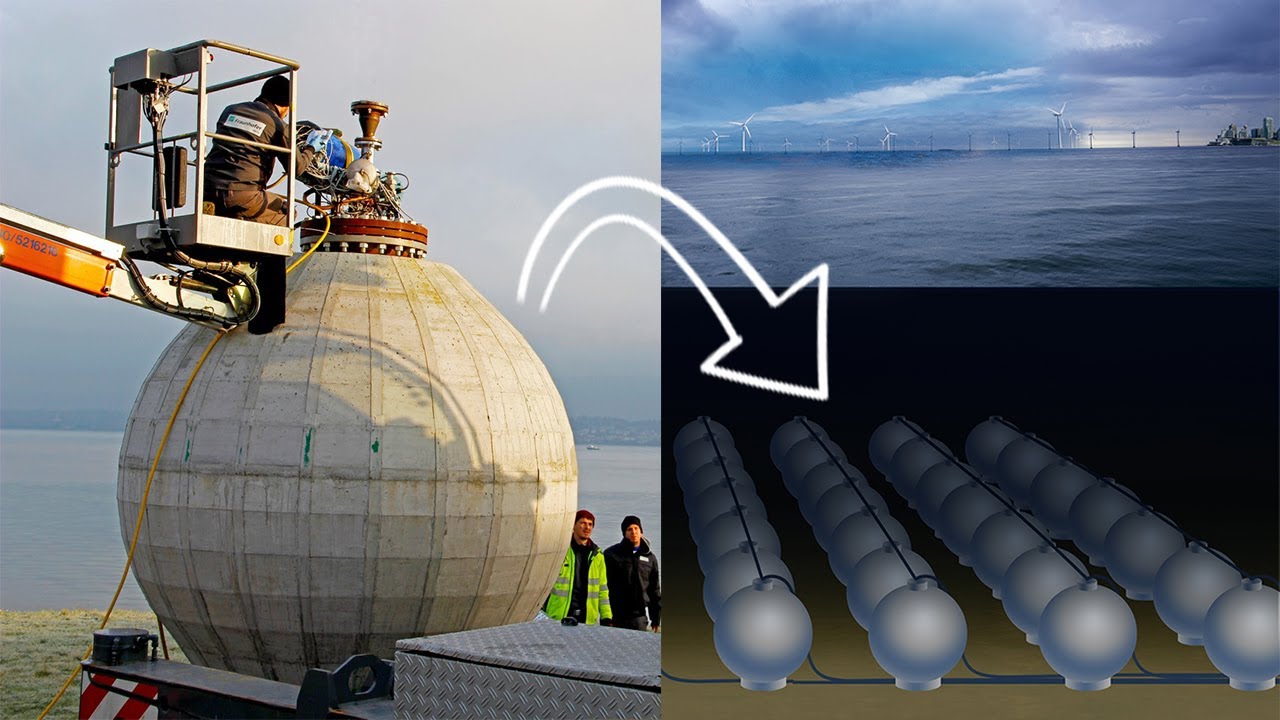


Projects Study Storing Renewable Energy at the Bottom of the Sea Using Compressed Air and Natural Ocean Pressure. Learn About the Concept of Underwater Compressed Air Energy Storage.
The transition to renewable sources such as solar and wind has brought a structural challenge for electric systems worldwide: how to store large volumes of energy when the wind isn’t blowing or when the sun sets. Lithium batteries dominate the current market but have limitations in scale, cost, and dependence on strategic minerals. It is in this context that researchers and companies have begun to study an unusual alternative: using the ocean floor as a natural reservoir for compressed air energy storage.
The concept is known as Underwater Compressed Air Energy Storage (UWCAES). It is based on a simple physical principle: hydrostatic pressure increases with depth. At approximately 1,000 meters below the surface, pressure can exceed 100 atmospheres.
This natural pressure can be used to keep compressed air stable within submerged reservoirs, reducing some of the energy normally required for mechanical compression.
-
He has never read a line of code, but he already knows how to work: the French company UMA presented in Paris the Northstar, its first AI-powered humanoid robot designed for factories and warehouses, capable of copying tasks just by observing an employee in action.

-
A young Kenyan engineer collects plastic waste from the streets and transforms it into robots that translate physics lessons into sign language in real-time, a machine made with old bottles that teaches what was missing to deaf children left out of science.

-
What is the dark substance found in the sand of Ipanema Beach? Civil Police conduct an examination, collect samples of the material, and initiate an investigation to identify the composition, clarify the origin, and verify if there was an environmental crime.
-
The beer that was hidden for 3,000 years has returned to the world: scientists find yeast preserved in Ancient Egyptian vessels and recreate a pharaoh’s drink to discover the lost taste of an ancient civilization.




The model is still in the research and development phase, with studies published in technical journals and pilot projects being analyzed in Europe and North America.
How Compressed Air Storage Works
Compressed air energy storage is not new. Land-based CAES (Compressed Air Energy Storage) systems have existed for decades and utilize underground caverns to store compressed air generated when there is excess electricity on the grid.
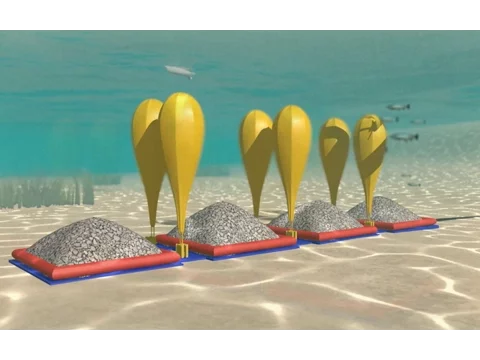

The process occurs in two stages. When electricity generation exceeds demand, electricity is used to drive compressors that store air under high pressure. Subsequently, when demand increases, the air is released and expanded in turbines, generating electricity again.
The innovation of the underwater model lies in utilizing ocean pressure to keep compressed air within large bags or flexible tanks anchored to the seabed.
Instead of relying solely on geological caverns or rigid artificial reservoirs, the system uses the water column itself as a containment element.
Natural Pressure as an Energy Ally
For every 10 meters of depth, pressure increases by approximately one atmosphere. At depths of 500 to 1,000 meters, pressure is already sufficient to maintain highly compressed air within suitable structures.
Conceptual projects propose the use of inflatable bags or metallic reservoirs installed on the seabed. When there is excess energy, compressors send air to these tanks. The external water pressure keeps the compressed volume constant.
During the generation phase, the air returns to the surface through pipelines and passes through generating turbines. One of the theoretical advantages is the stability of pressure at great depths, which can improve the efficiency of the energy cycle.
Ongoing Projects and Research
Academic studies on UWCAES have been published by European and North American groups, including technical analyses on thermodynamic efficiency and structural feasibility.
Energy technology companies are also investigating commercial applications. Some have received funding to develop experimental prototypes, especially aimed at integration with offshore wind farms.
The concept is particularly attractive to countries with extensive coastlines and strong offshore wind production, such as Canada, the United Kingdom, and Norway.
So far, there are no operational large-scale commercial facilities using underwater compressed air storage. The projects remain in the study, modeling, and technological development stage.
Comparison with Conventional Batteries
Lithium batteries offer quick response and high efficiency, but they present challenges related to cost, lithium mining, and environmental disposal.
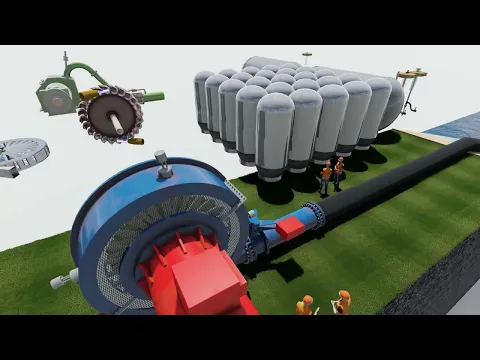
Compressed air storage uses atmospheric air as a storage medium, reducing reliance on critical materials.
Moreover, large-scale systems can store energy for extended periods, which is essential for stabilizing electrical grids with high penetration of renewables.
On the other hand, UWCAES requires complex underwater infrastructure, installation at great depths, and specialized maintenance.
Technical and Environmental Challenges
The implementation involves significant structural issues. Reservoirs must withstand extreme pressures and marine corrosion. Pipeline connections between the ocean floor and coastal stations must be robust.
There are also concerns about environmental impacts on the marine ecosystem. Studies need to assess effects on sediments, benthic fauna, and water quality.
Another challenge is thermal efficiency. When air is compressed, it heats up; when it expands, it cools down. Advanced systems need to manage these variations to maintain adequate energy efficiency.
A Promising Alternative for the Renewable Era
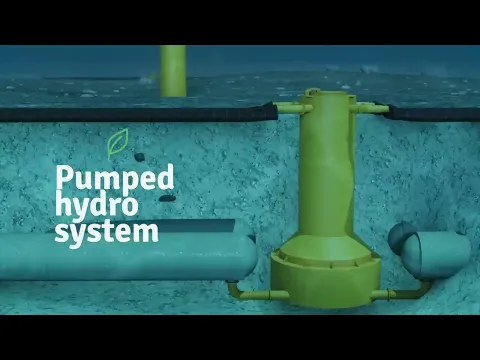
As the share of renewable sources grows, the need for large-scale storage becomes critical. Underwater compressed air systems emerge as a complementary alternative to batteries and pumped hydro storage.
The ocean’s natural pressure represents a physical resource available for integration into energy infrastructure.
Although it is still in the experimental phase, the concept demonstrates how future energy solutions can strategically use natural elements.
Transforming the ocean floor into part of the global electrical grid is not just a futuristic idea. It is a proposal based on solid physical principles, currently under technical evaluation.
If structural challenges are overcome, the ocean could cease being merely a geographical frontier to become an active component of the 21st-century energy infrastructure.







Haaaa, estocar o vento, ela já sabia.
Ela sempre tem ideias futurista.
Outra opção que pode ser viável para o Brasil principalmente no nordeste usando a água do rio são Francisco é fazer um grande represa em uma local a uns cem metros de altura para o rio por exemplo e durante o dia usa a ernegia solar para encher a represa e a noite usa a água para mover turbina devolvendo a água do rio.
“ESTOCANDO VENTO”! Quem diria… ou já disse.