Portuguese
  Spanish


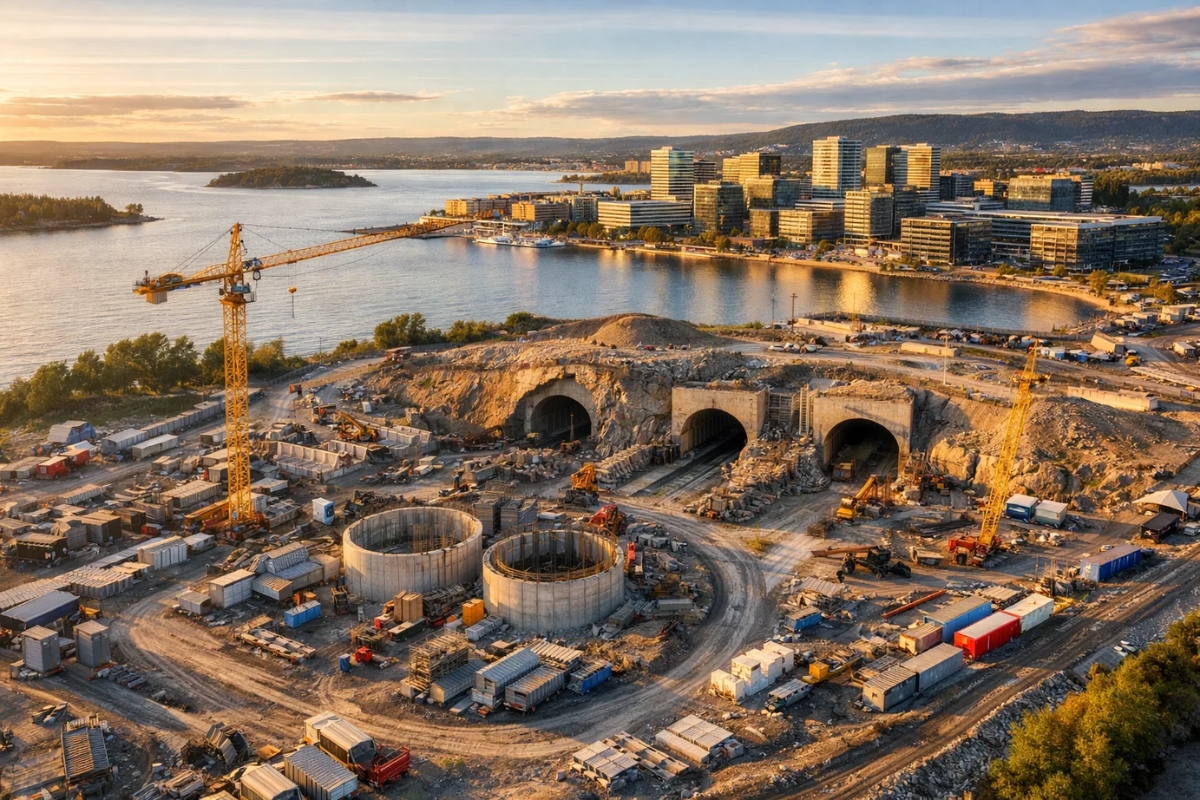


In Oslo, The City Council Completed The Construction Of The Fornebu Line With 7.7 Kilometers In Length And An Estimated Investment Of 23.3 Billion Norwegian Kroner To Connect Majorstuen To Fornebu, Triggering Urban Expansion, Expected 11 Thousand Housing Units And 20 Thousand Jobs And Catching The Attention Of The European Infrastructure Sector.
The City Of Oslo Is At The Center Of One Of The Largest Urban Mobility Projects In Norway. This Is The Fornebu Line, A New Extension Of The Subway Connecting Majorstuen To Fornebu Through A Continuous System Of Underground Tunnels.
The Project Emerges In An Area That Went Decades Without Subway Connection, Even After Hosting The Main Airport Of The Norwegian Capital Until 1998. Now, The Transformation Is Profound And Involves Population Growth, New Businesses, And A Complete Reconfiguration Of Local Mobility.
With 7.7 Kilometers In Length And Six Fully Underground Stations, The Fornebu Line Is Considered Strategic For The Future Of Oslo.
-
They exchanged the idea of a large house for a 35 m² warehouse, spent US$ 12,000 on the structure, and created a tiny house in Colorado with space to live and work.

-
A newly opened terminal in the middle of the Amazon has begun transporting soy and corn through Amapá, eyeing the queue of ships that is congesting the ports in the South.

-
Goodbye to old tiles: renovation technique without construction transforms bathrooms in a few hours, eliminates debris, and reduces costs with coverings using special paints, high-resistance adhesives, and modern finishes that completely renew the space.
-
Goodbye to the traditional clay brick: Indian startup transforms burnt straw into a carbon-negative brick that costs half, insulates better, and even removes CO2 from the air.


New Underground Line Connects Majorstuen To Fornebu And Changes The Transport Map In Oslo
The New Subway Line Will Have Six Stations: Skoyen, Vaekerø, Lighting, Fornebu Gate, Flight Control Tower, And Fornebu.
In Majorstuen, The Tracks Will Integrate With The Existing Oslo Subway Network, Expanding The Capital’s Connectivity.
The Fornebu Area, Which Previously Depended On Other Mobility Solutions, Now Has A Direct Connection To The City Center. What Once Seemed Distant Will Now Be Connected By Underground Tracks.
Project Began To Be Planned In 1919 And Finally Took Off More Than A Century Later
The First Plans For A Railway Line To Fornebu Emerged Back In 1919. In 1939, The Peninsula Became Home To The Main Airport In The Oslo Region.
Even After The Airport Closed In 1998, When The New Terminal In Gardermoen Was Inaugurated, The Subway Did Not Immediately Reach The Area.
Only In 2011 Was The Final Proposal Linking Fornebu To Majorstuen Approved. The Project Was Formally Created In 2017 And Foundation Works Started In 2020. The Change Happened After Decades Of Debates And Suggestions Made In The 1990s And Early 2000s.
Engineering Faces Complex Geology With Deep Tunnels And Large Rock Caverns
The Construction Of The Fornebu Line Involves Significant Technical Challenges. The Tunnel Crosses A Geology Considered Complex, With Folded Structures, Geological Faults, Deep Grooves, Clay Soils, And Low Rock Coverage.
The Project Includes Large Caverns Excavated In The Rock, Long Tunnels, Deep Construction Shafts, And Comprehensive Technical Installations.
The Organization Of The Work Functions As An Agency Linked To The City Council Of Oslo, While The Technical Development Is Led By The Fornebubanen Planning Group, Formed By The Companies Cowi And Multiconsult.
The Most Striking Detail Is The Underground Dimension Of The Project, With Stations Positioned Dozens Of Meters Below Ground Level.
11 Thousand Houses And 20 Thousand Jobs Expected Boost Urban Expansion In Fornebu
The Fornebu Line Was Not Designed Just For Transport. It Is A Central Piece In The Growth Plan For The Region.
There Are Plans For 11,000 New Housing Units In Fornebu, In Addition To The Creation Of 20,000 New Jobs. To Reduce The Number Of Cars, The Strategy Was To Offer An Efficient And Environmentally Friendly Alternative.
The Area Above The Tunnels Also Integrates The Project And Contributes To Urban Development. The Expected Impact Involves Less Traffic, Higher Property Value, And Reorganization Of The Flow Of People In The Norwegian Capital.
Investment Of 23.3 Billion Kroner And Division Into Large Construction Contracts
The Construction Costs Of The Fornebu Line Are Estimated At 23.3 Billion Norwegian Kroner In 2021 Values, According To An External Quality Assurance Report Known As KS2.
The Financing Occurs In Partnership. Half Of The Amount Comes From The Government, While The Rest Involves Oslo Package 3, Urban Environment Agreements, And Contributions From Landowners. The Cooperation Includes The City Council Of Oslo And The Municipality Of Akershus.
The Construction Has Been Divided Into Several Contracts, All Subject To Public Procurement Standards And The TransQ Qualification System.
Among The Highlights Are:
- K1A Excavation With An Investment Of 280 Million Kroner
- K1B Tunnel With 2.7 Kilometers In Length And 250,000 Cubic Meters Of Crushed Stone, Totaling 1.4 Billion Kroner
- K2D Tunnel With 1.7 Kilometers And Up To 240,000 Cubic Meters Of Excavated Material
- Fornebu K5A Station With 120,000 Cubic Meters Of Concrete And An Investment Of 2.25 Billion Kroner
- Skøyen K10 Station With A Depth Of 45 Meters And A Contract For 1.658 Billion Kroner
Some Platforms Reach 23, 25, 28, And Even 45 Meters Below Ground. The Figures Reveal The Scale Of The Project And Explain Why The Work Is Considered One Of The Most Significant In Recent Norwegian Infrastructure.
The Fornebu Line Represents Over A Century Between Idea And Execution, Billions In Investment, And A Structural Transformation In Oslo’s Mobility. The Project Combines Complex Engineering, Urban Planning, And Clear Environmental Goals, Consolidating A New Growth Axis For The Capital Of Norway.
Do You Believe That Large Underground Projects Like This Can Be A Solution For Traffic In Major Brazilian Cities? Share Your Opinion In The Comments.
Suggested SEO Keywords: Fornebu Line, Oslo Subway, Fornebubanen, Infrastructure Investment, Underground Tunnel Norway, Urban Expansion Oslo, Public Transport Norway, Billion-Dollar Projects Europe, Sustainable Mobility, Subway Construction, Underground Engineering, Deep Stations