






 Portuguese
  Spanish
  4 min of reading
  4 comments


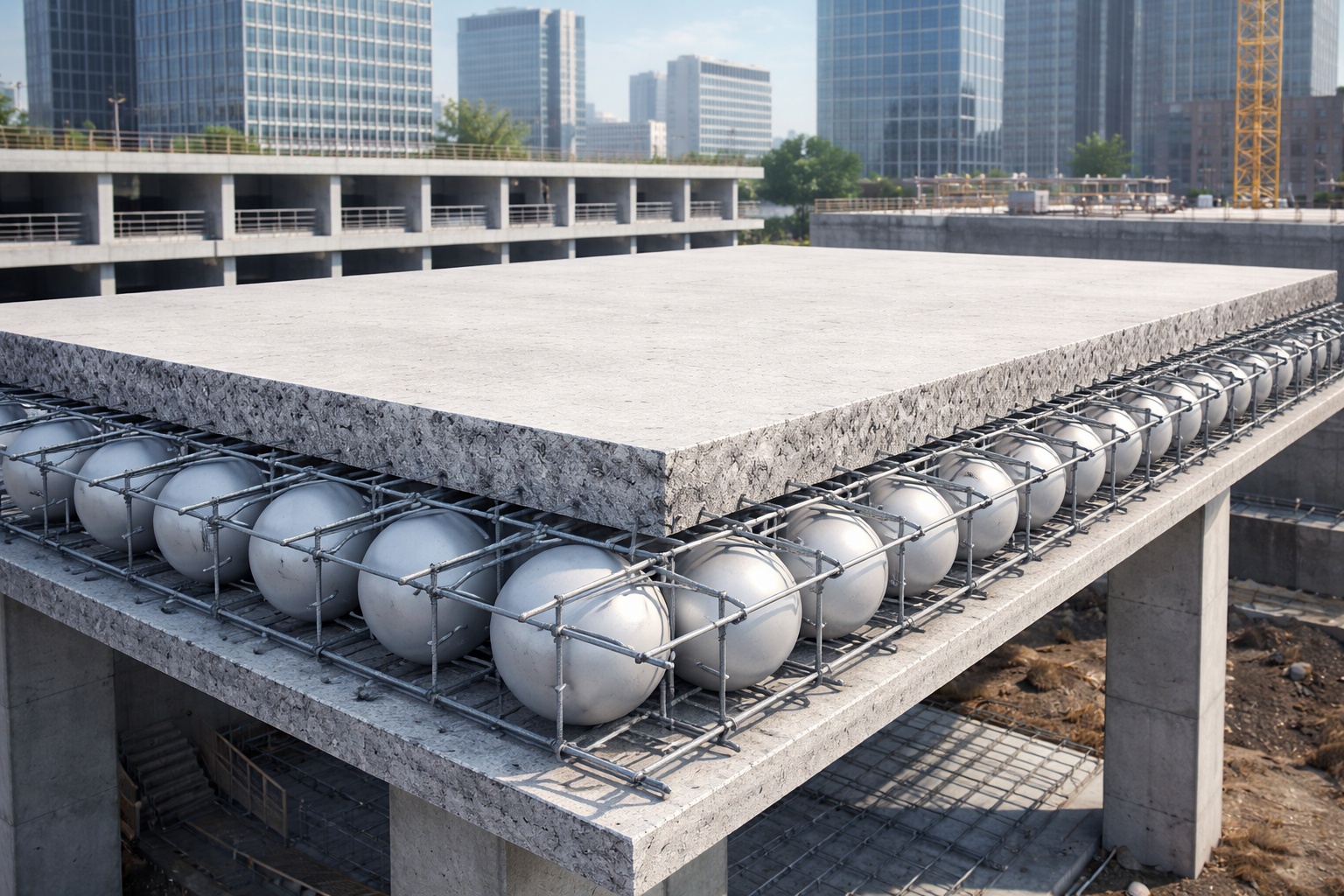


Slab with ‘Plastic Spheres’ Reduces Up to 40% of Concrete, Relieves the Structure, and Is Already Used in Buildings and Parking Lots as an Alternative to Solid Slabs.
For decades, solid slabs have dominated almost all residential, commercial, and garage building projects. The principle has always been simple: fill the entire area with reinforced concrete, even in regions where the material does not work structurally. The slab with plastic spheres, technically known as systems like BubbleDeck, emerges precisely to address this invisible waste by removing concrete from neutral zones of the slab without compromising strength.
The result is a structural solution that maintains performance while drastically reducing the volume of material used.
How Plastic Spheres Work Within the Slab
The concept is ingenious and, at the same time, simple. Recycled plastic spheres are positioned between the upper and lower rebar of the slab, creating controlled internal voids. In these regions, the concrete practically does not contribute to flexural strength.
-
Government announces R$ 370 million for those who preserve the forest and an unprecedented initiative places traditional Amazonian communities at the center of conserving a vast area.

-
A family from Martins, in the interior of RN, planted seeds in their backyard that no one remembered where they came from and harvested a green and yellow fruit resembling the Brazilian flag; the nickname “World Cup pumpkin” caught on before they discovered what had actually grown there.
-
Most people use a tape measure their whole lives without ever understanding why some numbers are painted red; the explanation lies in a 16-inch spacing that is invaluable for those who work with walls and wood.
-
Without ATMs, with social networks blocked and travel controlled by the government, Eritrea challenges the modern world and reveals why it is called the “North Korea of Africa.”

By eliminating this excess, the slab begins to work more efficiently, using concrete only where it is truly necessary.


In practice, the slab behaves like a two-way ribbed slab, but without the complexity of traditional forms.
Reduction of Up to 40% in Concrete Consumption
One of the most striking data points is the material savings. Depending on the span and structural design, the reduction in concrete use can reach up to 40% compared to conventional solid slabs.
This savings not only impacts the direct cost of concrete but also transportation, pumping, execution time, and associated CO₂ emissions from the construction.
Less concrete also means less steel in many cases, as the total load of the structure decreases.
Lighter Structures and Less Demanding Foundations
By reducing the self-weight of the slab, the system with plastic spheres creates a cascading effect throughout the building.
Beams, columns, and foundations begin to receive lower loads, which allows for slimmer designs with the BubbleDeck slab system. In multi-story buildings, this accumulated reduction can represent significant savings across the entire structure.
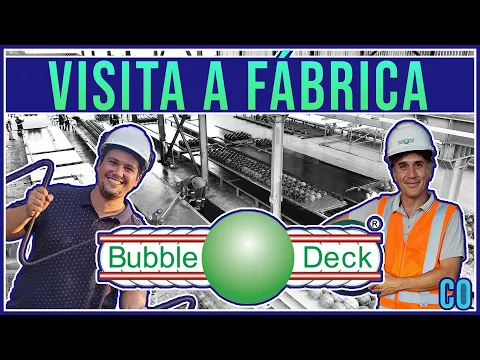
That is why the system has been widely adopted in parking lots, commercial buildings, hospitals, and corporate buildings, where large spans and distributed loads are common.
Real Applications of the BubbleDeck Slab System in Construction Around the World
Although it seems novel to many professionals, the slab with plastic spheres has been used for years in countries in Europe, North America, and Asia.
Large institutional buildings and multi-story garages have adopted the system precisely because of the combination of structural performance, material savings, and construction speed.
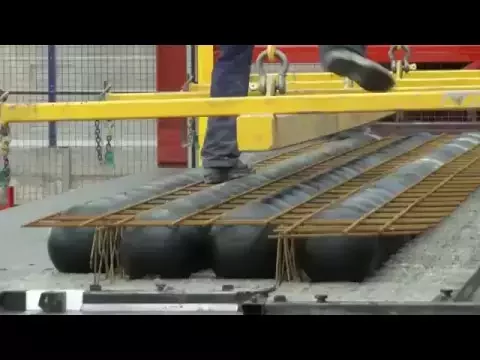
In many cases, the slab is executed with pre-assembled panels that arrive at the construction site with the spheres already positioned, reducing errors and accelerating the schedule.
Sustainability and Plastic Reuse with BubbleDeck
Another factor driving the adoption of this type of slab is the environmental aspect. The spheres are usually made from recycled plastic, giving structural purpose to a material that would otherwise have a high environmental impact.
Moreover, the reduction in cement consumption directly contributes to lowering the carbon footprint of construction, as cement production is one of the largest sources of emissions in the sector.
Thus, the solution meets both technical criteria and the increasingly common sustainability requirements in large projects.
Execution Similar to Traditional Slab
From the perspective of the construction site, the change is smaller than it seems. The slab with plastic spheres uses conventional concreting, traditional rebar, and processes familiar to workers.
The difference lies in the correct positioning of the spheres and the control of coverage, which is already covered in the technical manuals of the system.
This facilitates adoption, as it does not require special equipment or highly specialized labor.
Why Is This Slab Still Little Known in Brazil?
Despite the advantages, the slab with plastic spheres still faces resistance in more conservative markets.
Many projects follow traditional patterns out of habit, not efficiency. Additionally, the lack of detailed technical knowledge causes engineers and builders to oversize structures for safety, even when more efficient solutions are already consolidated internationally.

As more projects utilize the system and performance data accumulates, the trend is that this technology will cease to be an exception and become part of the standard of modern construction.
A Technology That Eliminates Structural Waste
In the end, the slab with plastic spheres is not an aesthetic revolution, but a rational evolution of structural engineering.
It starts from a simple question “Why use concrete where it does not work?” and delivers a practical, economical answer already tested in real construction projects.
By reducing up to 40% of concrete, relieving the structure, and maintaining performance, this type of slab shows that the construction industry still has plenty of room to innovate, even in elements considered “solved” for decades.





Acho que as boas novidade precisam vim trazendo benefícios, e esta oarece que sim, vamos ver se os construtores vão olhar com esses olhos , e buscar aprendizado oara difundir o conteúdo e solucionar dúvidas!!!!
No Brasil onde estão as fábricas, sou de MG e terei interesse no conteúdo!
Existe uma fábrica de formas para laje nervurada em Minas Gerais, ela chama ATEX DO BRASIL eles trabalham com locação e vendas das formas e também espaçadores de ferragens
A tecnologia sempre nos surpreende e em muitas vezes há questionamentos por técnicos que pensam que a evolução traz insegurança e comprometimentos na estrutura.
É preciso ir sempre em busca do conhecimento e da evolução em todas as esferas possíveis