






 Portuguese
  Spanish


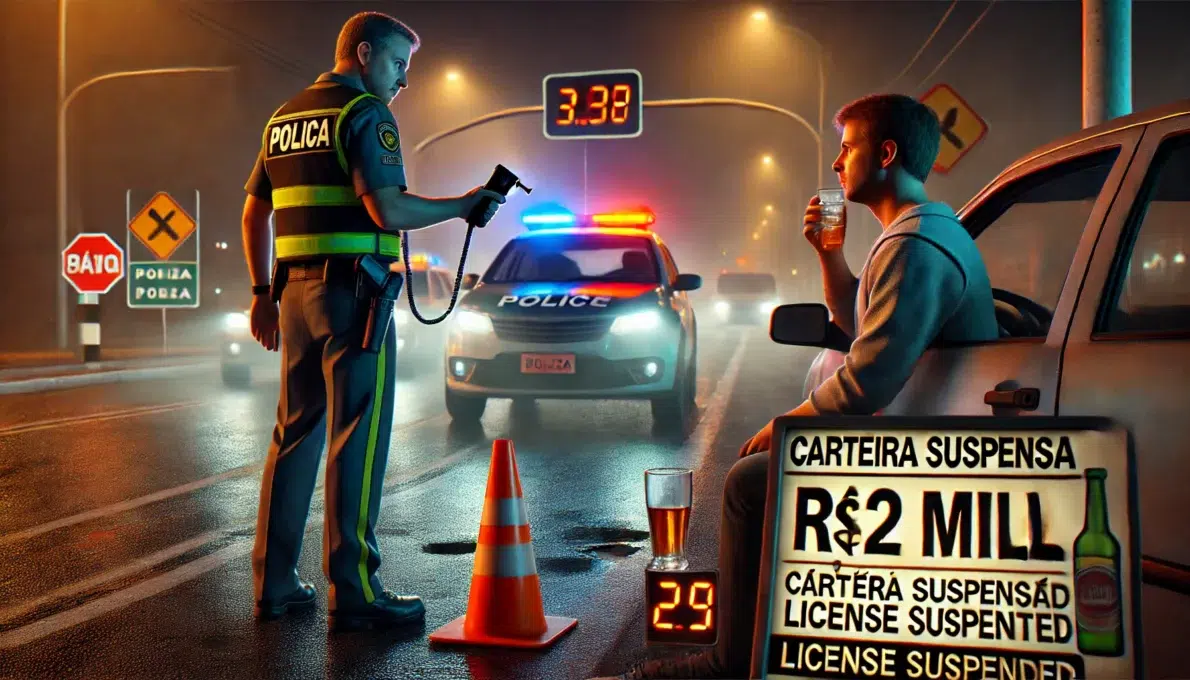

STF Decides That Refusal to Take Breathalyzer Test Does Not Exempt Drivers from Penalties of Dry Law, Which Promises Fine of R$ 2.9 Thousand Plus Suspension of Driver License (CNH)
The Federal Supreme Court (STF) concluded that, even if the driver refuses to take the breathalyzer test, they will still be subject to the penalties established by the Dry Law. The fine set is R$ 2,934.70, and the suspension of the driver license (CNH) for 12 months.
The decision was confirmed on September 19, 2024, validating the constitutionality of article 165-A of the Brazilian Traffic Code (CTB), which was introduced by Law No. 13,281/2016.
The Extraordinary Appeal No. 1079, under the responsibility of Minister Luiz Fux, raised issues about possible violations of individual rights and guarantees, such as the right not to produce evidence against oneself and the presumption of innocence. However, the STF recognized that the measure is legitimate, arguing that refusal to take the breathalyzer test compromises safety on the roads and puts many lives at risk.
-
Brazilian Electric Motorcycle Once Promised 180 km Range and Affordable Price, Now Faces Uncertain Future Amid Delays and Manufacturer’s Bankruptcy

-
Chery Stockman 2026 Unveiled: Larger Than Toyota Hilux, Featuring Unique Plug-In Hybrid Diesel Engine, 3.5 Ton Towing Capacity, and 1,000 kg Payload to Challenge Traditional Off-Road Trucks

-
Does a Flag on Your Car’s Hood Overheat the Engine? Expert Reveals the Overlooked Danger for Drivers
-
How to Identify and Remove Superficial Scratches Before Spending on Car Bodywork


244 Thousand Drivers Were Fined for Refusing to Take Breathalyzer Test, Between 2016 and 2024
The seriousness of the situation involving alcohol and driving is evidenced by the data. According to the Federal Highway Police (PRF), during the first five months of 2024 alone, alcohol consumption was responsible for 1,507 accidents on Brazilian federal highways. Additionally, between 2016 and 2024, more than 129,000 infractions related to driving under the influence of alcohol were recorded, and another 244,000 drivers were fined for refusing to take the breathalyzer test.
“This decision was highly anticipated by all professionals working in traffic safety in Brazil. While education does not manage to transform the mindset of Brazilian drivers, who still insist on driving after consuming alcohol, strict enforcement and penalties are essential to reduce traffic fatalities,” stated Alysson Coimbra, scientific director of the Minas Gerais Traffic Medicine Association (Ammetra).
According to traffic safety experts, the STF’s decision marks a fundamental step in the fight against violence on the roads. “Refusal to take the breathalyzer test allowed many offenders to escape punishment. We need stricter laws to combat this dangerous behavior that takes so many innocent lives every year,” highlighted Coimbra.
New Decision in Dry Law, Which Promises Fine and Loss of CNH, Will Help Reduce Accidents Due to Alcohol Use
With this new decision, it is expected that the Dry Law will become even more effective, helping to decrease accidents and deaths on Brazilian roads. Between January and May 2024, alcohol use was behind 1,507 accidents on federal highways. From 2016 to 2024, there were 129,599 infractions recorded for violations of the Dry Law, in addition to 244,594 fines for refusal to take the breathalyzer test.
“The Dry Law, in its 15 years of existence, has been responsible for a 76% reduction in accidents caused by the combination of alcohol and driving. This clearly demonstrates that the legislation works and saves lives. Several countries have adopted our legislation as an example. Now, with this STF decision, we need to intensify enforcement throughout Brazil,” concluded Coimbra.


E para filho menor de idade de influencer dirigindo carro importado um tapinha nas costas.
Concordo plenamente,mas tinha que ter um **** pra quem usa drogas e depois saí louco por aí dirigindo, assim como o bafômetro.
É isso aí bêbado e drogado não deve dirigir, e se recusar a fazer o **** do bafômetro é porque está admitindo a culpa.