Portuguese
  Spanish



Swedish brand combines functionality, aesthetics, and technology to consolidate one of the most recognized trajectories in the global home appliance sector
A trajectory of great impact in the global home appliance market began in 1919, in the city of Stockholm, Sweden. Electrolux was born from the merger between Elektromekaniska and Lux, in a union orchestrated by Axel Wenner-Gren, a name associated with the creation of the brand. Since then, the company has transformed household products into symbols of practicality, technology, and Scandinavian design. Refrigerators, stoves, microwaves, washers, dishwashers, and vacuum cleaners began to carry an identity linked to innovation and modern living.
The origin of the brand explains part of its global strength. Lux manufactured kerosene lamps for railway stations since 1901 and launched, in 1912, the electric vacuum cleaner Lux 1. The new company, officially formed on August 1, 1919, combined industrial experience and commercial vision. Shortly after, in 1921, the Model V vacuum cleaner incorporated mobility into the design, with metal feet similar to sleds, facilitating household cleaning. In 1925, the so-called D refrigerator marked another advancement by improving the preservation of perishable foods.
Technical revolution began with vacuum cleaners and refrigerators
International expansion gained momentum in the following years and led Electrolux to establish factories in Germany, England, and France. World War II interrupted part of the industrial operations, but the company produced air filters for the Swedish armed forces during this period. With the end of the conflict, the company resumed its production and expanded its portfolio. Vacuum cleaners and refrigerators remained relevant, but the brand began to manufacture electric motors, food processors, industrial machines, and other equipment.
-
99Food Under Investigation by Brazilian Consumer Protection Agency for Lack of Price Transparency, Faces Potential $2.8 Million Fine

-
Race for data centers in Brazil increases pressure on critical energy

-
Growth without profit has become one of the most costly management mistakes in Brazil.

-
Anvisa blocks batch of antibiotic after unexpected discovery in sealed vial and also suspends clindamycin with impurities and saline solution used in intravenous application



Growth also appeared in the diversification of the domestic line. In 1930, Electrolux launched compact refrigerators, similar to today’s mini-fridges. In 1931, it introduced the first air conditioner and the first air refrigerator. By 1951, it brought to market the first washing machines for domestic use. Shortly after, in 1959, came the dishwashers and refrigerators combined with freezers, increasing the brand’s presence in homes.
Innovation consolidated the brand in the sector
Electrolux maintained innovation as a growth axis during the following decades. In 1993, it introduced the first CFC-free refrigerator, reinforcing its role in less environmentally aggressive solutions. In 2000, it created a refrigerator with a flat screen on the door and wireless connection. The following year, it launched the Trilobite robotic vacuum cleaner, equipment that moved independently around the environment and anticipated a trend now common in the automated cleaning sector.
Other launches reinforced this image of pioneering. In 2004, the Ergorapido arrived, a battery-powered upright vacuum cleaner with an attached portable version. In 2007, the company introduced the UltraSilencer Green, made with recyclable plastic and lower energy consumption. In 2010, the i-Kitchen line brought together microwaves, refrigerators, and stoves with monitors and recipe files, showing how technology was already beginning to change the kitchen experience.
Presence in Brazil gained strength since 1926
Electrolux began its operations in Brazil in 1926, with direct sales in the city of São Paulo. Only in 1950 did the company start assembling vacuum cleaners and floor polishers in the country. After that, the brand began to launch important products for the Brazilian market, such as CFC-free refrigerators, stainless steel finishes, frost-free models, washers, microwaves, and stove lines.
The national advancement also involved brand experience and local production. At the end of 2010, the company launched Casa Electrolux in São Paulo, as the brand’s first flagship store in the world. The space was created to bring consumers closer to launches, gastronomic events, and new product categories. Currently, the Brazilian operation includes factories in Curitiba, São Carlos, and Manaus, maintaining a presence in refrigerators, freezers, washers, dryers, microwaves, stoves, air conditioning, and vacuum cleaners.
Scandinavian design became a competitive advantage
Design has always played a central role in the construction of Electrolux. The company develops products with attention to how consumers think, feel, and use appliances in daily life. This vision helps explain the brand’s adaptation to different markets, as its products combine aesthetics, functionality, and local needs. In 2003, the Electrolux Design Lab expanded this positioning by encouraging students to create solutions for smaller homes, healthy eating, sustainable living, and family well-being.
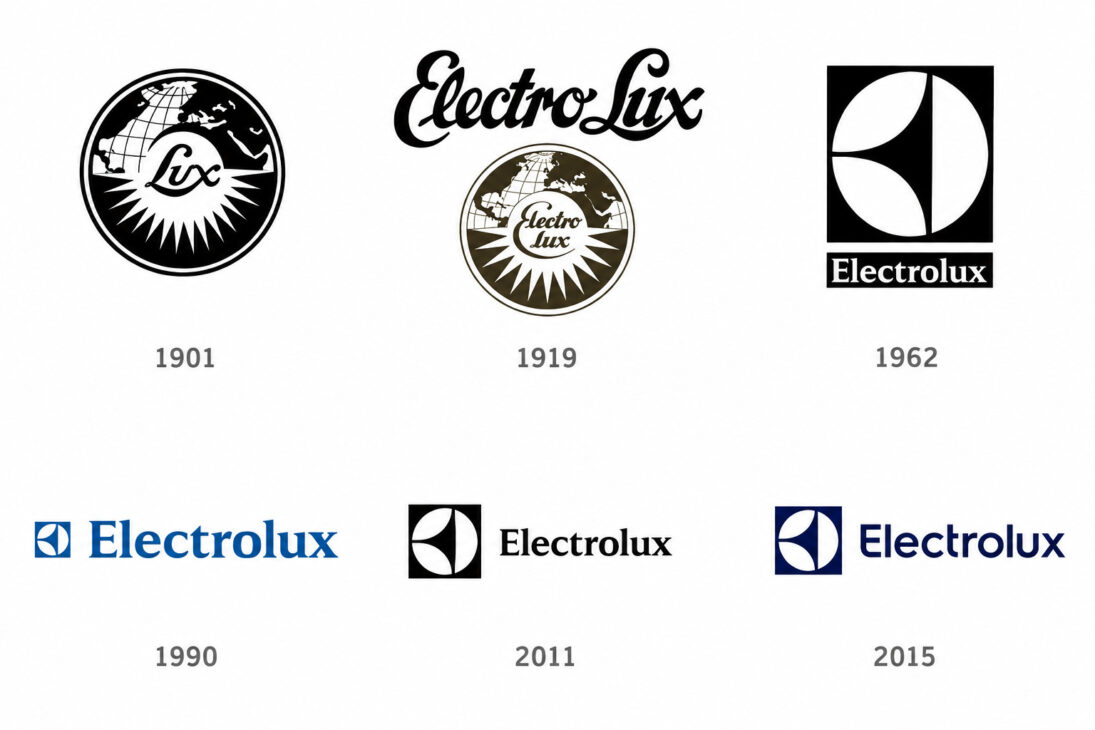
The visual identity accompanied the company’s international expansion. In 1961, Electrolux held a worldwide contest to choose a new logo. The symbol created by Carlo L. Vivarelli was selected for being clear, striking, timeless, and easy to apply in products and campaigns. Over time, the brand underwent new visual updates but kept the symbol as a central element of recognition.
Brand remains associated with the modern home
Electrolux has built a strong presence by combining technology, practicality, and design in products used daily. The brand has become known in kitchens, laundries, and professional environments, with lines aimed at domestic consumers, hotels, restaurants, and industrial kitchens. Its products have reached different markets, reinforcing the image of a global company with Swedish origins and broad operations.
The centennial journey shows how the brand moved from vacuum cleaners and refrigerators to achieve connected equipment, sustainable solutions, and more complete experiences at home. This evolution explains why Electrolux remains associated with innovation in home appliances.