






 Portuguese
  Spanish


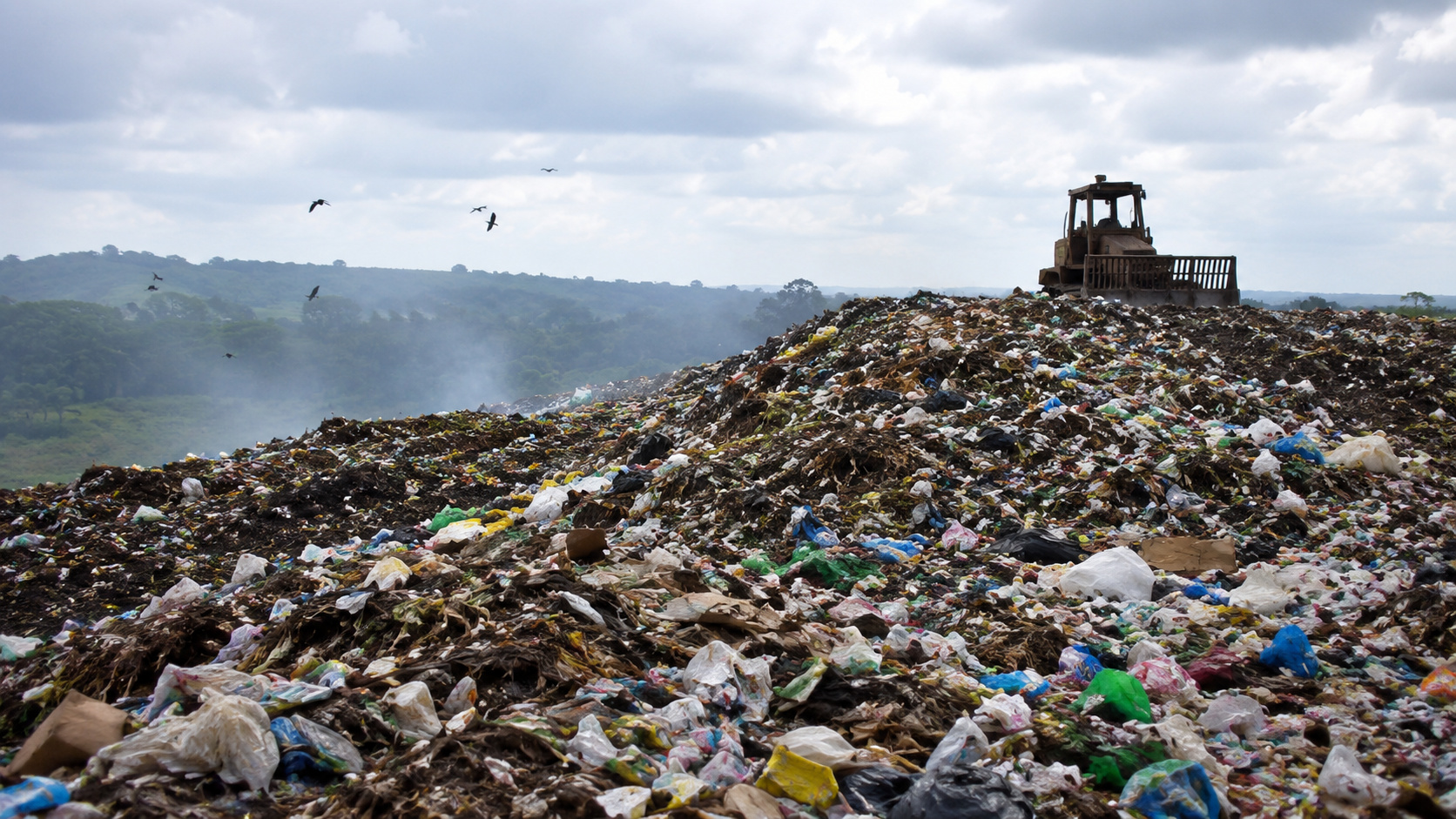

RN still has 176 active dumps. Understand the challenges of solid waste management, landfill expansion, and environmental sustainability.
Rio Grande do Norte still faces an environmental problem that persists even after years of discussions and deadline extensions. Data from the RN Solid Waste Panel, a tool from the Public Ministry of Rio Grande do Norte (MPRN), indicates the existence of 176 active dumps and 229 mapped areas of illegal disposal throughout the state.
According to information from Agora RN on June 5, the situation contradicts the guidelines of the National Solid Waste Policy, created by Law No. 12.305/2010, which mandated the closure of dumps and their replacement with suitable structures, such as landfills. Despite the progress made in recent years, experts and public managers acknowledge that there are still significant obstacles to achieving this goal.
Dumps remain a challenge for RN even after recent advances
The dump scenario in RN still concerns environmental agencies and public managers. Although dozens of municipalities have transitioned to more suitable solid waste disposal systems, many cities continue to struggle to permanently abandon illegal disposal areas.
-
A $18 Trillion Treasure of Nickel, Cobalt, Copper, and Manganese Lies 4,000 Meters Deep in the Pacific Ocean, Poised to Transform Electric Cars, Batteries, Renewable Energy, and Global Industry

-
Stand-Up Paddle Outing Turns Dangerous as Man Steps on UK’s Only Venomous Snake, Ends Up Hospitalized with Severely Swollen Leg
-
Europe Sizzles: Intense Heatwave Disrupts Daily Life, Closes Schools, Strains Power Grids, and Raises Concerns Over Potential Deaths
-
Ohio Carpenter Finds 308-Gram Meteorite the Size of a Baseball After Dreaming of Its Location


According to information monitored by the MPRN, the problem is not restricted only to municipalities that still use dumps as the final destination. In some cases, old disposal areas continue to be used temporarily as transfer points before sending the waste to a landfill.
This context shows that the challenge goes beyond the physical closure of dumps and involves creating an efficient and permanent environmental management structure.


What explains the persistence of dumps in the state
Justice promoter Kaline de Andrade, coordinator of the Operational Support Center for Environmental Defense, points out that several factors help explain the persistence of dumps in RN.
Among the main obstacles are:
- Lack of adequate infrastructure for final waste disposal;
- Absence of effective waste management fee collection;
- Management changes that disrupt public policies;
- Technical limitations in some municipal administrations;
- High transportation and operation costs.
Additionally, for many years, the environmental and sanitary impacts caused by dumps did not receive the necessary priority within local public policies.
Solid waste requires a structure that still does not reach the entire state
The management of solid waste depends on an integrated network of collection, transportation, treatment, and final disposal. When one of these stages fails, the entire system is impacted.
Currently, RN has licensed landfills in operation, but the geographical distribution of these structures still does not fully serve all regions. According to the Public Prosecutor’s Office, areas like Seridó and Vale do Açu face difficulties due to the absence of nearby facilities.
This means that many municipalities need to travel long distances to ensure the correct disposal of solid waste, significantly increasing operational costs.
Sanitary landfill is considered a key piece to reduce environmental impacts
The replacement of dumps with an adequate sanitary landfill is one of the main goals of the National Solid Waste Policy.
Unlike dumps, the sanitary landfill has environmental control systems that prevent soil and water resource contamination. These structures also have mechanisms for leachate treatment and monitoring of gases generated by waste decomposition.
Among the benefits of a sanitary landfill are:
- Reduction of environmental contamination;
- Lower proliferation of disease vectors;
- Control of gas emissions;
- Greater safety for nearby communities;
- Compliance with legal and environmental requirements.
For this reason, the expansion of coverage of these structures is seen as essential for the advancement of environmental sustainability in the state.
High costs hinder the correct disposal of waste
The Federation of Municipalities of the State of RN (Femurn) acknowledges that there have been significant advances in recent years. According to the entity, 102 municipalities already send their waste to one of the three landfills operating in the state, while another 10 use structures located in Paraíba.
Even so, costs remain one of the biggest obstacles.
The transportation of solid waste to the landfills represents a significant expense for many municipalities, especially those further from treatment centers. In many situations, municipalities manage to start the adaptation process but find it difficult to maintain it continuously.
Environmental sustainability also depends on selective collection
Experts point out that strengthening environmental sustainability necessarily involves expanding selective collection.
Without the proper separation of recyclable materials, the entire collected volume needs to go for treatment or final disposal, increasing system costs. Additionally, materials that could return to the production chain end up occupying space in landfills.
The expansion of recycling generates environmental, social, and economic benefits. It also strengthens the work carried out by waste pickers and cooperatives, who play a fundamental role in the solid waste chain.
Regional consortia gain strength as an alternative for municipalities
Femurn advocates for the regionalization of services as one of the most viable solutions to overcome current challenges.
Through public consortia, different cities can share infrastructure and divide costs related to the transportation and disposal of solid waste.
The entity also considers the implementation of transfer and transshipment stations important, which help reduce distances and make the system more efficient. This model has been used in various Brazilian regions with positive results.
MPRN supervision increases pressure for the closure of dumps
The Public Ministry of Rio Grande do Norte maintains permanent monitoring of the implementation of the National Solid Waste Policy.
Among the measures adopted are:
- Conduct Adjustment Terms (TAC);
- Non-Prosecution Agreements (ANPP);
- Periodic inspections;
- Monthly monitoring of waste disposal;
- Legal actions when necessary.
According to Kaline de Andrade, strategies vary according to the reality of each municipality, but all aim to accelerate the closure of dumps and promote environmentally appropriate solutions.
New ventures can accelerate changes in RN
Despite the challenges, there are positive prospects for the coming years. Femurn highlights the expectation surrounding the operation of the Caicó sanitary landfill and the licensing processes for new ventures planned for Assú and Areia Branca.
In addition, projects funded by state and federal agencies aimed at expanding solid waste infrastructure, especially in the Alto Oeste and Seridó regions, are still awaited.
The expansion of these structures can help reduce transportation distances and increase system efficiency.
What still needs to happen for RN to overcome this problem?
The definitive elimination of dumps in RN will depend on a set of coordinated actions between municipalities, the state government, the federal government, the Public Prosecutor’s Office, and society.
Among the priorities pointed out by specialists are the closure of irregular areas, the expansion of the sanitary landfill network, the strengthening of selective collection, the recovery of degraded areas, and the creation of mechanisms that ensure environmental and financial sustainability for urban cleaning services.
Although the numbers are still concerning, the progress made in recent years shows that there is a path under construction. The great challenge now will be to transform isolated initiatives into a permanent policy capable of ensuring modern and efficient solid waste management in all regions of the state.


