Portuguese
  Spanish


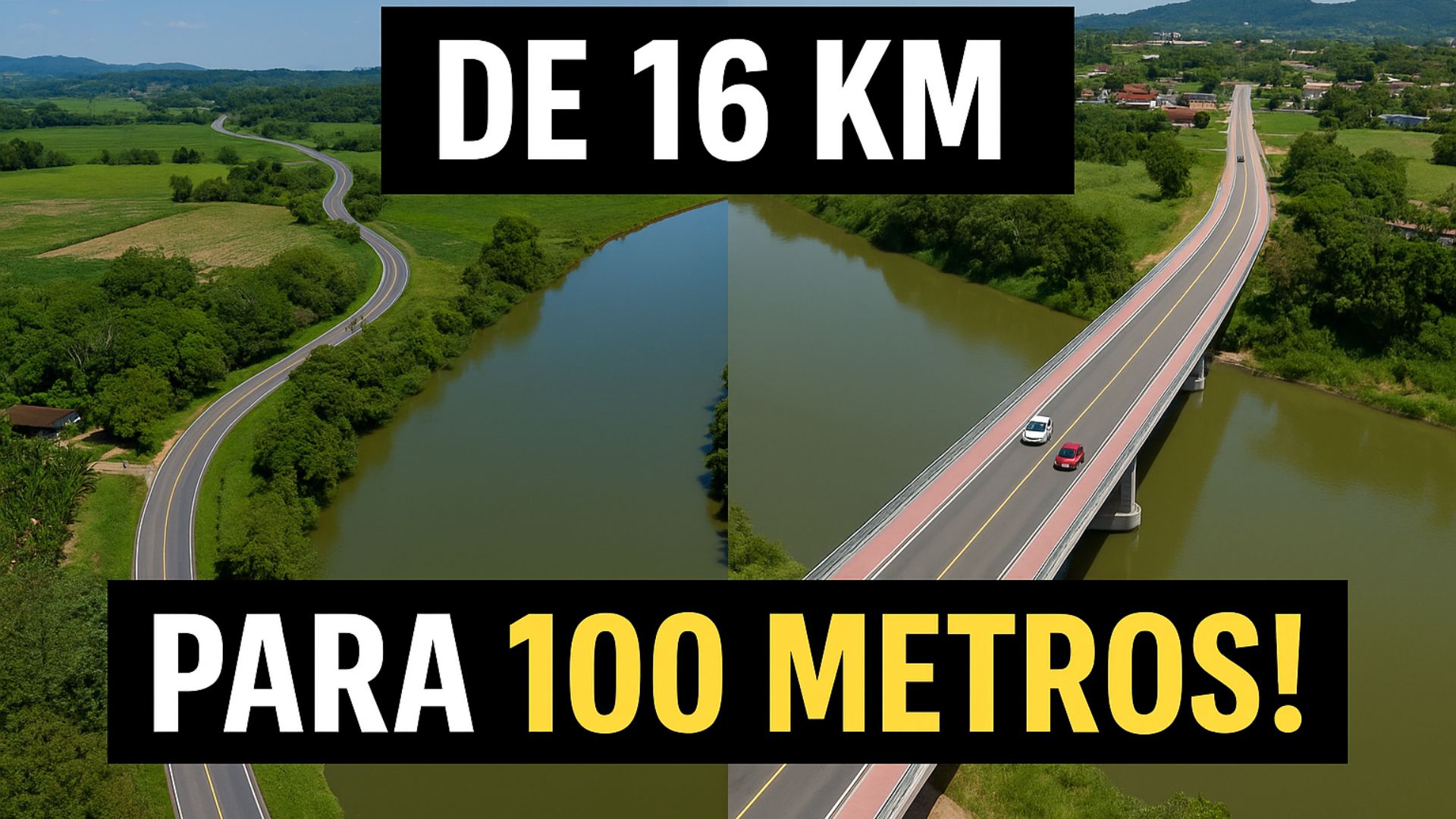

Bridge in Northern Santa Catarina Expected to Shorten the Journey Between Araquari and Guaramirim From 16 Kilometers to 100 Meters, Promising to Modernize Traffic, Boost the Regional Economy, and Improve Mobility for Drivers, Cyclists, and Pedestrians.
A new bridge over the Itapocu River will shorten the connection between Araquari and Guaramirim in Northern Santa Catarina from 16 kilometers to just 100 meters, according to plans approved by the city halls.
The crossing will feature two lanes for vehicles, sidewalks, and bike lanes, aiming to provide a faster and safer passage for those commuting daily between the two municipalities.
Unblocked Mobility Between Araquari and Guaramirim
According to the presented design, the structure will be made of reinforced concrete, with 100 meters in length and 13 meters in width.
-
Abandoned Building in Brazil to Become Biotechnology Unit with $10 Million Investment, Bridging Science, Industry, and Public Health

-
Company Offering “Stones to Diamonds” Scheme Sells Ruined Italian Homes to Brazilians for 1 Euro, Disappears with Promised Renovations, Leaving Buyers in Debt to Italian Tax Authorities Until 2028 Without Property

-
Plastic Packaging Drives Santa Catarina Industry to 230% Growth, Aiming for R$ 500 Million by 2030 Amid Sector Crisis, with New Gearless Line Expanding in Southern Brazil to Compete in South America

-
Flamengo Star Invests in Brazilian Coastal Luxury Real Estate as Itapema Surpasses Balneário Camboriú in High-End Market Growth


The new connection will replace the old suspended bridge, which was closed by Civil Defense after identifying structural issues.
The planned route connects Bananal do Sul Road in Guaramirim to Guamiranga General Road in Araquari, creating a direct link from neighborhood to neighborhood and eliminating long detours via secondary roads.
Currently, without the functional bridge, residents and drivers must make detours to go around the river, increasing travel time and costs.
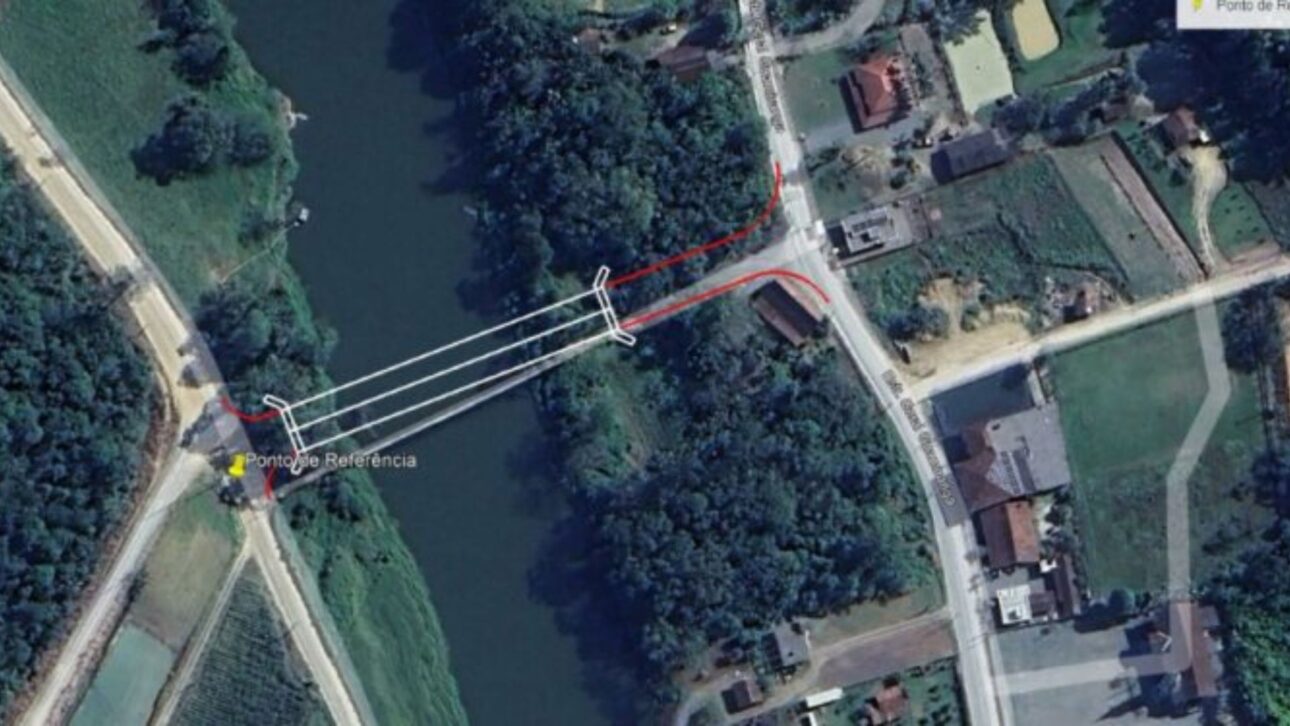
The resumption of a permanent crossing capable of accommodating vehicles is expected to reorganize local traffic flow, reducing bottlenecks and improving connections with service hubs and industries in the region.
Construction and Financing
The estimated investment is R$ 12.1 million, covering earthworks, foundations, drainage, signage, and landscaping in the surrounding area.
City halls reported that the stage of resource capture is underway to enable execution.
The executive schedule still depends on the completion of this financial stage and contractual processes.
The technical package includes interventions for site preparation, common structural works, and bank protection for the Itapocu.
The demolition of the old suspended bridge is also indicated as a requirement related to the implementation of the new project, under the responsibility of the municipality where the structure is anchored.
Road Safety and Accessibility
With two lanes of traffic and a segregated bike lane, the proposal aims to reduce conflicts between modes and enhance the safety of pedestrians and cyclists.
The sidewalks on both sides complement the lateral protections and the vertical and horizontal signage planned, forming a set that meets basic accessibility and circulation requirements.
The width of 13 meters allows for simultaneous traffic in both directions, with space allocated for non-motorized users.
Before the closure, the suspended crossing, built in 1978, had load and usage restrictions, limiting its ability to meet current demand.
The suspension of use by Civil Defense, recorded in May 2025, solidified the need for a definitive solution.
The replacement with a concrete road bridge meets this demand, with greater durability and structural capacity.
Regional Economic Impact
The reduction of the distance to 100 meters is expected to lower logistical costs and travel time for workers, directly affecting the cargo transport that circulates in the region.
The shortening of the route facilitates access to industrial units, agricultural areas around, and urban services concentrated in the municipal headquarters.
During construction, the expectation is for creation of direct and indirect jobs linked to civil construction and associated services.
Alongside the immediate effect on mobility, the bridge may redistribute traffic from the roads that currently absorb the 16-kilometer detour, relieving urban stretches and reducing the wear of pavements used as alternatives.
The shorter connection between neighboring neighborhoods on the banks of the Itapocu is also expected to encourage small businesses, local services, and new residential developments.
These projections are cited by municipal administrations when defending the strategic nature of the project for the economy of Northern Santa Catarina.
Project Status and Next Steps
The city halls of Guaramirim and Araquari approved the project in October after the completion of technical studies.
The document defines dimensions, construction methods, and accesses on both sides of the river.
With the consolidated design, the municipalities have begun to seek funding sources to execute the work, a necessary step before contracting services and starting interventions.
There is currently no public announcement of an official start date for construction.
In the meantime, drivers continue to use alternative routes to bypass the river.
In case of implementation, the project should consider temporary signage, detours, and usual environmental conditions for this type of intervention, as well as safety plans for machinery operation and material transport.
These guidelines are standard in special structural works and are usually detailed in the contracting announcements.
What Changes in the Routine for Those Crossing the Itapocu
For those crossing daily between work and home, the expectation is for a significant reduction in travel time and greater predictability in the route.
At the same time, pedestrians and cyclists will have dedicated infrastructure, which may encourage short trips without a car, especially between riverside neighborhoods.
The elimination of the 16-kilometer detour reduces fuel consumption and associated emissions, an effect that adds to the safety gain of a modern crossing.
Even though the project has been approved, execution depends on funding and the bidding process.
When the bridge becomes operational, the direct connection of 100 meters should establish a new circulation axis and reorganize flows between productive areas and residential zones of the two municipalities.
What changes do you expect in your daily life with the new crossing between Araquari and Guaramirim?