






 Portuguese
  Spanish


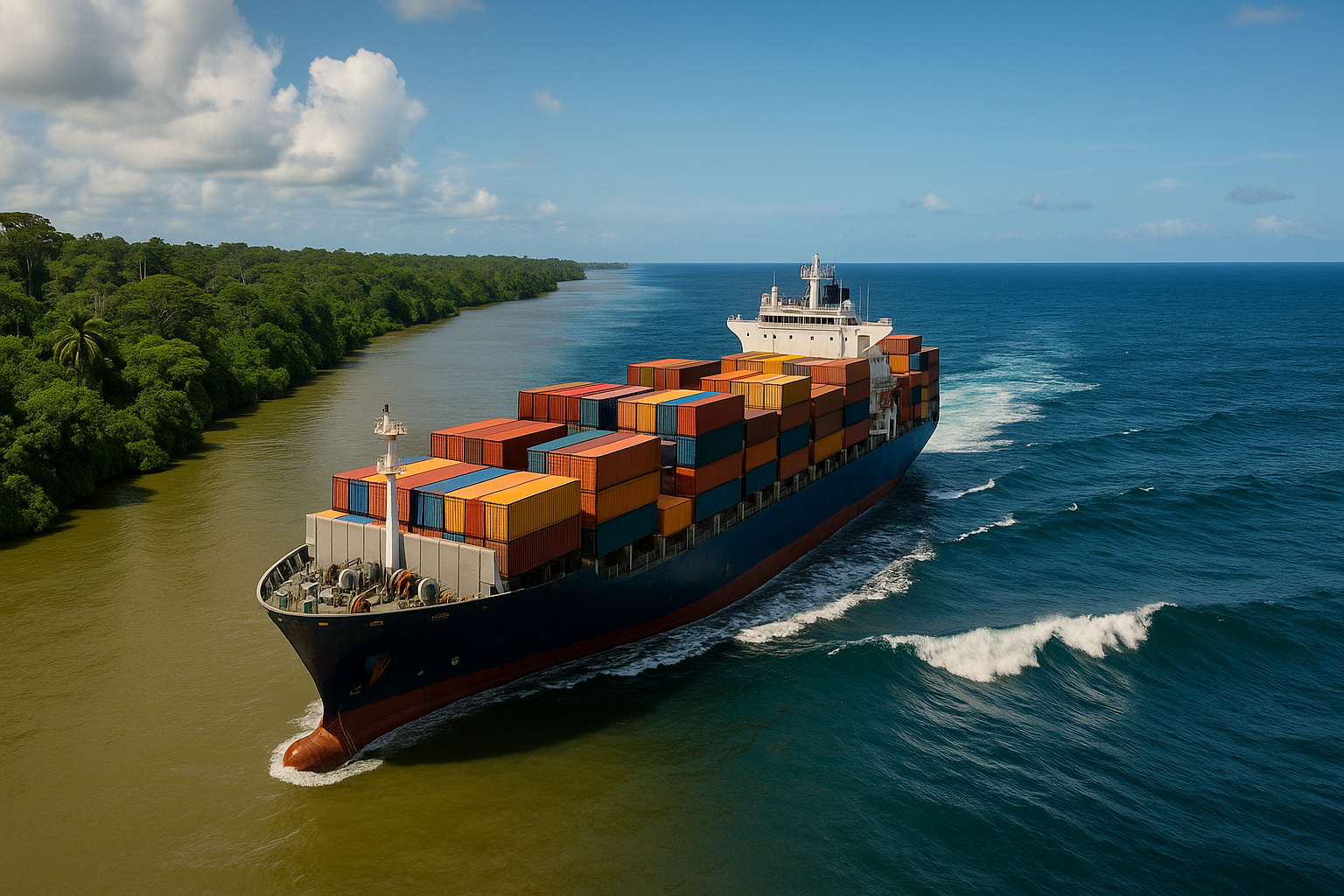
New Amazon Route Strengthens Sustainable Outflow, Boosts Border Economies, and Repositions Brazil in Strategic Corridors of the Pacific.
The conclusion of the route connecting the Amazon to the Pacific Ocean was announced during COP30 in Belém and thus marked a turning point for South American logistical integration. The project links waterways and roadways, thereby transforming access between Brazil, Peru, Ecuador, and Colombia. According to official information, the dredging of the Upper Solimões has completed the final stage, thus ensuring full navigability of the stretch to the Pacific ports.
Minister Simone Tebet stated that the route is already operational even before the inauguration, thus highlighting immediate impact. She explained that the route operated precariously, reinforcing the importance of the new infrastructure. According to Tebet, the corridor is the most sustainable in the region, as it crosses essential rivers such as the Solimões, Madeira, and Amazon.
Technical Investigation Reveals Logistical and Sustainable Potential
The consolidation of the route resulted from multilateral cooperation and thus required coordinated actions with Peru, Ecuador, and Colombia. According to official information, the improvement of navigability in the Upper Solimões made the route continuous, thus enabling full connection between Manaus and strategic Pacific ports.
-
Controversial 6-day Workweek Elimination in Brazil Faces Economic Criticism Over Productivity Claims

-
Itaú to Refund Customers After 14 Years of Unauthorized Credit Card Charges; Agreement Includes No Interest or Adjustments, Deadline by 2028, with Potential Impact of Up to $6.5 Billion

-
Brazilian Company Grows from Bartering Soap for Food to Producing 30 Million Units Monthly, Challenges Global Giants with $100 Million Revenue and Expands into Premium Cosmetics
-
Petrobras and Engeko’s New Investment Plan Promises Billions and Thousands of Jobs, Capturing Market Attention


According to the government, the route will expand the outflow of the Amazonian bioeconomy, thus strengthening supply chains for fish, coconut, açaí, and rubber. The corridor benefits the Free Trade Zone of Manaus, thus improving exports and imports. Additionally, it encourages low-carbon ecological tourism through vessels powered by clean energy.
Economic and Social Impacts Are Already Appearing
The economic effects began to emerge rapidly and thus reveal the transformative potential of the route. In the first half of 2025, Tabatinga’s exports saw a record increase, even before the complete conclusion of the works. According to Tebet, the trade flow of 2024 surpassed the sum of the previous seven years, thus demonstrating the direct impact on a historically vulnerable region.
These results show that the route reorganizes the commercial dynamic of the tripartite border, thus strengthening Amazonian competitiveness while opening new logistical pathways for regional products.
Strategic Paths of the Amazon Route
The Amazon Route integrates the South American connectivity plan and thus occupies a central position in the regional strategy. The Brazilian section is entirely waterway, as it starts from Manaus and follows along the Solimões to Santo Antônio do Içá.
From this point, the corridor splits into two main axes, thus expanding access routes to the Pacific.
- First Axis – Brazil–Colombia: follows the Putumayo River to Puerto Asis, connected by road to the Port of Tumaco.
- Second Axis – Brazil–Peru–Ecuador: moves to Iquitos and thus unfolds into three alternatives:
- Napo River to Francisco de Orellana, with access to the Port of Manta.
- Marañón River to Yurimaguas, connected to the Port of Paita.
- Ucayali River to Pucallpa, linked to the Port of Chancay.
Planning for Sustainable Use
Currently, the Brazilian government is focusing efforts on organizing the use of the route and thus recognizes the need for ongoing regulation. The priority is to ensure that development advances sustainably, thus avoiding common problems in other intense river routes.
Authorities emphasize that all future operations must follow strict technical criteria, thus ensuring environmental protection while the infrastructure is used to expand economic activities.
The Route in Continental Context
The conclusion of the Amazon Route follows a regional movement aimed at expanding integration corridors and thus strengthening connections between South American countries. The project repositions Brazil in strategic logistical networks, and thus broadens the commercial and environmental reach of the Amazon.
What Does the Future Hold for the Amazon?
Experts point out that the route can transform Amazonian development, thus directly influencing riverside populations, production chains, and cross-border trade. However, the future will depend on the balance between preservation and logistical expansion.
Meanwhile, the initial positive impacts reinforce the need for constant governance, thus indicating that the route requires careful monitoring to ensure lasting benefits.
What do you believe should be a priority for the Amazon: accelerating the use of the new route to boost development or advancing more cautiously to ensure sustainable long-term benefits?






-

-

-

-

-

7 people reacted to this.