






 Portuguese
  Spanish


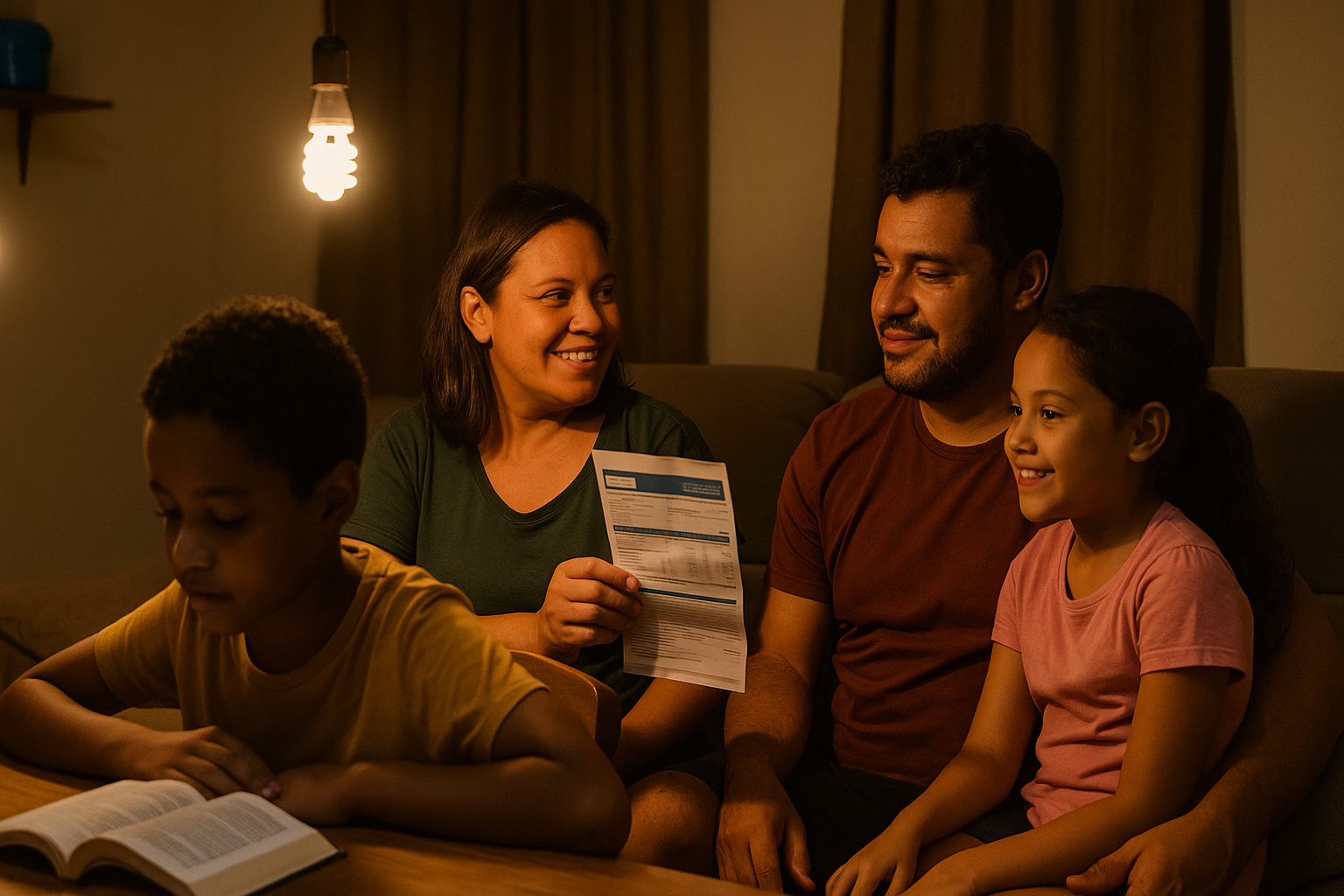


Social Tariff Guarantees Discount on Electricity Bills and Helps Low-Income Families Save with the New Federal Program.
Government Reinforces Discount on Electricity Bills for Low-Income Families
The Federal Government has expanded the reach of the Social Tariff for Electricity (TSEE), a program that offers discounts on electricity bills for low-income families across the country. The measure, updated in July 2025 by Provisional Measure No. 1,300/2025, ensures full exemption for those who consume up to 80 kilowatt-hours (kWh) per month.
The benefit is aimed at families registered in the Unified Registry (CadÚnico) and also for those receiving the Continuous Cash Benefit (BPC).
These groups now have automatic rights to the reduction, without needing to register again with the distributors. Thus, the program facilitates access and increases savings on household bills.
-
Brazil’s July Bolsa Família Payments May Include Extra $150 and $50 for Families with Children, Pregnant Women, and Updated CadÚnico Registration

-
Brazilian Woman Buys €1 House in Sicily, Clears 50 Truckloads of Debris, and Transforms Ancient Ruin into Inspiring Life Project by 2026

-
Havan Competitor Expands in Brazil with 170 Stores, Offering Everything from Stationery to Asian Food and Focusing on Affordable Products to Attract Shoppers

-
Norway’s $2 Trillion Dilemma: How Oil Revenue Created a Massive Savings Fund with Too Much Money to Spend




How the Social Tariff Discount Works
The Social Tariff provides a progressive reduction according to electricity consumption. Families that use up to 80 kWh per month receive a full discount, only paying local taxes — such as ICMS and the public lighting fee.
On the other hand, those who consume a bit more still receive proportional discounts, which encourages conscious energy use. In this way, the program contributes both to the financial relief of families and to environmental balance, reducing waste.
Who Is Eligible for the Benefit
Families registered in the CadÚnico with an income of up to half a minimum wage per person, as well as beneficiaries of the BPC, can apply for the Social Tariff. In these cases, the inclusion is automatic — which avoids bureaucratic hurdles and ensures faster access to the discount on electricity bills.
According to the Ministry of Mines and Energy (MME), the reformulation of the program in 2025 aimed to simplify access and increase reach of the initiative, especially in regions with high social vulnerability.
Savings and Social Impact
The Social Tariff has become an important tool for household savings for millions of Brazilians. By reducing the value of the electricity bill, the program allows low-income families to direct their resources towards food, health, and education.
The impact is also social. With guaranteed energy at a lower cost, families can improve their quality of life and increase the use of basic appliances, such as refrigerators and fans, without compromising their budget.
Financing Comes from the Energy Development Account
The Aneel states that the Social Tariff discount is funded by the Energy Development Account (CDE), maintained with charges paid by other consumers. Thus, the system redistributes costs and maintains the balance of the electricity sector.
The distributors apply the discount to the invoice and then are reimbursed for the amount. Additionally, the CDE finances projects to expand access to energy and the Fuel Consumption Account (CCC), which subsidizes supply in isolated areas, such as in the Legal Amazon.
Social Tariff: A Public Energy Policy Focused on Inclusion
With the reinforcement of the Social Tariff, the government seeks to guarantee, therefore, universal and sustainable access to electricity, a basic right enshrined in law.
Moreover, the initiative strengthens social and economic inclusion, reduces inequalities, and ensures that energy continues to reach the families that need it the most.
This way, the program goes far beyond a simple discount on the electricity bill. In practice, it represents a public policy of social justice and energy efficiency, connecting economy, citizenship, and sustainability in a single action that transforms realities and promotes dignity for millions of Brazilians.


