Portuguese
  Spanish


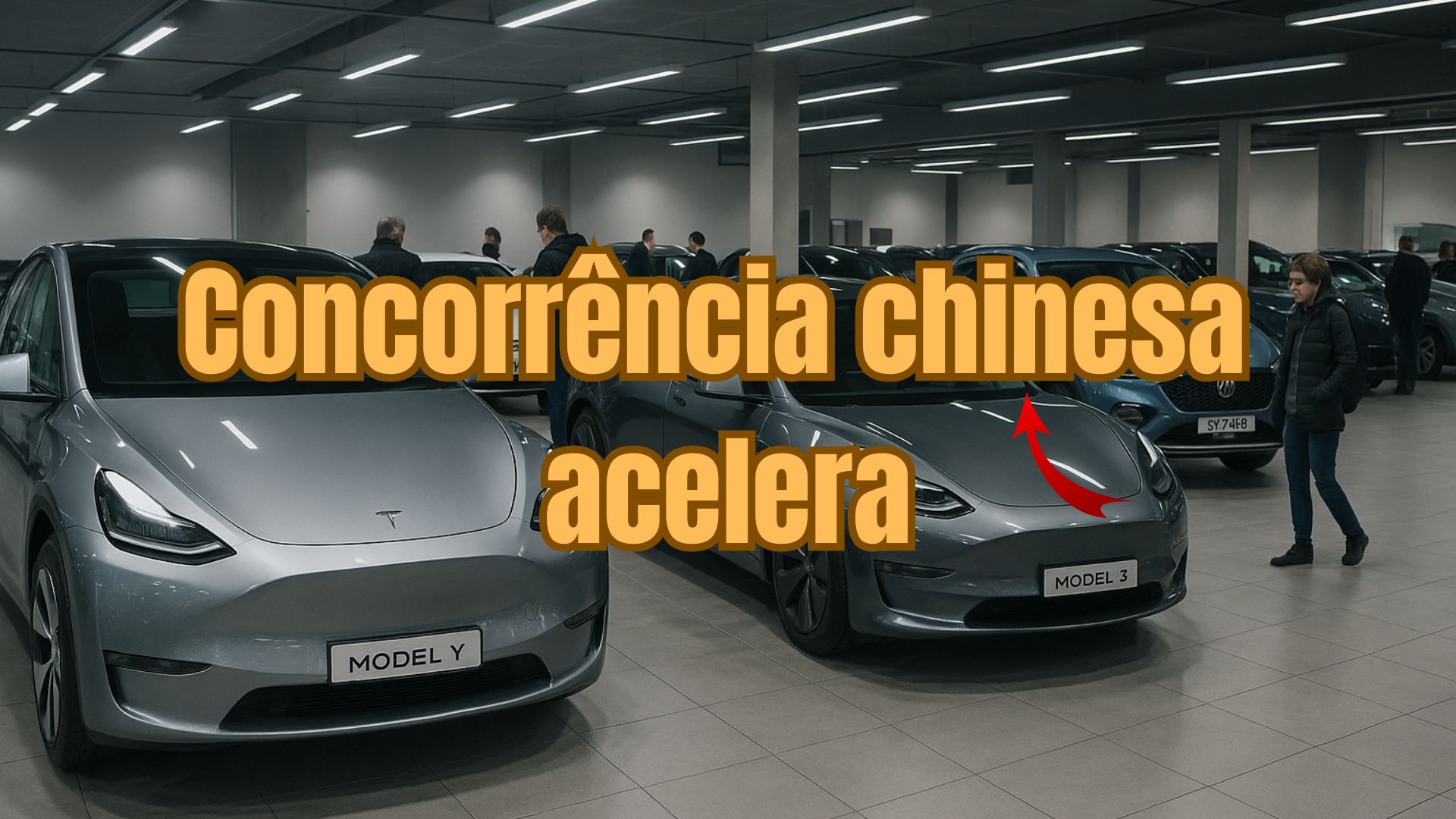

Tesla, led by Elon Musk, is facing one of its most challenging moments since its arrival in Europe. Despite launching cheaper versions of its electric cars, the SUV Model Y Standard, priced at US$ 39,990, and the sedan Model 3, at US$ 36,990, the impact on the European market has been limited.
According to information published by Reuters, the company is trying to regain space in an environment already saturated with affordable electric vehicles, many of them produced by Chinese and European manufacturers offering models below US$ 30,000 — with new options arriving in the market every month.
This reality contrasts with the scenario in the United States, where only one electric model, the Nissan Leaf, competes directly in this price range. However, in Europe, the diversity of compact and efficient electric cars creates fierce competition, reducing the appeal of Tesla vehicles even with aggressive price cuts.
Fierce Competition and Damaged Image Challenge Tesla
According to Sam Fiorani, vice president of consulting firm AutoForecast Solutions, “the competition in this market is fierce.” He claims that the wide variety of electric vehicles in Europe at prices lower than those of the Model Y and Model 3 could compromise Tesla’s performance in 2025.
Even though the brand defends its higher prices based on quality, embedded technology, and superior range, the company has seen its market share in Europe cut in half, approaching 1.5% — a significant drop compared to 2023, when the Model Y was the best-selling car on the continent.
-
Brazilian Homebuyers Still Fall for Illegal “Drawer Contracts,” Risking Foreclosure and Long Legal Battles Without Deeds.

-
World’s Largest Pencil Factory, Producing 2 Billion Annually, Operates in a Brazilian University Town with Its Own Sustainable Forest

-
World’s Largest Banknote Printer is a British Private Company Producing Currency for Over 69 Nations
-
Europe’s Largest Hydrogen Truck Fleet Begins Operation with 125 Vehicles Emitting Only Water Vapor




Analysts also point to other factors for the retraction: an aging product line that has not kept pace with the rapid evolution of design and batteries from rivals such as BYD, MG, and Renault, and a negative reaction from some of the European public to Elon Musk’s political statements, where he expressed support for far-right leaders on several occasions.
Decline in Global Sales Triggers Alarm for Elon Musk
The red alert was triggered after the report from Visible Alpha, which predicts a new 10% decline in global deliveries for Tesla in 2025, after the first drop recorded in 2024. The decline is symbolic: it is the first time the company faces a decrease in sales since its meteoric rise in the automotive market.
Musk’s expectation is that the new cheaper models will help recover some demand, but experts warn that competitive pressure from China and the European Union is expected to intensify. Traditional automakers and tech startups are betting heavily on design, connectivity, and aggressive pricing, diminishing Tesla’s space in a continent that has already been its showcase for innovation.
This information was originally published by Reuters, with contributions from Abhirup Roy, and reinforces the challenge Musk will face in reversing the scenario — especially in an increasingly fragmented, demanding, and price-sensitive market.
Source: Infomoney