Portuguese
  Spanish


The Port Authority of Santos (APS) Plans an Investment of R$ 1.4 Billion in Land Infrastructure Works at the Port of Santos. The Measure Aims to Modernize Access and Expand the Logistics Capacity of the Terminal.
The Port Authority of Santos (APS) formalized with the National Agency of Waterway Transportation (Antaq) a new investment schedule worth R$ 1.4 billion, intended for land infrastructure works at the Port of Santos.
The document was delivered on May 9, within the deadline established by the regulatory agency, after a series of requests made by the Union of Port Operators of the State of São Paulo (Sopesp).
Works Plan Aims to Resolve Historical Logistic Barriers
The new schedule was developed in partnership with Sopesp and focuses primarily on improving access to the port, considered one of the main demands of the sector.
-
North Korean Fiasco: Launch of the Largest Warship Ends in Sinking

-
While giant ships still burn heavy fuel and the maritime sector races against climate targets, Maersk and Vale are starting to bet on ethanol as a new route to reduce emissions at sea.

-
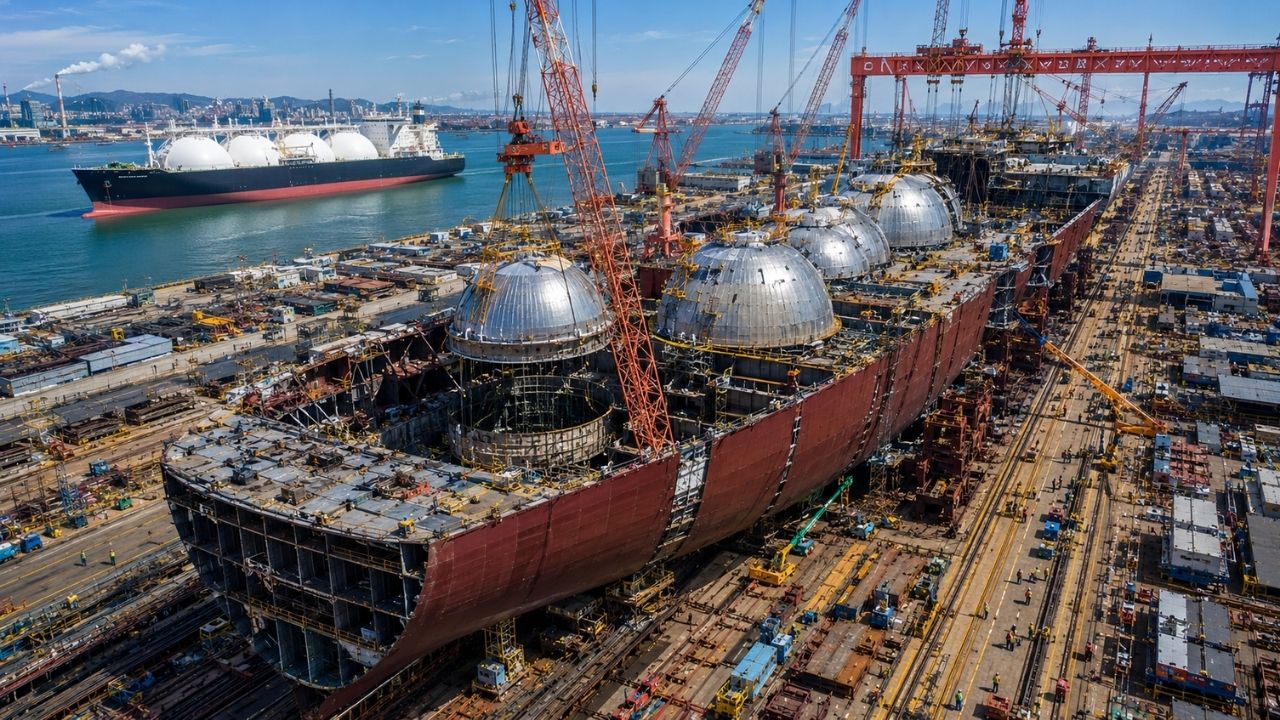
China begins construction of the world’s largest LNG ship, a 344-meter giant capable of supplying 4.7 million homes for a month, carrying 271,000 m³ of gas, and placing QatarEnergy in the largest naval order ever recorded in world history.
-
China is designing a container ship with a thorium nuclear reactor that will operate for 40 years without refueling, and the 25,000-container giant from Jiangnan Shipyard will cross oceans without emitting carbon in an industry that burns 300 million tons of fuel per year.



The proposal aims to eliminate bottlenecks that compromise the logistical and operational efficiency of the Port of Santos, the largest in Latin America.
According to APS, the content presented to Antaq exceeds the scope of previous plans. In a statement, the president of APS, Anderson Pomini, emphasized the current management’s commitment to modernizing port infrastructure:
“APS has already addressed Antaq by sending a new, much more complete works schedule, developed in conjunction with the Union of Port Operators of the State of São Paulo (Sopesp).
In other words, we are resolving what our predecessors at APS did not do during four years,” said Pomini.
Investments Exceed Former Contributions
In addition to the R$ 1.4 billion filed, APS claims it is already executing a broad federal investment plan worth R$ 12.5 billion.
For comparison, the previous administration reportedly invested only R$ 71 million over four years, as pointed out by the current administration.
The new package of works includes strategic interventions for the flow of cargo and improvement in the mobility of access roads to the port, directly contributing to increasing Brazil’s competitiveness in foreign trade.
Sopesp’s Complaint Prompted Accelerated Response
The submission of the schedule comes in response to a complaint filed by Sopesp in March of this year.
The entity requested Antaq to suspend port tariffs, alleging that APS was not complying with a decision regarding the tariff revision for the period from 2018 to 2021.
The union also questioned the lack of compliance with the physical-financial schedule of the planned works.
In light of the complaint, Antaq initially granted a deadline of 30 days, extendable by another 15, for APS to present a new investment plan.
The final deadline was set for May 8, with the port authority stating it filed the document the day after, on May 9.
Union Maintains Caution on the Progress of the Process
Contacted for comment on the development of the case, Sopesp stated through an official note that:
“The mentioned process is ongoing with the competent authorities, and it will only comment on the matter at the appropriate time.”
Port of Santos Enters a New Phase of Expansion
The new schedule reinforces the federal government’s intention to transform the Port of Santos into an increasingly modern and efficient logistics hub.
The expectation is that investments in infrastructure will generate positive impacts for both foreign trade and the national economy, paving the way for future concessions and public-private partnerships.
Source: A Tribuna.