






 Portuguese
  Spanish


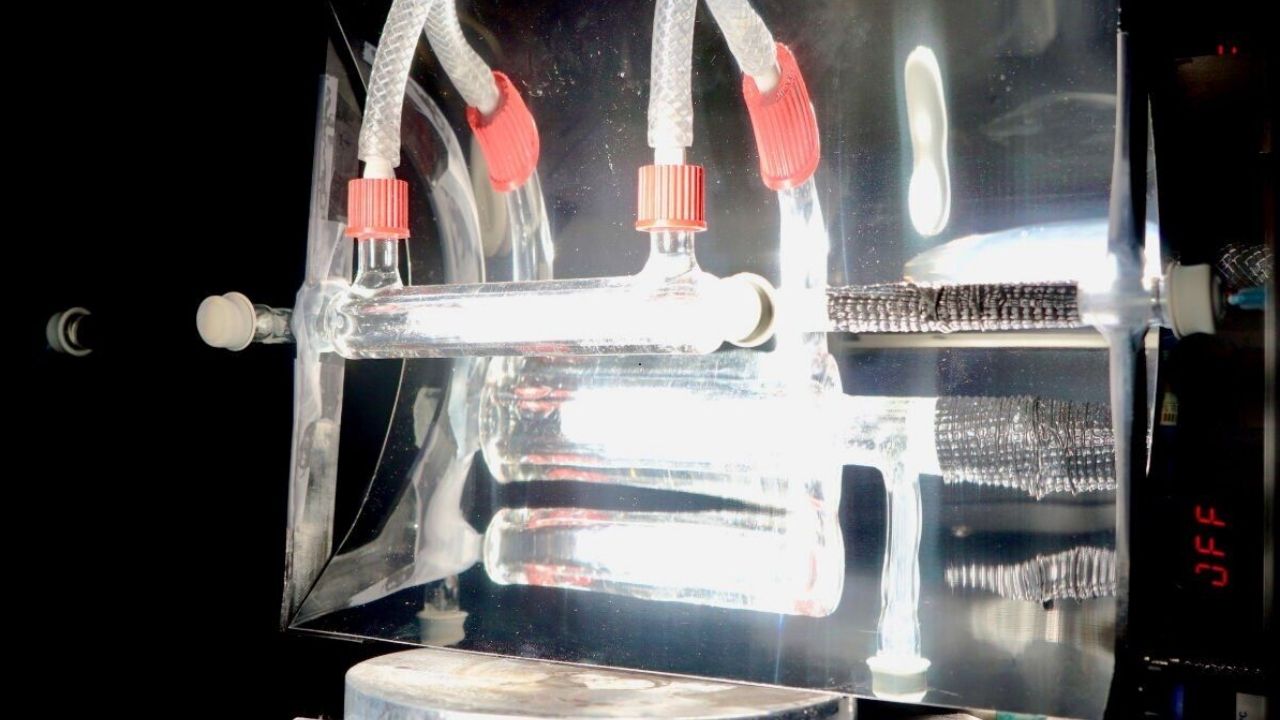


A Technology That Can Change The World: Sustainable Fuel Created From Air And Powered By Solar Energy
Researchers at the University of Cambridge have developed an innovative solar-powered reactor capable of capturing carbon dioxide directly from the atmosphere and turning it into fuel. This innovation promises not only to reduce greenhouse gas emissions but also to create a viable and economically sustainable alternative to fossil fuels. Inspired by photosynthesis, the process uses specialized filters to extract CO2 from the air, converting it into syngas using solar light and semiconductors. This gas can be refined into liquid fuels to power cars, airplanes, and even industrial systems. In addition to being a solution for the climate crisis, the new reactor can operate in remote locations, without the need for fossil fuel infrastructure, becoming a fundamental advance in the quest for a world free of polluting emissions.
The Revolution Of Sustainable Fuels
The burning of fossil fuels has been one of the main contributors to the increase of carbon dioxide (CO2) emissions, contributing to global warming. But what if this same CO2 could be reused to fuel cars and airplanes? This idea, which previously seemed like science fiction, may be closer to reality with the development of a new solar-powered reactor.
Scientists at the University of Cambridge have created an innovative system capable of capturing CO2 directly from the air and turning it into sustainable fuel. This technology promises not only to reduce emissions but also to provide a viable alternative to fossil fuels. The new reactor could transform one of the main environmental villains into a valuable resource.
-
Suzuki Jimny Nomade 5-Door: A Rugged Family SUV with 1.5L Engine and 4WD, Priced Around $18,000 in Brazil

-
Suzuki XL6: Affordable Premium Minivan in India Offers Seating for Six, Hybrid Engine, and Impressive Fuel Efficiency

-
Banco do Brasil and Uber Launch Cashback Program Offering Up to 3.5 Loan Installments Back, Drivers Gain Access to New Cars Worth Up to $30,000 Through Move Brasil Initiative

-
Looking for a Car for Dirt Roads? Fiat Uno, Strada, and Volkswagen Gol Offer Durability and Affordability




The Operation Of The New Reactor

The inspiration for this technology came from photosynthesis, the natural process by which plants convert sunlight into chemical energy. The reactor uses specialized filters to capture CO2 from the air, like a sponge absorbing water. This CO2 is then heated by sunlight, absorbing infrared radiation. Meanwhile, a semiconductor powder absorbs ultraviolet radiation, initiating a chemical reaction that converts the captured CO2 into solar syngas.
Syngas is an essential intermediary for the production of various chemical and pharmaceutical products. It can be converted into liquid fuels, enabling the fueling of land vehicles and aircraft without the need for oil or coal.
Advantages And Challenges Of The New Reactor
The main advantage of the new reactor is the ability to produce fuel without adding more CO2 to the atmosphere. This means that, instead of just capturing and storing carbon passively, the technology allows us to transform this gas into something useful and sustainable.
The reactor does not depend on fossil fuels to operate, and it can be installed in remote locations and run solely on solar energy. This characteristic expands its application possibilities, allowing its implementation in different parts of the world.
However, there are still challenges to be overcome. The conversion of syngas into liquid fuels needs to be improved to become efficient and economically viable on a large scale. It is necessary to ensure that the process is safe and does not generate unexpected environmental impacts.


