






 Portuguese
  Spanish
  4 min of reading
  1 comment


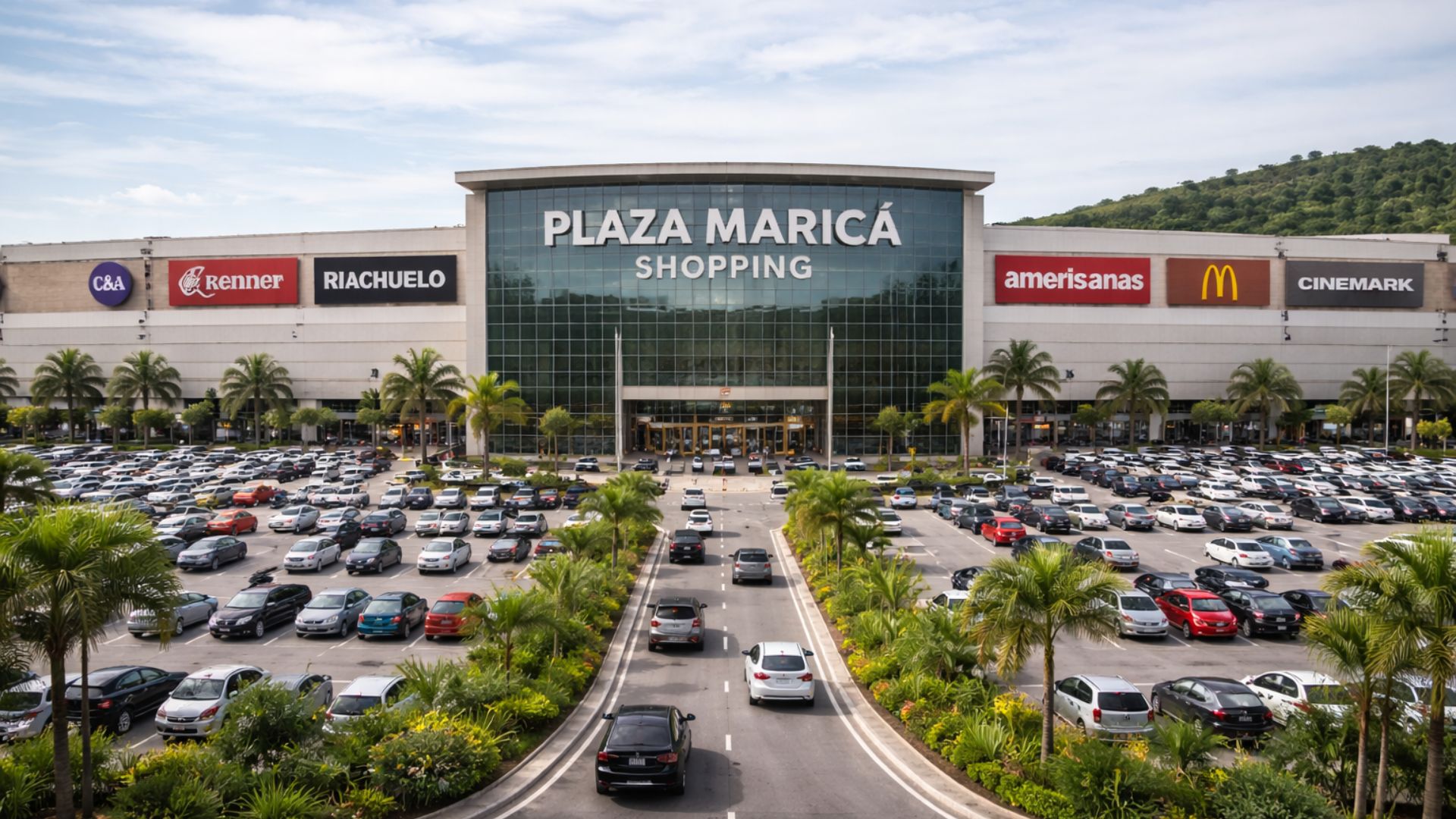


32 Thousand m² Venture in Maricá Brings Public Investment, Promise of Thousands of Jobs, and Expectation of Up to 6 Thousand Visitors Per Day, Consolidating New Commercial Pole on the Banks of RJ-106 with Direct Participation of the Municipal Sovereign Fund.
Maricá, in the Metropolitan Region of Rio, launched the construction of Plaza Maricá Shopping, a venture that plans for 32 thousand m² of total area and participation from the municipality as a co-investor, in a bid to diversify the local economy and expand the supply of commerce and services.
According to the City Hall, the complex will be built on the banks of the Amaral Peixoto Highway (RJ-106), at km 29, in Camburi, in front of the access return to the Center, in an area close to Atacadão, chosen for its concentration of traffic and ease of access for consumers.
Plaza Maricá Shopping Structure and Gross Leasable Area
According to the published project, the shopping center will have 20,800 m² of Gross Leasable Area, with two megastores and 94 satellite stores, in addition to more than 100 operations among commerce and services, gathered in a single environment for shopping, convenience, and leisure.
-
FIRJAN’s mega plan of R$ 526.3 billion for Rio de Janeiro aims to revive Brazil’s largest industry, with two-thirds of the investments going to oil and gas.

-
China signals an increase in beef imports, Brazil has already consumed 70% of the 1.106 million ton quota and seeks to renegotiate the tariff that jumps from 12% to 55%, while demand from the US also skyrockets.
-
Food inflation rose 302% in 20 years in Brazil, but the supermarket changed: purchasing power yielded 87% more mortadella and 31% less fruit, and ultra-processed foods took over the cart.
-
Petrobras sells the first batch of 3,800 m³ of aviation fuel made with certified soy, capable of reducing emissions by up to 70%, in an unprecedented project that anticipates the aviation sector’s requirements expected for 2027.


One thousand parking spaces, a cinema, a food court, and children’s entertainment areas are also planned, with an amusement park estimated at about 1,000 m², reinforcing the proposal to attract families and extend the time spent on site.
The expected daily traffic during the operational phase is between 5 thousand and 6 thousand visitors, a number that, if confirmed, tends to reposition Camburi as a commercial corridor and redistribute part of the consumption that currently escapes to neighboring municipalities.

Direct Jobs and Economic Impact in Maricá
During the implantation, construction, and operation phase, the estimate provided by the government is up to 3 thousand direct and indirect jobs, with the initial impact concentrated in the construction sector and, later, in retail, services, and administration jobs.
The City Hall presented the venture as the first large shopping center in the municipality and indicated that, in addition to the stores, there will be a hotel integrated into the complex, with about 120 apartments, an element that expands the project’s scope.
At the launch ceremony, Mayor Washington Quaquá stated that the idea is to attract investors to generate jobs and advocated that oil resources should be directed to initiatives with local returns, instead of remaining idle in the financial system.
Maricá’s Sovereign Fund and Public Co-Investment Model
The municipality participates through the Maricá Development Company (Codemar) and Maricá Global Invest (MGI), a structure created to manage investments with resources from the Sovereign Fund, in a format announced as a strategic partnership with the private sector.
The City Hall reported that the estimated investment is R$ 220 million, an amount associated with the implementation package of the venture, which, according to the management, has already attracted the interest of major national brands to occupy part of the operations.
Justifying the presence of the government in the business, Codemar president, Celso Pansera, stated that building a shopping center “of this magnitude” in the city “is not something obvious for the private initiative” and advocated for municipal encouragement as a catalyst for the project.
Meanwhile, MGI president, Marcelo Batista Gomes, stated that the expectation is to generate taxes between R$ 10 million and R$ 12 million per month, an estimate presented as an indication of the activation of different sectors linked to consumption and services.
Old Project and New Attempt at Execution
Previous announcements about the shopping center indicated an opening forecast in 2021, a schedule that did not materialize, and the recently announced resumption seeks to anchor the project in a more realistic timeline, although not detailed by the City Hall.
In official communications, the management also linked the venture to commitments to sustainability and innovation, mentioning waste management, recycling, rational water use, solar energy, and landscaping with native species.
The location on RJ-106 is regarded as strategic for concentrating circulation between neighborhoods and facilitating the connection with the Center, and the City Hall mentioned the potential for appreciation of the surroundings and urban improvements associated with the new service pole.
Not presenting inauguration deadlines in the most recent announcement, the municipality focused communication on job creation, brand attraction, and the investment model, signaling that the shopping center is part of a long-term policy to expand the economic base.
With the work officially launched and the promise of a facility that combines consumption and entertainment, the discussion shifts to how the venture will integrate with the local dynamics and street commerce without abruptly displacing the economy of traditional neighborhoods.




Fico muito feliz com estes empreendimentos em Maricá, mas pergunto; e o esgoto ? Como atender a essas demandas sem esgoto?