Portuguese
  Spanish


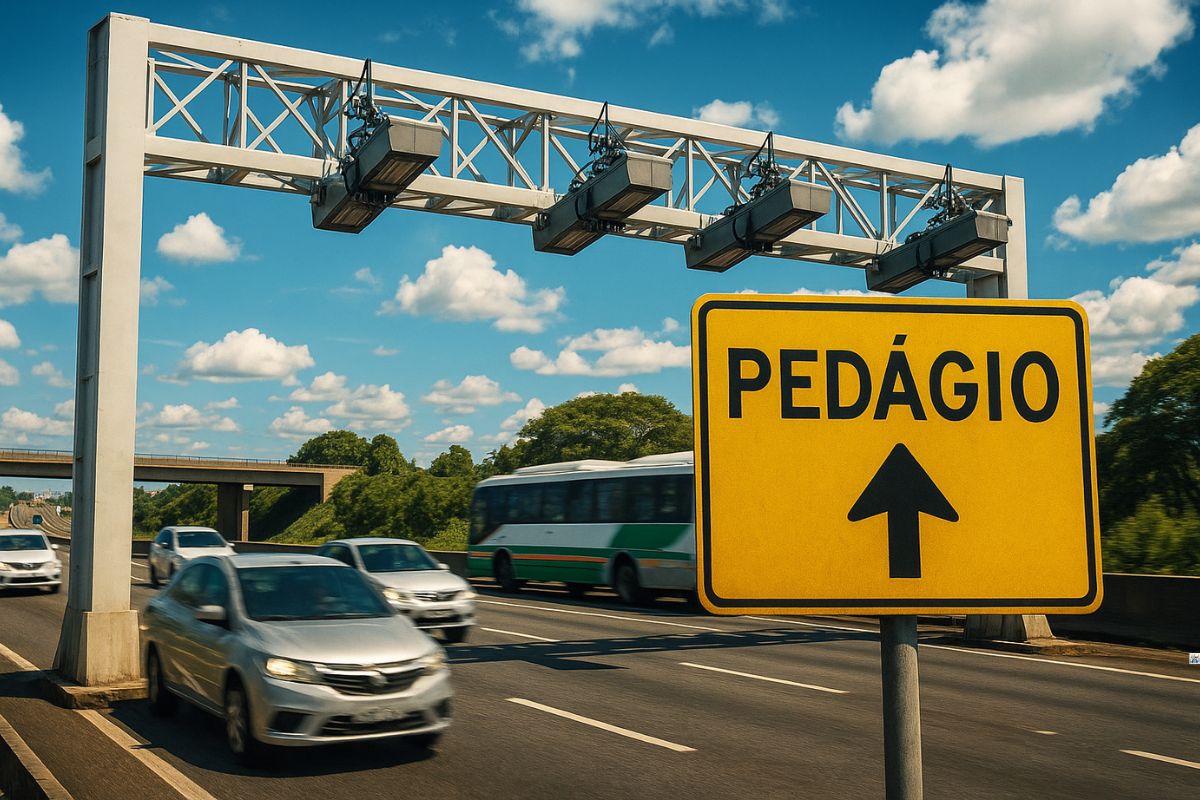

As of This Saturday, the State Implements New Electronic Tolls on Three Paulista Highways with the Free Flow System That Eliminates Barriers and Makes Automatic Charging Through Intelligent Gates, Marking a Technological Advance in the Modernization of the Road Network and in the Efficiency of Toll Management.
The free flow electronic toll system started operating on three more highways in São Paulo on November 1st, consolidating a new phase of the modernization policy for road concessions in the state. The technology allows for automatic payment through sensors and cameras installed on gates, eliminating the need for toll plazas and reducing travel time.
The highways included in this phase are Mogi-Dutra (SP-088), Mogi-Bertioga (SP-098), and Padre Manoel da Nóbrega (SP-055). The operation occurs after months of contractual adjustments, judicial decisions, and discussions about tolls and exemptions. According to the Concessionária Novo Litoral (CNL), responsible for 213 kilometers of stretches, the gates are located at strategic points in Arujá, Mogi das Cruzes, Bertioga, Santos, and Miracatu, becoming the first 100% automated set under state management.
How the Free Flow System Works on the Highways of São Paulo
The free flow model uses high-precision cameras and sensors that automatically identify vehicles by license plate or payment tag, eliminating the need for barriers and queues.
-
Family Quietly Transforms Old Sawmill into $700 Million Business, Opens 25 Stores in Two Years Across 22 Brazilian States

-
Couple Sold Their Home to Save Business, Now Run Platform Handling $180 Million Monthly and Managing Over 51 Million Listings
-
Brazil’s 2026 Tax Refund: Record 9.58 Million Filers in Largest Payout Ever, But a Key Detail on Priority Recipients Draws Nationwide Attention

-
Itaú Alters Hybrid Work Model, Increasing Office Days from 2028, Prompting Employees to Adjust to New Routine




Charging occurs entirely electronically, and users have up to 30 days to settle the toll amount on the Siga Fácil portal.
After this period, non-payment constitutes toll evasion, subject to the penalties provided for by the Brazilian Traffic Code.
Prices vary according to the distance traveled and the type of vehicle.
For passenger cars, tolls range from R$ 0.57 to R$ 6.95 each way, with an adjustment of about 9% applied based on the IPCA.
The structure was defined in the concession bid and submitted to public hearings, ensuring technical and legal transparency.
The government’s goal is to expand the system to 58 gates by 2030, aligning São Paulo with international digital charging models.
Tolls, Exemptions, and Discount Policies
The new electronic toll model provides mechanisms for tariff moderation and regional benefits.
Residents of Mogi das Cruzes, for example, will have exemptions on tolls incurred within the municipality, including the Taboão district.
In Baixada Santista, approximately 600 residents from the neighborhoods of Caruara, Iriri, Monte Cabrão, and Cabuçu are also registered for exemption at the P4 gate of Mogi-Bertioga.
Moreover, the system applies the Frequent User Discount (DUF) for drivers with a TAG. From the 11th passage at the same gate, the discount is 10%, and after the 21st, it reaches 20%.
The goal is to reduce costs for regular users and make charging more proportional to the actual use of the road.
This benefit is not cumulative with the automatic TAG discount, and only one modality applies per operation.
Legal Challenges and Regional Controversies
The implementation of the new electronic tolls has been marked by legal disputes and resistance from municipalities.
In Mogi das Cruzes, a court injunction temporarily suspended the charging, arguing that the proposed amount violated tariff moderation and impacted local transportation.
After negotiations, the concessionaire reduced toll rates and extended exemptions for residents.
In Arujá, the municipality still maintains a public civil action questioning the installation of gates in urban areas, alleging incompatibility with the Master Plan and a lack of technical studies on mobility and socioeconomic impact.
CNL reported that it is appealing the decisions and that it will fully comply with the terms of the concession contract signed with the state government.
Expansion of the Model and Future Perspectives
With operations starting on the new highways,
São Paulo now has six active points for automatic charging, in addition to those already installed on the Raposo Tavares, Tamoios, and SP-333 highways.
The State Transport Agency (Artesp) plans new gradual implementations, prioritizing corridors with high traffic and proven technical feasibility.
The free flow system represents a decisive step in the transition to a more dynamic and digitized road transport model.
In addition to reducing operational costs and CO₂ emissions, electronic tolls promise to enhance road safety and decrease congestion in metropolitan areas.
The trend is that future concessions will already be tendered exclusively with embedded technology.
Do you believe that the free flow system can really make trips faster and fairer for Paulista drivers? Share your opinion in the comments.