






 Portuguese
  Spanish


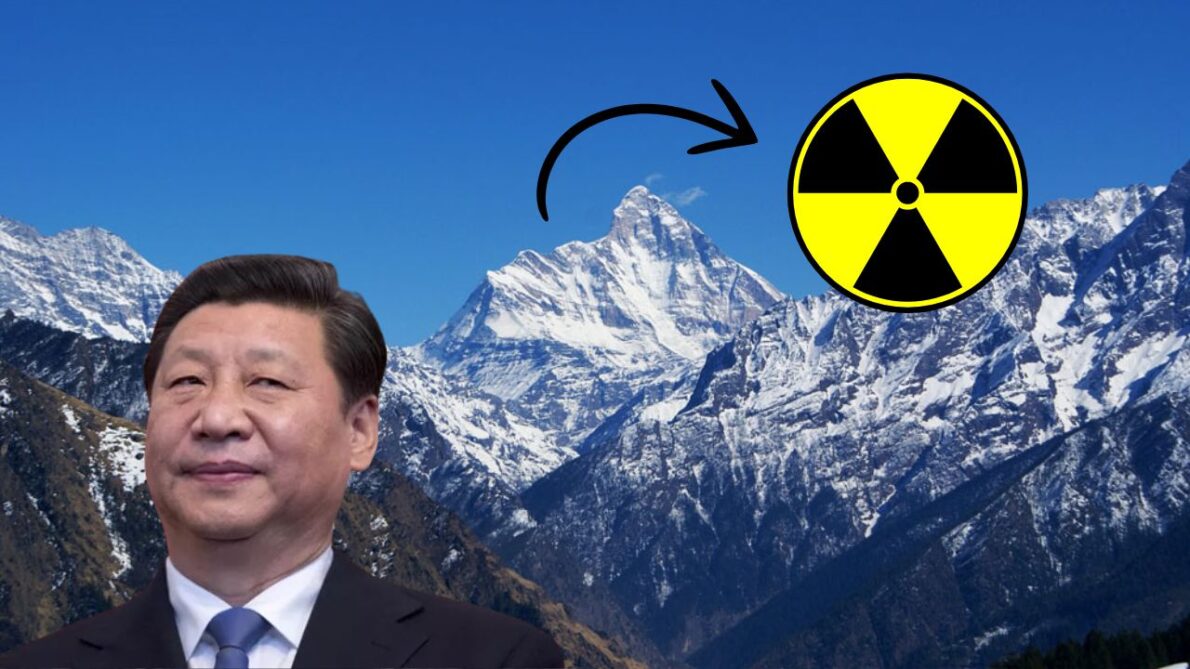

A US Espionage Mission Against China’s Nuclear Advancement Resulted in a Disaster So Great It Was Kept Secret for Four Decades.
In the 1960s, China’s nuclear advancement put the US in a delicate position during the Cold War, leading to a spy mission in partnership with India. The objective? To monitor Chinese nuclear activity. However, this secret operation in the sacred Himalayas turned into a total disaster, so catastrophic that it remained silent for 40 years.
It was a tense time. The Cold War was in full swing and China’s nuclear advancement worried not only the US but also its allies. The CIA, concerned about Chinese nuclear tests, decided it was time to act. In 1964, China conducted its first nuclear test near Lop Nur Lake, a remote area in the Kuruk-tagh mountains. This event set off alarm bells in the US and prompted the agency to investigate how far the Chinese were advancing.
China X India X US
Two years earlier, China had defeated the Indian army, which only heightened the sense of inferiority in the region. India, feeling threatened, joined forces with the US to monitor China. And thus, a secret mission was born that seemed straight out of a spy movie.
-
Angra 3 becomes Brazil’s R$ 24 billion dilemma: finishing the 66% complete plant costs almost the same as abandoning it, right in the race for energy in the AI era.

-
Nvidia Secures Billion-Dollar Deal to Supply Up to 170,000 AI Accelerators to a 360 MW Data Center in Indonesia, Aiming to Transform Batam into an Advanced Computing Hub

-
NuScale proposes revised plan for six VOYGR SMR reactors in Poland after ending U.S. project
-
Holtec and EDF Submit Joint Proposal to Install Four SMR-300 Reactors in England with Combined Capacity of 1.3 GW


Spying on China’s Nuclear Activities
The idea was simple, yet bold: to use India’s mountains, especially the majestic Nanda Devi peak, to spy on China’s nuclear activities. The plan, as cinematic as it sounds, involved sending a team of spies and climbers to install a nuclear-powered surveillance device on one of the highest peaks in the world.
STILL ABOUT THE US: Construction: the largest 3D-printed neighborhood in the world is almost complete, check out the process
The Goal Was to Climb the Mountain…
The team included notable names like climber Tom Frost and the famous expedition leader Mohan Singh Kohli. Together, they faced months of intense training, including helicopter jumps and handling atomic material. The goal was to climb the mountain carrying a nuclear generator that would power a monitoring system capable of tracking Chinese nuclear activity.
Nanda Devi Is 7,816 Meters High
However, the mission soon faced problems. The climb to Nanda Devi was extremely challenging, and the heavy nuclear equipment only made the situation more difficult. The spies, unaccustomed to the physical rigor of climbing, struggled to advance. The weather did not help, and the team encountered a severe snowstorm when they were just a few meters from the summit.
It was then that the fatal decision was made: due to the imminent risk, the expedition leader ordered that the equipment be left on the mountain to expedite the descent. The idea was to return in the spring to complete the mission. However, what they did not know was that they were leaving behind a device with enough plutonium to cause an environmental disaster and potentially spy on them for a thousand years.
Nuclear Generator Stayed… There
The nuclear generator, never recovered, remains somewhere on the slopes of Nanda Devi, and China’s nuclear advancement continued to be monitored, but by other means. The mission’s failure was so significant that the details remained hidden for four decades, and even today, this story is little known.
In a world where nuclear tensions continue to be a reality, this story serves as a reminder of how far nations are willing to go to protect their interests, even if it means leaving a radioactive legacy hidden in the sacred mountains of the Himalayas.







Se fosse a China, a mídia ocidental estaria a todo vapor condenando e inventando um monte de besteiras!