Portuguese
  Spanish


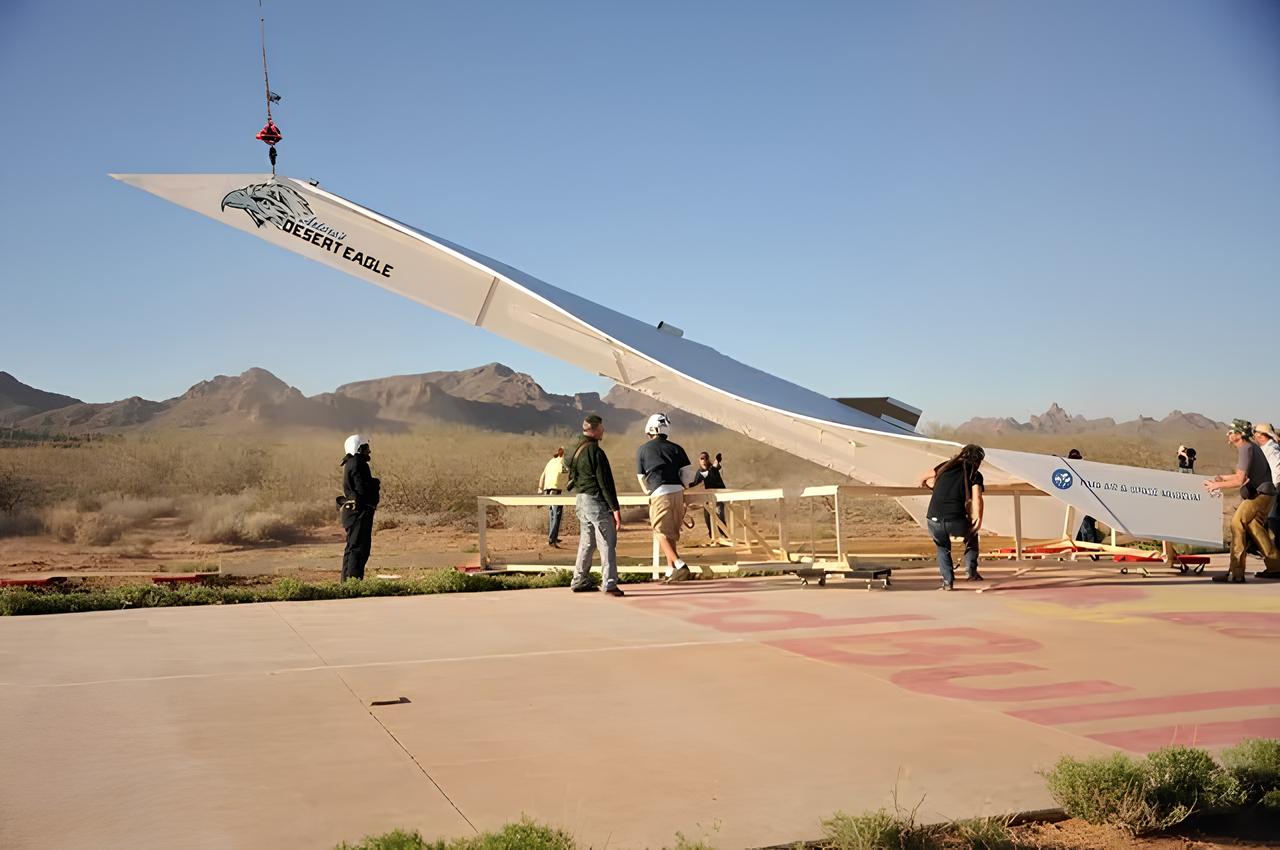


Arturo’s Desert Eagle, the Largest Paper Airplane in the World, Measured 13 Meters in Wingspan, Weighed 363 kg and Flew More Than 150 Meters After Being Launched by a Helicopter in Arizona.
This unbelievable feat is not an internet myth. It actually happened, was documented on video, and became one of the most extraordinary projects in the history of creative engineering. The name of the aircraft? Arturo’s Desert Eagle — a tribute to the boy who inspired the team to bring the idea to life, literally. It all started with a 12-year-old boy named Arturo Valdenegro, who won a competition held by the Pima Air & Space Museum in Arizona by constructing the paper airplane that flew the farthest among hundreds of students.
The prize? To be the “chief inspector” of a project that would scale his concept to real size — only this time, with more than 13 meters in wingspan, a weight of 350 kg and a challenge: to make it actually fly.


The project came to life in 2012, bringing together engineers, technicians, and aerospace designers, along with support from the museum and specialists in aerodynamics. The goal was to construct the largest paper airplane ever launched in the world, respecting the physical characteristics of a hand-folded airplane, but using materials capable of supporting the weight and real flight.
-
College Dropout Turned Window Cleaner Builds $1 Million Cleaning Business with Subscription Model After 18 Years of Door-to-Door Work

-
North Korean Soldier Risks Crossing One of the World’s Most Dangerous Borders, Detained in South Korea

-
Stingless Bee Honey from Brazil Can Cost Up to $120 a Liter, Surprises with Flavors of Wood, Citrus, and Even Cheese
-
Woman Claims to Have Spotted a Technical Pattern in Recent FIFA Tournaments, Predicts Possible World Cup Winner


Construction: Paper, Wood and a Lot of Calculation
Despite being called a giant paper airplane, the Arturo’s Desert Eagle was not made with conventional paper, but with reinforced cardboard structures, lightweight wood, epoxy resin, and coatings designed for wind resistance and twisting strength.
The biggest challenge was to replicate the characteristic design of a simple paper airplane on a scale 100 times larger — without it collapsing before leaving the ground. Engineers spent weeks simulating aerodynamics, weights, and balance, even building miniatures in a wind tunnel to test angle of attack and stability.
The final structure measured:
- 13.4 meters in wingspan (width from wingtip to wingtip)
- 7.3 meters in length
- 350 kilograms of total weight
- Coating in industrial cardboard, with internal reinforcements in wood
- No engine: 100% glider, no propulsion
The Flight of Arturo’s Desert Eagle: Power, Altitude and Emotion
On March 21, 2012, in the middle of the Sonoran Desert in Arizona, a crowd of curious onlookers, engineers, and aviation enthusiasts gathered to see the heaviest and largest paper airplane in the world take off.
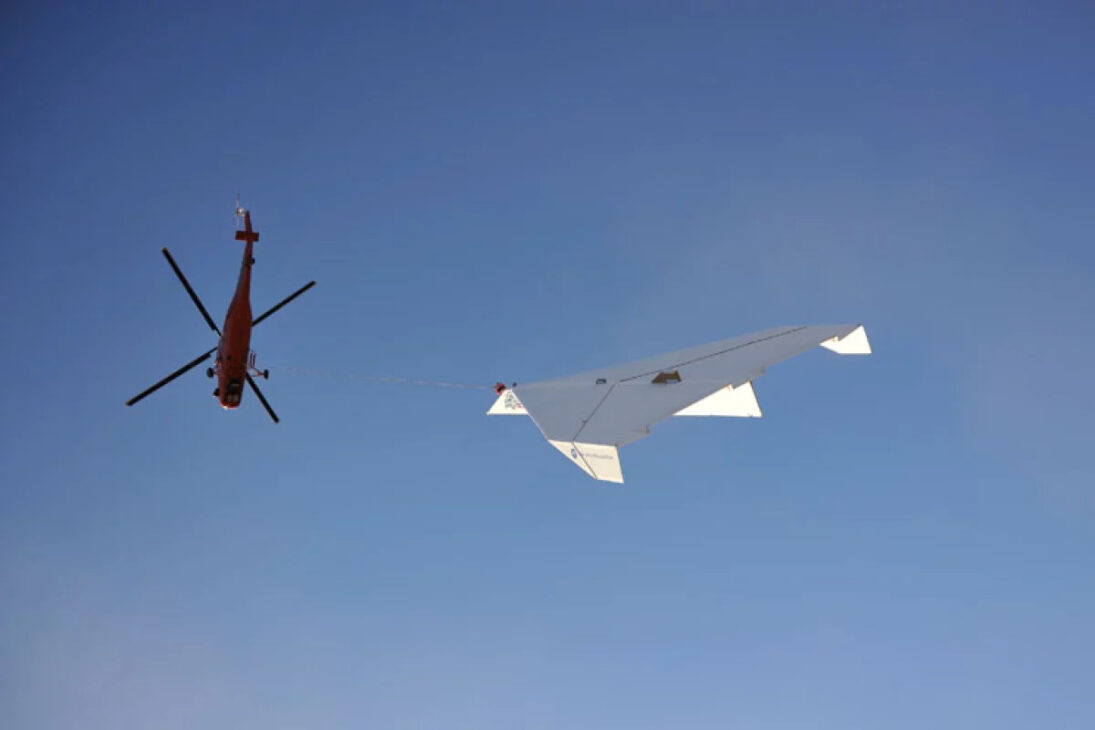
But how do you launch a 350 kg object without an engine? With a helicopter-crane.
The Arturo’s Desert Eagle was lifted by a helicopter to an approximate altitude of 800 meters, and then released with millimetric precision. As it began to fall, it immediately entered a gliding flight — sliding through the air at high speed and covering about 150 to 200 meters before touching the ground.
It was an emotional moment. The flight lasted just over 20 seconds, but it was enough to ensure the project:
- Worldwide visibility
- A documentary with incredible aerial footage
- A place in aviation history as the largest aircraft inspired by a paper airplane ever built and successfully launched
Creative Engineering and Educational Inspiration
The Arturo’s Desert Eagle was not just a curious experiment. It became a symbol of how creative engineering can be used to inspire children and young people to engage in science, technology, and aerodynamics.
The project involved everyone from top specialists in structures to young students in the area, who closely followed every stage of the creation — from the folds to torque measurements.
The museum that sponsored the construction, the Pima Air & Space Museum, still reports today on the educational impact of the feat: “We wanted to show that simple ideas can create big things. And we succeeded.”
Moreover, the project sparked discussions about aerodynamic design and structural integrity in unconventional materials — something that can inspire solutions for ultralight drones, gliders, and low-cost structures for civil uses.
Absolute Record?
Although there are paper airplanes with longer flights (such as the record of 77 meters set by Joe Ayoob in 2012, with a traditional hand-folded airplane), no other project has successfully replicated a paper airplane at this scale, weight, and distance.
Therefore, the Arturo’s Desert Eagle is considered:
- The heaviest paper airplane ever launched with a successful flight
- The giant paper airplane with the largest wingspan in history
- A milestone in cardboard engineering applied to functional structures
Unfortunately, the landing was not the smoothest. The airplane was damaged upon touchdown, as expected — after all, there was no landing gear or navigation control. But the project was entirely filmed and documented, and part of its remains were displayed in the museum in Arizona.
The memory, however, remains alive — both in videos that continue to go viral today and in classrooms that use the case to teach principles of aerodynamics, weight, strength, and teamwork.