






 Portuguese
  Spanish


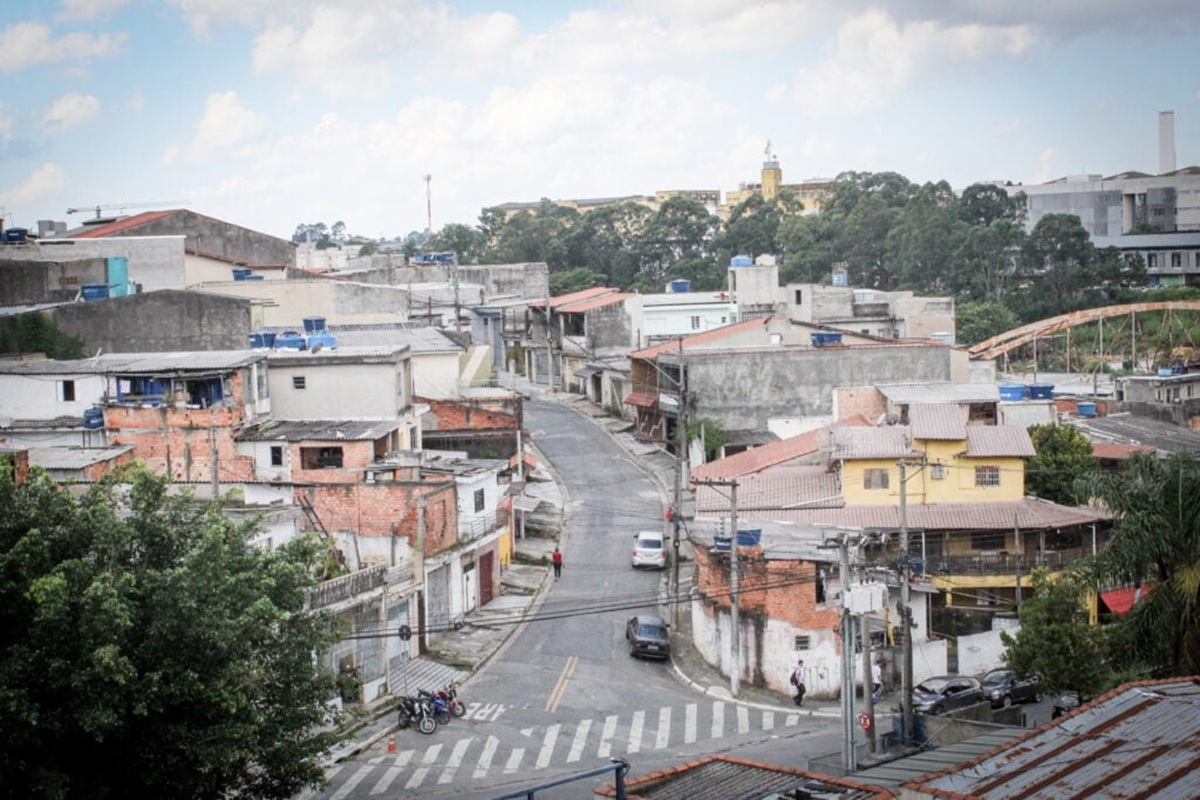


Few Know That the Most Populous Neighborhood of São Paulo Is Not in the Capital. With More Than 168 Thousand Inhabitants, Pimentas in Guarulhos Surpasses Historical Regions and Continues to Expand.
Have you ever wondered which neighborhood is the most populous in São Paulo? According to the 2022 Demographic Census, the national territory had 17,576 officially recognized neighborhoods.
Among the ten most populous, eight are located in Rio de Janeiro, revealing the weight of the fluminense capital in urban concentration and the inequality in the country’s population distribution.
The survey also identified 10,698 districts and 643 sub-districts spread across 54 cities.
-
72-Year-Old Retired Chinese Engineer Builds Personal Cable Car for $1,200 to Avoid Climbing Stairs, Uses It for 5 Years Before Ordered to Dismantle

-
Neymar’s 14-year-old son, Davi Lucca, launches 3D dinosaur brand “Amigo Dino,” gaining attention on social media for his entrepreneurial spirit.

-
Improper Outlets Can Cause Fires and Damage Devices: How to Identify the Correct 10A or 20A Model for Each Appliance
-
Entrepreneur Who Started at 13 Delivering Flyers by Bike in São Paulo Now Runs a 4,000 m² Culinary Complex in Brazil




These numbers show how the country has become highly urbanized, with large centers concentrating millions of inhabitants and small municipalities housing increasingly smaller populations.
In several capitals and metropolitan regions, there are neighborhoods whose population exceeds that of entire municipalities, highlighting the uneven and accelerated growth in urban areas.
The survey highlights the most populated locations and shows how these territories house a significant portion of the Brazilian population, demanding more infrastructure and public services.
Neighborhoods and Official Delimitations
The neighborhoods are administrative divisions created by the municipal governments to organize and manage municipalities. Unlike regions or zones of real estate interest, these areas follow technical and institutional criteria based on parameters defined by public bodies.
The Brazilian Institute of Geography and Statistics (IBGE) is responsible for disclosing the official delimitations and adjusting territorial limits to align with the census sectors used in its surveys.
In each new Census, the institute updates these borders to incorporate changes resulting from urban expansion and the emergence of new developments.
These updates are essential because city growth constantly modifies the urban map.
Areas that were once considered rural zones are becoming densely populated neighborhoods, with intense economic activity and the presence of public facilities.
The Most Populous Neighborhood of São Paulo
According to the 2022 IBGE Census, the most populous neighborhood in the state of São Paulo is Pimentas, located in Guarulhos, with 168,232 residents. Nationally, it ranks sixth among the most inhabited neighborhoods in Brazil.
The Pimentas neighborhood is situated in the eastern zone of Guarulhos, close to important access roads, such as the Presidente Dutra Highway. It offers complete infrastructure to residents, including schools, health centers, diverse commerce, and efficient public transportation.
Moreover, Pimentas is a cultural and social reference center in the municipality.
Various associations and community movements work there, promoting events, activities, and projects that strengthen local identity and encourage integration among residents. This strong participation network makes the neighborhood a dynamic and organized space.
Many residents of Guarulhos often say that Pimentas is “almost a city,” because a good part of Brazilian municipalities has a smaller population than this area.
The neighborhood is composed of about 40 subdivisions and maintains its own characteristics, both in commerce and local traditions.
The origin of the name Pimentas is controversial. Some argue that the term came from the cultivation of peppers by the indigenous peoples who inhabited the area.
Others believe it derives from the surname of a family that owned a large farm that existed there.
With the Presidente Dutra Highway on one side and the Ayrton Senna Highway on the other, the neighborhood is traversed from end to end by the Presidente Juscelino Kubitschek de Oliveira Road.
Other important avenues complete the road network, such as Jurema, José Miguel Ackel, and the roads of Sacramento and Água Chata.
There are also neighborhoods whose names honor the daughters of old land developers, such as Angélica, Jurema, and Stella.
List of the 10 Most Populous Neighborhoods in Brazil
The 2022 Census revealed the national ranking of neighborhoods with the highest number of inhabitants:
- Campo Grande (Rio de Janeiro) – 352,356 residents
- Santa Cruz (Rio de Janeiro) – 249,130 residents
- Jacarepaguá (Rio de Janeiro) – 217,462 residents
- Bangu (Rio de Janeiro) – 209,302 residents
- Cidade Industrial de Curitiba (Curitiba) – 172,510 residents
- Pimentas (Guarulhos) — 168,232 residents
- Realengo (Rio de Janeiro) – 167,027 residents
- Guaratiba (Rio de Janeiro) – 159,888 residents
- Barra da Tijuca (Rio de Janeiro) – 151,603 residents
- Tijuca (Rio de Janeiro) – 142,909 residents
The predominance of Rio de Janeiro is evident, as eight of the ten most populous neighborhoods in the country are located in its territory. This reflects not only the size of the city but also how its peripheral and historical zones have grown and consolidated over the decades.
Why Not Grajaú?
In the capital of São Paulo, the situation is different because the IBGE considers districts as administrative units, not neighborhoods. An emblematic example is Grajaú, located in the southern zone of the city of São Paulo, which stands out for housing 384,873 inhabitants and 154,205 households — a number greater than many Brazilian municipalities.
Grajaú is the most populous district in the capital and, in absolute numbers, surpasses Pimentas. However, it is not officially classified as a neighborhood, and therefore does not appear in the national ranking.
Only 130 cities across the country have a population greater than that of the district, meaning Grajaú has more residents than 97.7% of Brazilian municipalities.
The average number of residents per household in the region is 2.88, highlighting the high urban density. This density creates significant challenges for infrastructure and public services, such as transportation, health, and education, in addition to reinforcing the importance of urban planning.
The Most Populous Neighborhood in Brazil
The title of the most populous neighborhood in the country belongs to Campo Grande, located in the West Zone of Rio de Janeiro. According to the 2022 Census, the neighborhood houses 352,356 inhabitants spread over 104.9 square kilometers, numbers that place it ahead of many Brazilian municipalities in both population and territorial extension.
Campo Grande is located about 52 kilometers from downtown Rio and combines two seemingly opposite characteristics: intense urbanization and vast green areas. Within its limits is the Parks Estadual da Pedra Branca, considered the largest urban forest in the world, with 12,500 hectares of native vegetation.
This coexistence between population density and environmental preservation makes the neighborhood a unique space where busy streets, housing complexes, and commercial areas coexist with trails, springs, and preserved woods. This configuration helps explain why Campo Grande stands out in both size and diversity.
In addition to its size and population, the neighborhood also represents a microcosm of the city of Rio: it has shopping centers, popular residential areas, communities, and middle-class regions, forming an urban mosaic that reflects the complexity of the metropolis.
Interpreting the Numbers
The data from the 2022 Census make it clear that Brazil’s major urban centers concentrate a significant portion of the national population.
Neighborhoods such as Campo Grande and Pimentas illustrate this phenomenon, showing how areas within cities acquire dimensions equivalent to medium-sized municipalities.
This information reinforces the importance of urban planning and efficient public management, capable of meeting the needs of millions of citizens living in densely populated regions. It also highlights the territorial transformations Brazil has experienced in recent decades — a country that is increasingly urban, unequal, and interconnected by large population clusters.
Amid these contrasts, the 2022 Census offers an accurate portrait of human occupation and the challenges it imposes on Brazilian cities.
Source of Information: IBGE 2022


Impossível ler a matéria!! Completamente incertada de propaganda! Vtc