






 Portuguese
  Spanish
  4 min of reading
  0 comments


Led by Doctor Gabriel Liguori, 3D bioprinting technology advances in Brazil as a concrete hope to solve the donation crisis and transform regenerative medicine.
A Brazilian is at the forefront of a technology that can solve one of the world’s greatest health dramas: transplant waiting lists. Doctor and researcher Dr. Gabriel Liguori developed a method to print human organs in the laboratory. The innovation promises, in the near future, to create hearts, livers, and kidneys on demand, using the patient’s own cells and thereby eliminating the risk of rejection.
A Waiting List That Keeps Growing
Transplant medicine is a success, but faces a chronic crisis in Brazil. In 2024, the waiting list for an organ reached 78,000 people, the highest number in 25 years. The kidney is the most awaited organ, with over 42,838 patients on the list. Following that are corneas and livers.
Despite the country performing a record number of surgeries, with over 30,300 procedures, the waiting list does not decrease. The main obstacle is not surgical capacity, but the lack of donors. One of the most critical factors is the high rate of family refusal for donation, which remains at a concerning 42% to 45%.
-
Helicopter Drops 180 Tons of Sand and Gravel on Swedish River to Revive Ecosystem Damaged by Decades of Exploitation

-
Brazilian Company Launches Retro Smartphone with 48 MP Camera, T9 Keyboard, and Privacy Features for Social Media-Free Use

-
Self-Taught Chinese Farmer Builds 5-Ton Submarine from Scrap, Launches It in Anhui River
-
Invisible Induction Technology Enables Wireless Power for Blenders, Coffee Makers, and Air Fryers, Reducing Countertop Cables




This scenario shows that the current model has reached a limit. The solution lies not only in optimizing the system but in finding an alternative that circumvents the need for donation. It is here that the technology to print human organs emerges as a frontier of hope.
Who Are the Brazilian Pioneers in Organ Bioprinting?
The innovation in Brazil has two main fronts that complement each other.
On one side is Dr. Gabriel Liguori, a 34-year-old entrepreneurial physician. Graduated from USP and with experience at Harvard, he founded the startup TissueLabs in 2019. His goal is ambitious: to build the first bioartificial heart for transplantation in ten years.
The strategy of TissueLabs is to function as a platform. The company develops and sells bioprinting tools, such as 3D printers and over 15 types of “bioinks” for researchers worldwide. This accelerates scientific advancement collectively.
On the other front is the academic research of Professor Dawidson Gomes from the Federal University of Minas Gerais (UFMG). In his laboratory, Biolink, the focus is regenerative medicine, such as the development of artificial skin for burns, and the creation of “organoids” (tissue models) to replace the use of animals in drug and cosmetic testing.
How Does the Technology to Print Human Organs Work?
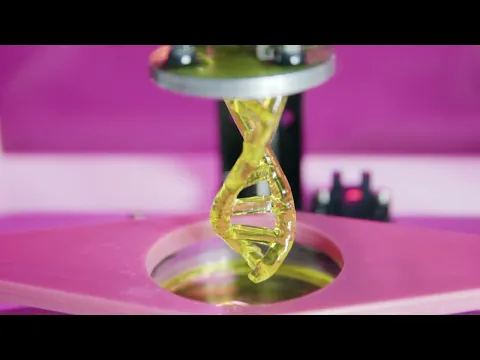

The process, which seems like science fiction, follows well-defined steps.
- Pre-processing: It all starts with a 3D digital model of the organ, usually created from a CT scan of the patient.
- Processing: A bioprinter deposits, layer by layer, a “bioink”. This ink is a hydrogel containing the patient’s living cells, ensuring there will be no rejection.
- Post-processing: The printed structure is placed in a bioreactor. This equipment simulates the conditions of the human body, allowing the cells to multiply and organize to form a functional and stable tissue.
The great innovation lies in the bioink. TissueLabs, for example, uses the extracellular matrix from decellularized pig organs. This creates a “scaffold” much more precise for human cells to develop correctly.
The Impact of Bioprinting Beyond Transplants
Although a complete heart is still a future goal, the technology already brings real benefits. One of the most important applications is the creation of human tissue models for testing. Researchers can print miniature human organs (organoids) to test the efficacy and toxicity of new drugs, drastically reducing the need for animal testing.
The technology also advances in clinical practice. In orthopedics, the National Institute of Traumatology and Orthopedics (INTO) already uses 3D printing to manufacture custom titanium implants. The next step is bioprinting cartilage and bone. In dermatology, research focuses on creating skin for burn victims. In cardiology, the goal is to create “patches” of cardiac muscle to repair damage from heart attacks.
What Is Needed for the Technology to Print Human Organs to Reach Patients?
The path from the laboratory to the patient still has significant obstacles. The biggest scientific challenge is vascularization: recreating the complex network of veins and arteries that nourish the organs. Without it, the cells die.
Another point is the high cost. Equipment, materials, and skilled professionals make the technology expensive. However, the cost of a printed organ may be lower, in the long run, than the cost of ongoing treatments like dialysis, which burden the public health system.
Finally, there is the regulatory challenge. In Brazil, a bioprinted organ is classified as an Advanced Therapy Product and requires clear regulations from ANVISA. Experts point out that current regulations are generic and need to be adapted to this new reality, ensuring safety and agility in development. Brazilian pioneers expect that, once these challenges are overcome, the first complex printed organs for transplantation will be a clinical reality within 10 to 15 years.




-

-

6 people reacted to this.