






 Portuguese
  Spanish


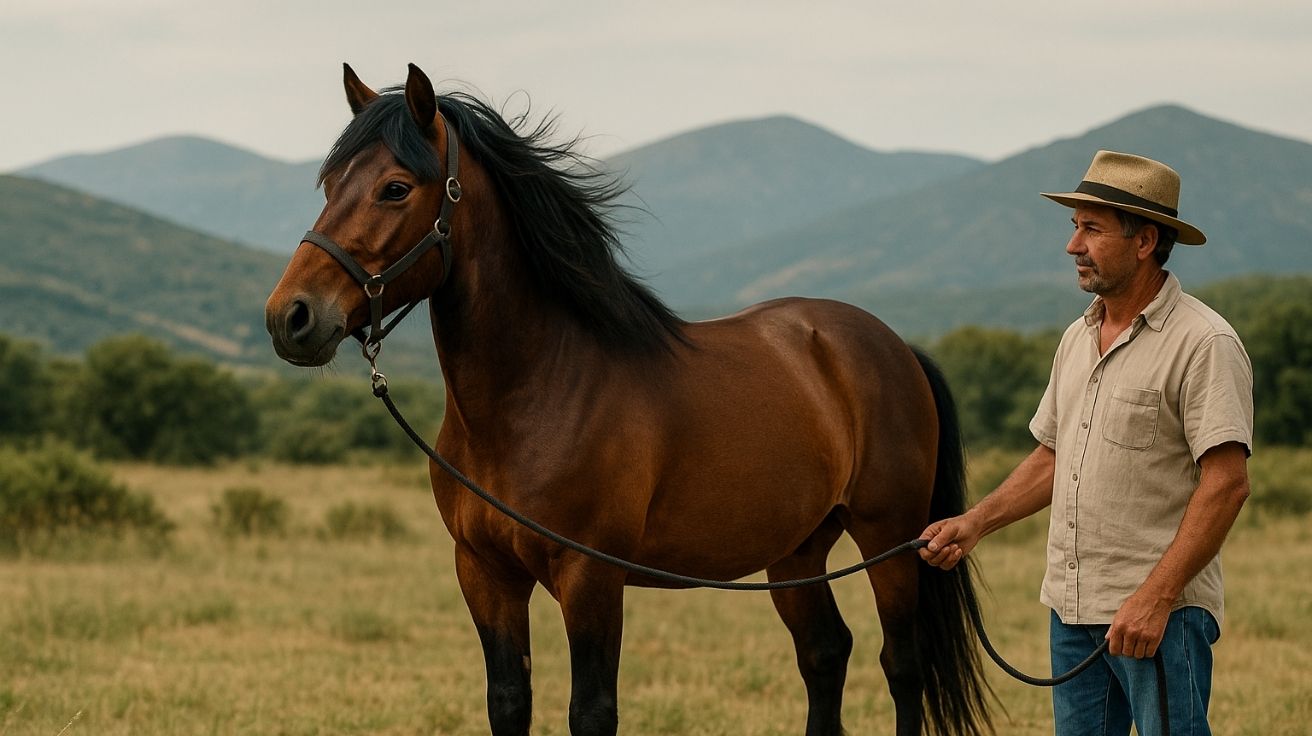


Native to Northern Portugal, the Garrano horse breed survives in a semiferal state, has withstood time, wars, and rural mechanization, but now faces the risk of disappearing from farms and fields
The Garrano horse breed, originating from Northern Portugal, is one of the oldest in the Iberian Peninsula and survives today in a semiferal state, playing an important ecological role and maintaining historical ties with the countryside, agriculture, and even the great navigations. With a small stature and gentle temperament, the Garrano is threatened with extinction and mobilizes preservation initiatives.
Considered a rustic and mountain equine, the Garrano is classified within the group of Celtic ponies, scientifically known as Equus caballus celticus. With a height of less than 1.35 m, chestnut coat, and black mane, this small horse has always been adapted to steep and cold terrains, making it a valuable ally for rural communities and difficult to replace in trails, forests, and rugged terrains.
In addition to its aptitude for transport and saddle, the Garrano has a unique type of movement, called ambling, which makes it comfortable for long distances. Its breeding in freedom and the limited human interference have resulted in stable morphology and unique resilience. Many still roam freely in the mountains of Minho, Soajo, and Peneda-Gerês, in Northern Portugal.
-
Artesian Well Becomes Lifeline for Small Brazilian Farm: Drilling Reaches 60 Meters, Finds Marble, Navigates Rock Fissures, and Strikes Fresh Water

-
Street Cleaner in Brazil Finds Discarded Books That Helped His Wife Pass Civil Service Exam and Become Police Captain
-
July’s Night Sky to Feature Planetary Alignments, New Moon, Venus at Sunset, Buck Moon, and Two Meteor Showers

-
Fisherman Catches 18kg Catfish Near Brazil’s Itaipu Lake, Among Largest Recorded in Recent Years




History, Functions, and Preservation of the Garrano Horse
The Garrano has historical records dating back to the Bronze Age. The breed is believed to have been brought to the Americas during the era of great navigations, being an ancestor of several South American horse breeds, such as the Brazilian baixadeiro. Used for centuries to carry wood, minerals, and agricultural products, it was also essential for the transportation of soldiers and rural goods until the onset of agricultural mechanization in the 20th century.
Since the 1940s, with the advance of motorized transport and the loss of direct economic function, the Garrano population began to decline drastically. From an estimated total of up to 60,000 animals in the 1940s, only between 1,500 and 3,000 individuals remain in the country today, according to data from breeder associations.
Due to the risk of disappearance, the breed is currently protected by specific legislation and is the target of reintroduction and valorization projects, including its use in equestrian tourism, trail rides, and educational activities with children. The Garrano also contributes to forest fire prevention, acting as a natural herbivore by consuming the combustible material present in the undergrowth.
Morphology, Behavior, and Relationship with Agriculture
The morphological pattern of the Garrano is well-defined: compact body, straight or slightly concave head profile, large and expressive eyes, short limbs, and extremely strong cylindrical hooves. Its average weight is around 290 kg, with size proportional to its mountain habitat. The breed also features a thick tail and a lush forelock, predominantly in dark colors.
Although it is a small-sized horse, its temperament is gentle, sober, and intelligent, facilitating training and cohabitation with humans. This makes it ideal for rural leisure activities, agricultural fairs, and integration into small family farms. Many breeders highlight its excellent relationship with children and ease of handling.
The presence of the Garrano in the field not only keeps alive a millennial tradition of Iberian agriculture but also promotes biodiversity and can be integrated into sustainable rural tourism activities. Some properties have invested in selective breeding of the Garrano, combining the production of educational content with environmental conservation, even using natural products such as almond-based feed, rich in fibers and plant proteins.


