Portuguese
  Spanish


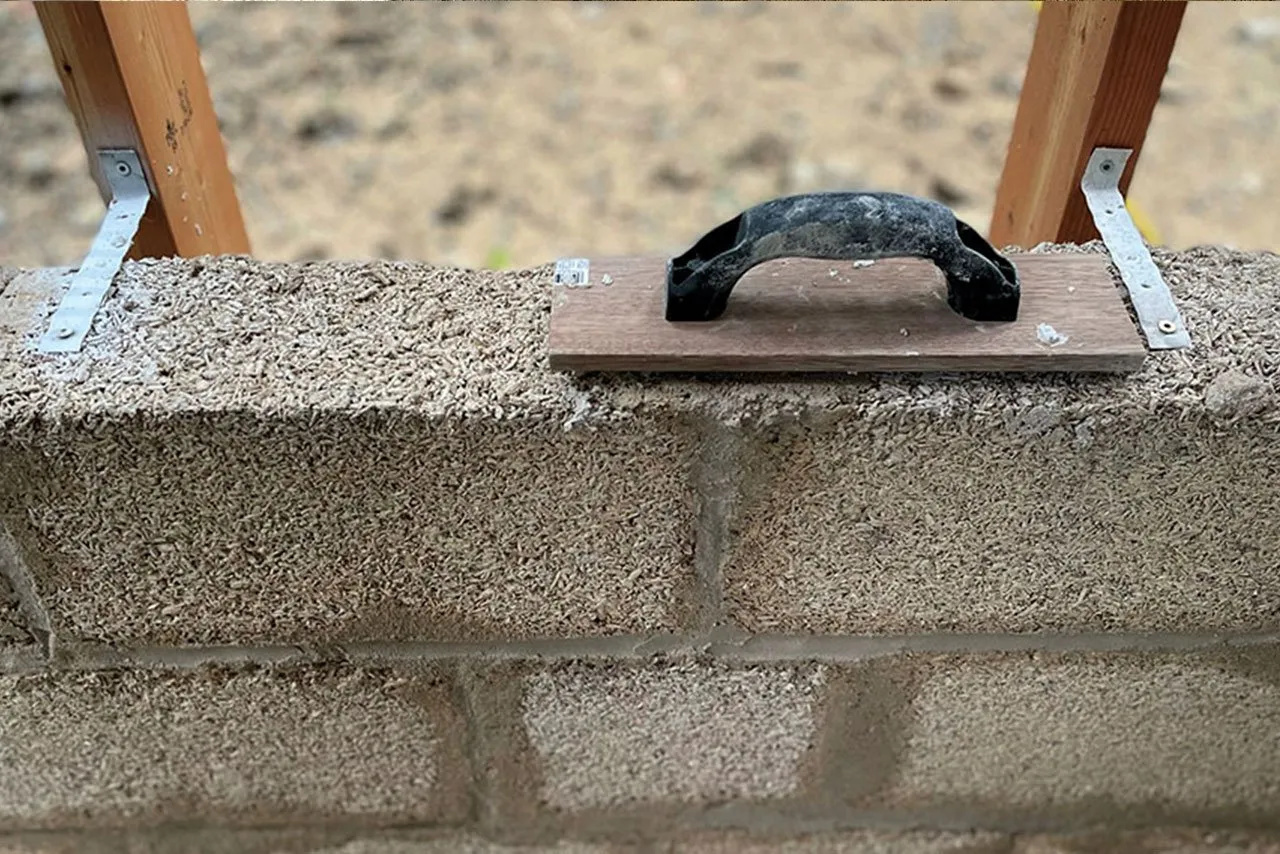


Plant-Based Concrete Without Cement: Hempcrete Uses Hemp and Lime to Create Lightweight, Insulating Walls That Are Up to 80% More Efficient Than Traditional Masonry.
While a large part of the global construction industry relies on conventional masonry—ceramic bricks laid with cement and coated with layers of plaster—a material has been gaining traction in European countries and parts of the United States for proposing the opposite: low mass, high thermal efficiency, and reduced emissions. This material is Hempcrete, known in Brazil as “hemp concrete” or “plant-based concrete.”
Despite its name, Hempcrete is not a direct substitute for reinforced structural concrete: it does not use Portland cement, does not contain steel, does not have mineral aggregates, is not vibrated, and is not applied as a slab. Its function is different: to replace bricks, blocks, and thermal insulation simultaneously, acting as a monolithic closure with superior hygrothermal behavior.
The result is a lightweight wall that breathes, regulates internal humidity, and can reduce the use of artificial cooling by up to 80% in cold regions—data widely documented in French and British housing programs since the 1990s.
-
Brightline to Connect Los Angeles and Las Vegas in Two Hours with the First U.S. Electric High-Speed Train, a $12 Billion Project Aiming to Reduce Road Traffic

-
Brazilian Students Develop Hurricane-Resistant, Ultra-Light Concrete for Modular Homes to Aid Homeless Youth

-
Netherlands Builds Road from 218,000 Recycled Plastic Cups and 500,000 Bottle Caps, Featuring Smart Sensors and Promising Triple the Lifespan of Traditional Asphalt

-
Brazil to Convert 80 Public Properties into 11,000 Affordable Homes Across 44 Cities to Address Housing Shortage



What Is “Plant-Based Concrete” Made Of and Why Does It Work?
Hempcrete is basically composed of three elements:
- Hemp Shiv: the inner, woody part of the plant’s stem, rich in silica, with high porosity and lightness.
- Hydraulic Lime Binder: replaces cement and hardens through carbonation, absorbing CO₂ during the process.
- Water: used to hydrate the binder.
The big difference lies in the hemp shiv: it has microcells of air distributed throughout its structure, creating a natural ability to:
- absorb and release moisture
- stabilize thermal variations
- reduce sound propagation
Countries like France, United Kingdom , and the Netherlands have been using Hempcrete since the 1990s in single-family homes, multi-family buildings, and renovations of historical constructions, mainly because the mix does not cause internal condensation, a critical issue in cold and humid climates.
The effect is so efficient that, in various applications, it completely eliminates the need for rock wool, glass wool, EPS, or drywall, resulting in monolithic walls with just one construction phase.
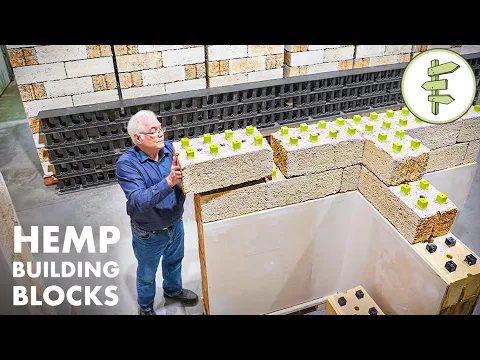

Thermal and Acoustic Performance: One of the Main Reasons for Global Interest
The thermal efficiency of Hempcrete is what draws the most attention:
- Lambda Value (Thermal Conductivity): about 0.06–0.10 W/mK, comparable to insulating materials
- Density: between 90 and 150 kg/m³, much lower than conventional concrete (2,400 kg/m³)
- High Thermal Inertia: maintains stable temperatures for longer
In practice, this means that 30 cm thick walls can provide thermal performance equivalent to or better than constructions with masonry + conventional insulation.
French studies recorded reductions of up to 60% in heating consumption in homes built with Hempcrete compared to ceramic masonry. In the United Kingdom, figures reach 80% in humid regions, mainly due to the absence of condensation in the walls.
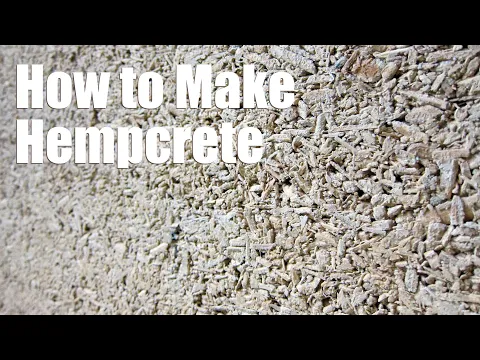
In the acoustic field, the fibrous structure of hemp also absorbs mid and high frequencies, reducing external noise even without secondary layers.
Fire Resistance: One of the Points That Surprises First-Time Observers
Despite being plant-based, Hempcrete is not flammable. Lime reacts with the fibers to form a mineral matrix that:
- Does Not Spread Flames
- Does Not Release Toxic Smoke
- Does Not Suffer Flashover (Generalized Ignition)
European tests classify the material as fire resistant, and there are cases of houses that suffered internal fires with wood structure preserved thanks to Hempcrete acting as a thermal barrier.
These characteristics make it highly used in renovations of historical buildings, where the risk of fire is critical and lightweight materials are welcome.
Durability, Moisture, and Health: The Trio That Defines the “Breathable Concrete”
Unlike impermeable walls (such as masonry coated with acrylic paints), Hempcrete allows water vapor to pass through, balancing internal humidity levels between 40% and 60%, considered ideal for respiratory health.
This prevents:
- mold
- fungi
- condensation
- walls sweating
- deterioration of internal insulation
Lime, in turn, is an antibacterial and antifungal material, with high pH, contributing to healthier indoor environments.
The hardened material undergoes carbonation, absorbing CO₂ from the air—a behavior opposite to Portland cement, which emits CO₂ during its production.
Application and Limitations: Where It Works and Where It Doesn’t
Hempcrete is applied in three main ways:
- Prefabricated Panels
- Spraying
- Forming On-Site Between Forms
However, it does not substitute slabs, does not withstand high structural loads, and must be combined with light wood or steel structure. Therefore, it is designed as filling and insulation, not as a pillar or beam.
Its limitations include:
- Longer drying time than cementitious masonry
- Lower industrial availability in Brazil
- Requirement for specialized workforce in bio-construction
Nonetheless, progress is being made consistently.
The Global Expansion and Slow Arrival in Brazil
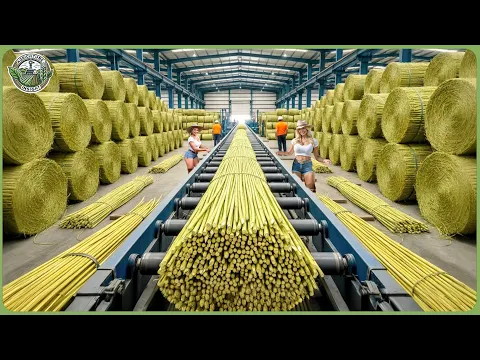
France is the country that has developed the most technical regulations for Hempcrete, through housing programs and restoration of 19th-century heritage.
In the United Kingdom, universities, architects, and companies have been reporting:
- reduced climate impact
- lower cooling costs
- better thermal comfort in cold climates
In the United States, after the legalization of industrial hemp in 2018, several states initiated experimental projects.
In Brazil, the bio-construction sector is growing at a slower pace, but there are architects, construction companies, and university institutes testing the material in prototypes in the Southeast and South, especially in regions with higher thermal amplitude.
Why Hempcrete Is Not a “Trend” But an Alternative Engineering Path
What gives Hempcrete traction worldwide is not “green” marketing, but physical performance:
- Natural thermal insulation
- Moisture control
- Acoustic barrier
- Fire resistance
- Low density
- Low environmental impact
It does not replace everything. It does not solve everything. But it is a real alternative to traditional masonry in various construction typologies, especially residential and renovations in cold climates.
For countries seeking carbon reduction, the use of renewable materials, and energy efficiency, plant-based concrete opens a path that did not exist before: the path of light monolithic closure, with low emissions and high thermal performance, without industrialized coatings.