






 Portuguese
  Spanish


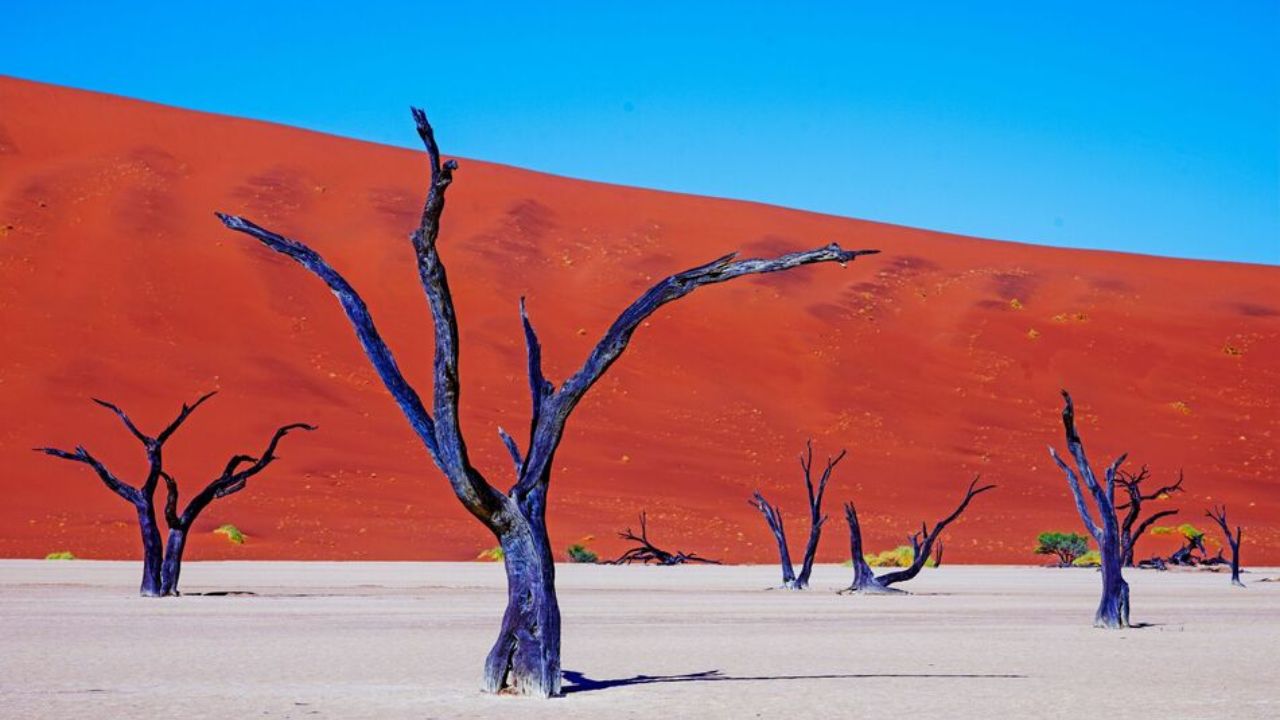


In the oldest desert in the world, located in Namibia, it rains less than 10 mm per year, and blackened trees over a thousand years old remain preserved by the extreme climate.
When we think of deserts, the image of the Sahara comes to mind, right? But surprisingly, the Sahara is not the oldest desert in the world. That title belongs to the Namib, in Namibia, home to the mysterious and impressive Dead Vlei. A place where time seems to have stopped and rain is an event that only happened millions of years ago.
Let’s explore this almost surreal landscape and discover why Dead Vlei, besides being a natural wonder, is one of the most intriguing destinations on the planet.
Dead Vlei: The Heart of the Oldest Desert in the World
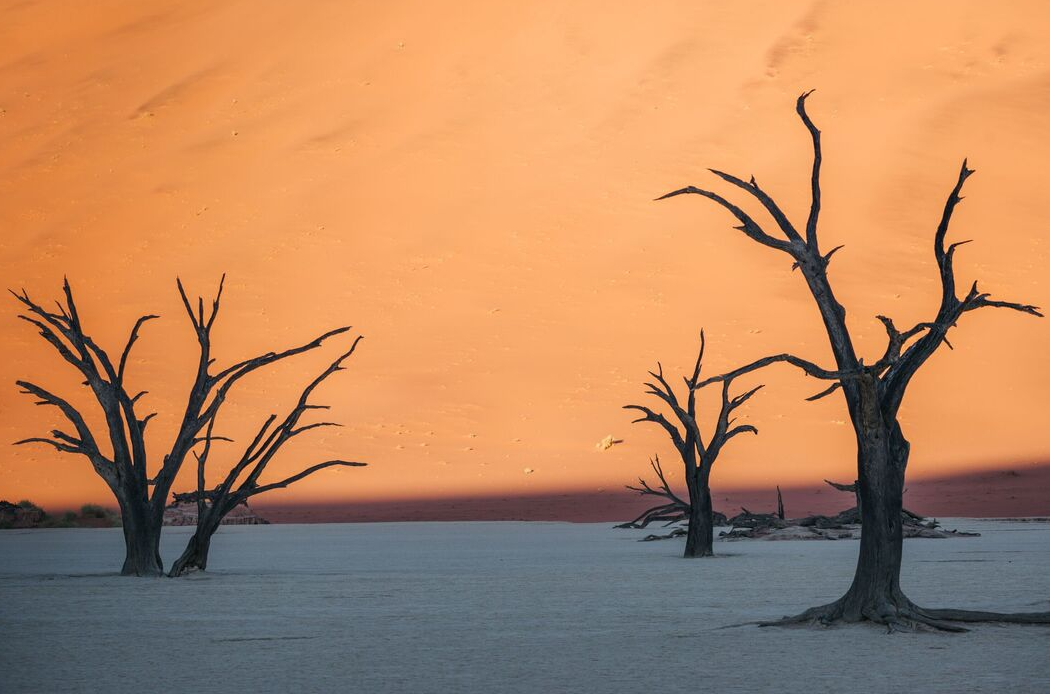
In the heart of the Namib-Naukluft Park, in Namibia, lies Dead Vlei, a valley that combines beauty and mystery in one place. The name, which means “dead marsh,” tells the story of a very different past. Over a thousand years ago, this area was a vibrant marshland, irrigated by the Tsauchab River. However, climate changes altered the river’s course, leaving the region dry and arid.
-
How to Prevent Brown Recluse Spider Bites: Common Hiding Spots and Free Tips to Reduce Risks

-
Natto: The Unusual Japanese Superfood Gaining Popularity on Social Media and Driving Record Exports
-
Brazilian Mayor Goes Undercover as Homeless for 24 Hours to Assess Public Services

-
15-Year-Old Entrepreneur Malu Lira Publishes 20 Children’s Books on Financial Education, Earns $500,000, and Expands Her Project to the Amazon Rainforest




The sand dunes, some of the tallest in the world, surrounded the area, blocking any possible source of water. The cracked white clay ground is a reminder of the marsh that once existed there. With less than 10 mm of rain per year, Dead Vlei is literally one of the driest and most inhospitable places on Earth.
The Landscape Frozen in Time
If you have ever seen a photo of black trees surrounded by orange dunes and a deep blue sky, you have caught a glimpse of Dead Vlei. These blackened and hauntingly beautiful trees are over a thousand years old. They died centuries ago in this desert, but they are so well preserved that they seem frozen in time.
The reason? The extremely dry climate prevents decomposition. Here, nature has become an artist: the combination of dead trees, white soil, and orange dunes creates a unique visual spectacle in the world.
Why Dead Vlei is a Unique Destination?
Have you ever imagined being in a place that feels like it’s from another planet? That’s exactly the sensation Dead Vlei evokes. The contrast between the vibrant colors of the dunes and the darkness of the trees creates an almost unreal landscape in this desert.
It’s no wonder that Dead Vlei is every photographer’s dream. The light of sunrise and sunset transforms the place, further highlighting its vibrant colors. And for nature lovers, it’s a chance to witness a landscape that defies time and extreme conditions.
Tips for Exploring Dead Vlei
If you plan to visit Dead Vlei, it’s good to prepare. Temperatures in summer can exceed 50 °C during the day, so the best time to explore the area is early in the morning or late in the afternoon. During winter, temperatures are milder, ranging from 20 °C to 25 °C, but the climate still requires light clothing, water, and sun protection.
For those seeking an unforgettable experience, climbing the dunes around Dead Vlei is a must-do adventure. Dune 45 and the “Crazy Dune,” which reaches 400 meters in height, offer spectacular views of the entire region.
The History of the Oldest Desert in the World
The Namib Desert is not only the driest in the world but also the oldest. It began to form about 200 million years ago when the Earth was dominated by dinosaurs. Since then, it has witnessed extreme climate changes, adaptations of species, and the evolution of the planet.
This advanced age is what gives the desert its unique character. Unlike other “younger” deserts, the Namib features an ecosystem perfectly adapted to extreme conditions, including species like Welwitschia mirabilis, a plant that can live for over 1,000 years.








Eu vou conhecê-lo.
O deserto é de Angola não da Namíbia.
NOSSA ,VOU PROCURAR NO YOUTUBE PRA VER NEM PASSOU NA MINHA CABEÇA QUE ISISTE,VOU VER EM CASA NO MEU COMPUTADOR SOSSEGADO!!