Portuguese
  Spanish


A Story of Survival, Courage and Technology That Mobilized Rescue Teams From Several Countries and Entered History as One of the Largest Rescue Operations Ever Carried Out.
On August 5, 2010, Chile came to a standstill. An explosion at the San José mine in the Copiapó region buried 33 workers 700 meters underground. What seemed like just another tragic mining accident transformed into one of the most emotional stories ever told, with an almost miraculous ending: the Chilean miners survived 69 days underground until being rescued in an unprecedented operation that captured the world’s attention.
The Accident That Changed the History of Mining in Chile
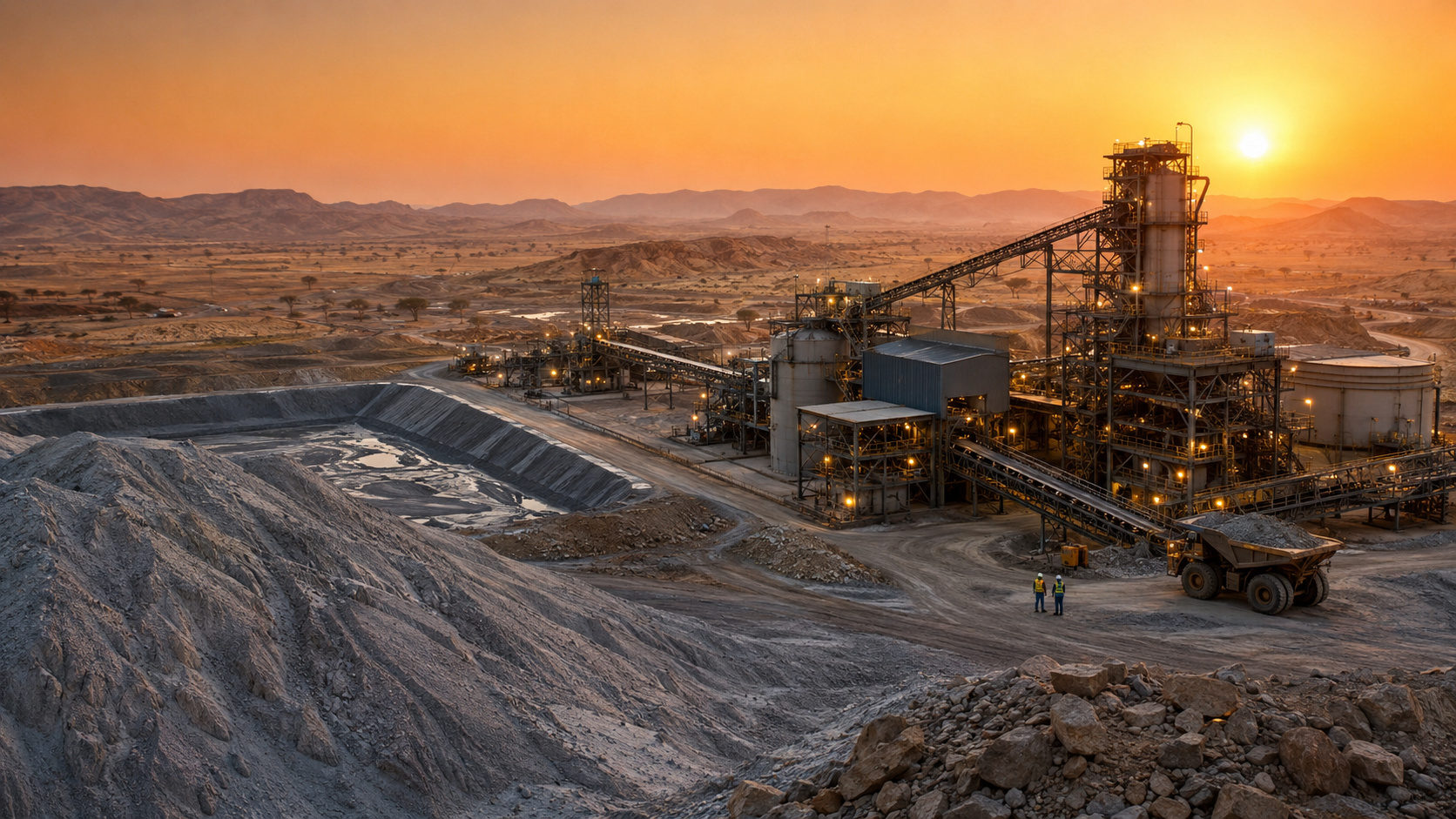
The San José mine, a copper and gold deposit in the Atacama Desert, was considered risky. Previous reports had already pointed out safety issues, but the operation continued. On the afternoon of August 5, a massive collapse blocked the mine’s main access.


In the first days, the scene was bleak: no one knew if the 33 miners were alive. Communication attempts failed, and the risk of new collapses complicated the work of the rescue teams.
-
U.S. Acquires Brazil’s Only Rare Earth Mine for $2.8 Billion, Diverting It from China

-
Indian Project Aims to Recover Zinc and Silver from Mining Waste, Targeting Over ₹3.8 Billion Revenue in 28 Months

-
Giant 142 kg Emerald from Brazil’s Bahia Region Auctioned with Starting Bid of Nearly $16 Million

-
Study Reveals 97% of Pregnant Munduruku Women in the Brazilian Amazon Have Mercury Levels Above Safe Limits, 90% of Newborns Contaminated by Gold Mining



The Discovery That Made World Headlines
It took 17 days of anguish until a probe drilled through the rock and brought back an answer: a note attached to the drill, written with a red pen, said:
“Estamos bien en el refugio los 33” (We are fine in the shelter, the 33).
This simple message, on a crumpled piece of paper, traveled the world. It was the confirmation that the miners were alive — and triggered one of the largest rescue operations in history.
69 Days of Survival Below Ground
Trapped at 700 meters, the Chilean miners faced a superhuman challenge. They took refuge in the “shelter,” a small emergency gallery with limited resources.
- Food: in the first days, they divided small portions of tuna, cookies, and milk. Rationing was so strict that each man received the equivalent of two tablespoons of tuna every 48 hours.
- Water: the only source was the water that dripped from the equipment and the mine walls.
- Temperature: ranged between 30°C and 35°C, with high humidity and inadequate ventilation.
When communication was reestablished, narrow tubes began to send food, medicine, clean clothes, and messages from families. The medical team on the surface prepared a diet to avoid health issues — all under intense psychological monitoring, as claustrophobia and despair were constant enemies.
The Mega Operation That Involved the Whole World
The Chilean government set up an unprecedented task force, involving military personnel, engineers, and specialists from several countries, including the United States, Canada, and even NASA, which helped with health and confinement protocols.
Three drilling plans were devised:
- Plan A: slow, using a traditional mining drill.
- Plan B: used a more modern machine called Schramm T130, which ended up being the chosen one.
- Plan C: a third safety drilling.
It took weeks of drilling through the rock until a tunnel was opened wide enough to bring the men back.
The Fénix Capsule: The “Elevator of Hope”
The rescue required the creation of a special capsule, the Fénix. With only 53 cm in diameter and space for one man at a time, it would descend the tunnel and ascend in individual trips of nearly 20 minutes.
Each miner would wear a special suit, a helmet with a camera, and an oxygen mask. The capsule had direct communication with the surface and safety systems to prevent it from getting stuck.
The Rescue That Stopped the Planet
On the night of October 12, 2010, the Fénix capsule began its descent. The first to emerge was Florencio Ávalos, who reached the surface after a tense 15-minute ascent. The scene was broadcast live to millions of people.
One by one, the 33 Chilean miners emerged, embracing family members, authorities, and rescue teams. The last to come out was Luis Urzúa, the leader of the group, called “the captain,” who maintained discipline and morale during the 69 days of confinement.
A Happy Ending – and the Marks Left by the Tragedy
The rescue ended on October 13, after 22 hours of continuous operation. No miners died — an unprecedented outcome in accidents of this magnitude. The world celebrated the story as a modern miracle, but it also raised questions about mine safety, corporate responsibilities, and emergency protocols.
After the rescue, the miners traveled, gave interviews, and inspired books, films, and documentaries (such as “The 33,” starring Antonio Banderas). However, not everyone was able to return to life as before. Many suffered psychological trauma, financial difficulties, and found themselves caught up in legal processes and media contracts.
The Legacy of the 33 Miners
The episode of the Chilean miners left marks on history. The operation became a model for rescue in extreme confinement, studied by engineers, military personnel, and even space agencies. The San José mine never reopened, but the event forced changes in safety and inspection policies throughout Latin America.
More than just a disaster, the story transformed into a symbol of resilience, international cooperation, and hope. The note “Estamos bien en el refugio los 33” remains one of the most famous messages ever written — a reminder that, even in the most impossible situations, survival is possible.