Portuguese
  Spanish


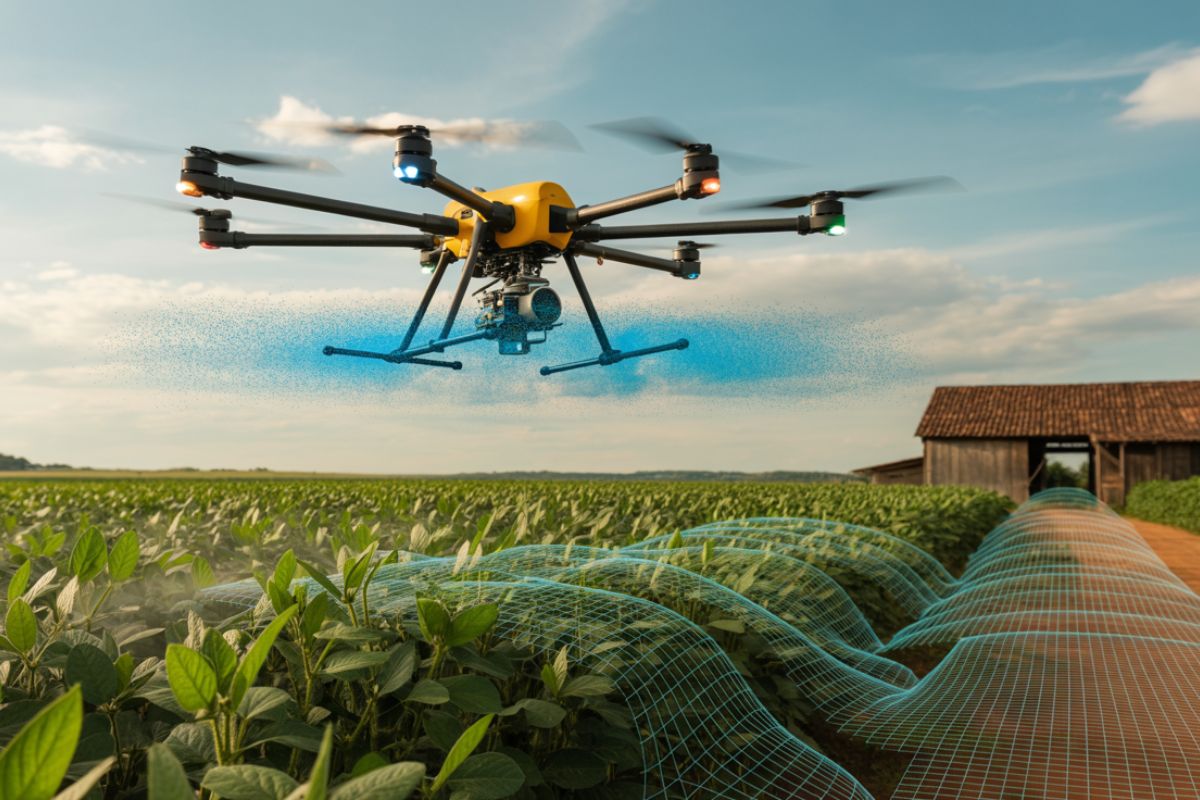


Meet the DJI Agras T50, the 8-Rotor Drone That Applies Pesticides with 90% Less Waste and Is Revolutionizing Precision Agriculture in Brazil.
A new revolution is hovering over Brazilian farms, powered by an impressive 8-rotor drone that promises to replace tractors, optimize the use of inputs, and increase productivity like never before. This is the DJI Agras T50, one of the most advanced precision agriculture tools in the world, already in operation in Brazil, transforming the way farmers manage their crops.
Developed by the Chinese giant DJI, a world leader in drones, this equipment goes far beyond a simple aircraft. It is a complete aerial work platform, capable of mapping the terrain in 3D, identifying obstacles, creating automatic spraying routes, and applying pesticides and fertilizers with surgical precision, reducing waste by up to 90% compared to traditional methods.
What Is the DJI Agras T50?
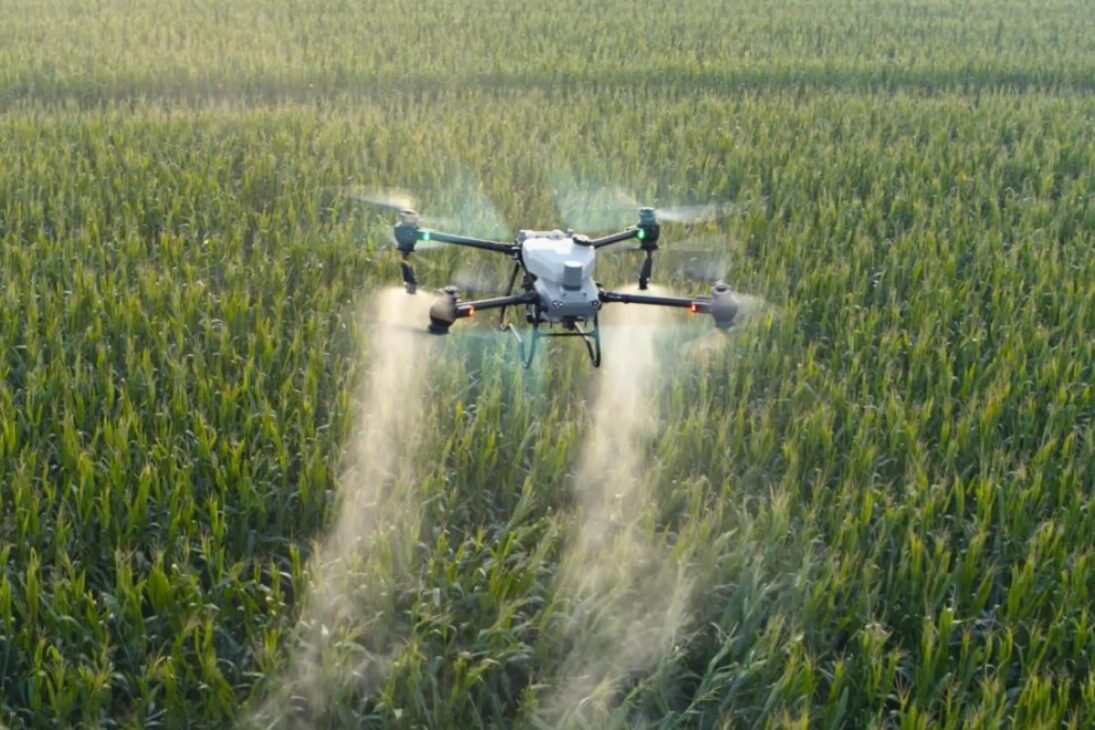
The Agras T50 is a large 8-rotor drone designed specifically for the heaviest tasks in the field. Its robust and foldable structure allows it to carry heavy payloads, making it a viable alternative to ground sprayers.
-
Chinese Farmers Develop “Blanket Greenhouses” to Grow Vegetables in Extreme Winter Without Heaters

-
Centuries Before Modern Greenhouses, English Gardeners Used Horse Manure to Grow Pineapples in Cold Climates

-
Sugarcane Cultivation in India: A Symbol of Water Stress and Environmental Strain Amidst Global Demand for Sugar and Green Fuel
-
Innovative Farm in Northeastern Brazil Combats Drought with Advanced Techniques, Aiming for 10,000 Liters of Milk Daily Production


- High Payload Capacity: It can carry up to 40 kg of liquid pesticides for spraying or 50 kg of solid fertilizers for spreading.
- Operational Efficiency: With its high flow rate, the T50 can cover an area of up to 21 hectares (or 50 acres) per hour, an impressive productivity for an aircraft of its size.
3D Mapping and Intelligent Navigation
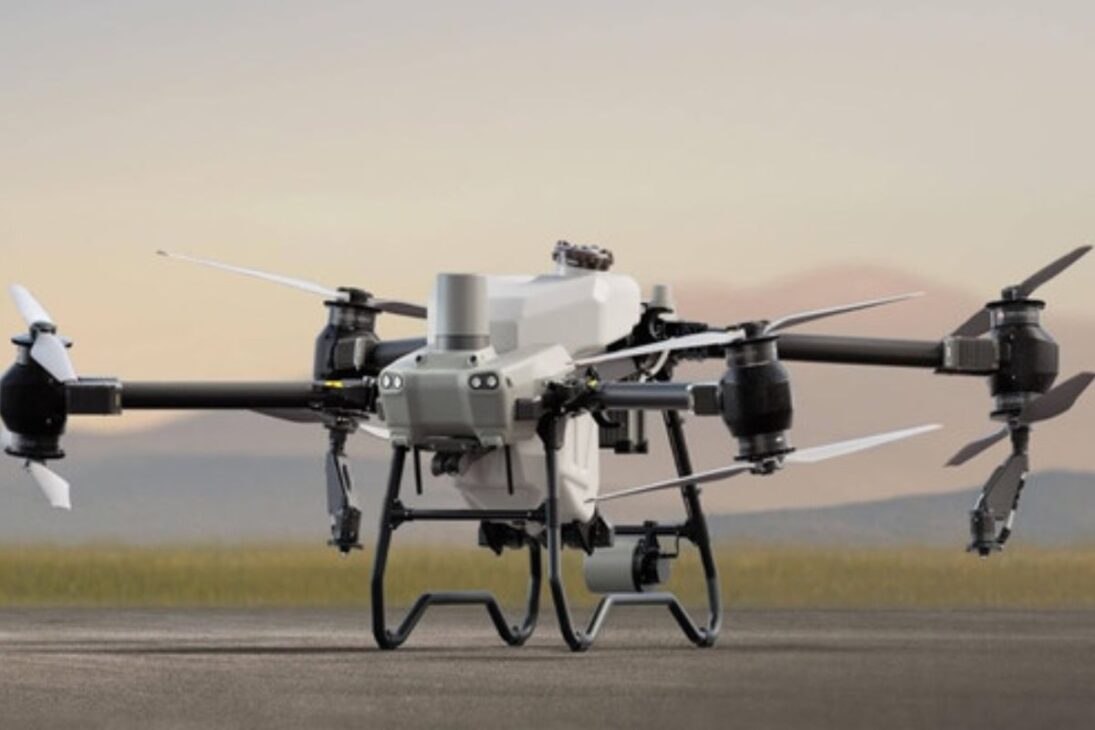
One of the main differentiators of the Agras T50 is its ability to “see” the environment. Equipped with phased array radar and a binocular vision system, it scans the crop and creates a detailed 3D map in real time.
This allows the 8-rotor drone to plan automatic flight paths, avoiding obstacles such as trees and poles autonomously and maintaining a constant height relative to the ground, even on slopes of up to 50 degrees.
Spraying with 90% Less Waste
The key to input savings lies in its dual atomized spraying system. The centrifugal nozzles produce uniformly-sized and adjustable droplets, ensuring that the product reaches the target with minimal drift (when the wind carries the pesticide away from the application area).
Combined with the automatic routes that avoid overlaps, the system ensures that every droplet of pesticide is used as efficiently as possible. While the 90% waste reduction figure is a promotional estimate from DJI, the industry recognizes that drone application can easily reduce waste by over 50% compared to tractors.
The Impact on Brazilian Agriculture
In Brazil, the 8-rotor drone is already being used in major crops such as soybeans, corn, and sugarcane. Companies like Agridrones and Drone Direto are among the authorized dealers that are driving the adoption of technology in the country.
The business model ranges from selling the equipment, which has an initial cost of around 18 thousand dollars, to offering spraying services, where the farmer contracts application by hectare. This flexibility is making precision agriculture accessible to an increasing number of producers, who see technology as a way to reduce costs, increase productivity, and adopt more sustainable practices.
And what do you think about the use of this 8-rotor drone in agriculture? Do you believe that aerial automation is the definitive future of agribusiness? Leave your opinion in the comments!