Portuguese
  Spanish


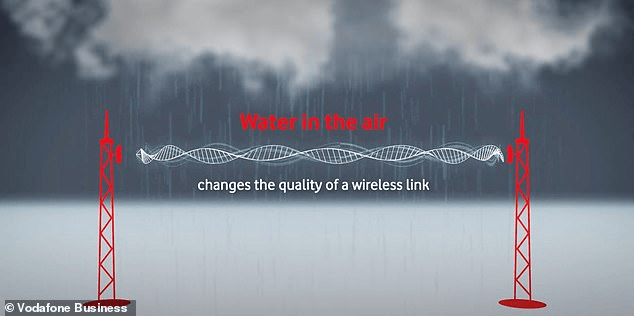

Being Caught Off Guard by a Storm May Become Thing of the Past. Company Started in the United Kingdom Tests an Innovative System That Uses Mobile Phone Antennas to Predict Rain with Extremely High Accuracy.
Being caught off guard by a storm may be numbered. A new test conducted by Vodafone in the United Kingdom could change the way rain is forecasted. Using mobile phone antennas, the company aims to create a more accurate early warning system than the current radars or weather stations.
The initiative is being applied in the River Severn region, one of the most flood-affected areas in the country. If successful, it could expand to other locations.
How The Technology Works
The technology, called “Network as a Sensor,” is based on a simple principle: the interference caused by rain on signals between cell towers.
-
Largest Known Single-Piece Meteorite, Weighing 60 Tons, Puzzles Scientists with Its Intact Fall and Lack of Visible Crater

-
Oceanographer Turns Abandoned Fishing Nets from Brazilian Waters into Bags, Creating Jobs and Earning Over $7,000 Monthly

-
Australia deploys poisoned sausages and uses traps, shooting, and fences in a battle against invasive cats that kill over 1.5 billion native animals annually, threatening more than 200 species.

-
NASA Rover Captures “Tired Face” on Mars, Highlighting Human Brain’s Tendency to See Faces in Rock Formations



Whenever someone makes a call or sends a message, the device’s signal travels a path from antenna to antenna. These connections occur via electromagnetic waves. When raindrops are in the way, they disrupt this signal.
This interference, which is usually a problem, can now be used as an advantage. Certain frequencies, such as microwaves, are very sensitive to water. They can “feel” the amount of rain in the air accurately.
Currently, Vodafone monitors these signals every 15 minutes. The idea is to use this data to predict storms, heavy rain, and even possible floods.
Test in the River Severn Region
The partnership with the River Severn Partnership seeks to prevent tragedies and damage caused by flooding.
Matt Smith, from the River Severn Partnership Advanced Wireless Innovation Region, believes the technology can increase the region’s resilience.
According to him, predicting the weather more accurately can protect not only homes but also the health and economy of communities.
Criticisms of the Current System
The new project comes at a time when the traditional forecasting system is facing heavy criticism.
During the Bert storm in November last year, hundreds of homes were flooded. However, according to local residents and authorities, the alerts were insufficient.
These communication failures put residents at risk and caused outrage among local leaders. The hope now is that the new approach can detect these signals earlier.
Data as a Tool for Protection
Nick Gliddon, director of Vodafone Business in the United Kingdom, says that advancements in technology can help mitigate the impacts of extreme events.
He believes that storms are becoming increasingly common and dangerous, and it is necessary to use all available resources.
The company believes its network can become a kind of giant rain gauge. Being more sensitive to rain than weather stations or satellites, the antenna network can capture signals that might otherwise go unnoticed.
Unlike traditional forecasting, which looks days ahead, this technology focuses on the next minutes or hours. This is essential in emergency situations, such as flash floods.
Expansion to Other Countries
If the test in the United Kingdom is successful, Vodafone intends to implement the system in other European countries.
In Spain, the company is already conducting experiments aimed at detecting dryness in the air.
The goal is to anticipate wildfires, which have become more frequent and intense in recent years.
Combining data on rain, temperature, and wind, the company believes it will be possible to predict these disasters before they become uncontrollable.
Marika Auramo, CEO of Vodafone Business, says that the data from the network can be used by governments, local authorities, and industries to make quicker decisions.
She states that with the pan-European network functioning as a climate meter, it will be possible to create alerts for floods, wildfires, and even human-caused accidents.
Real-Time Monitoring
The test that transforms cell towers into climate sensors represents a new stage in weather forecasting.
If the British experience is positive, the way we monitor the weather could change drastically.
The use of an existing infrastructure — the cell antennas — makes the proposal even more feasible and scalable.
With faster systems and more accurate data, authorities will be able to act before disasters occur.
In times of climate change and extreme events, this could be the difference between a controlled storm and a tragic outcome.