Portuguese
  Spanish


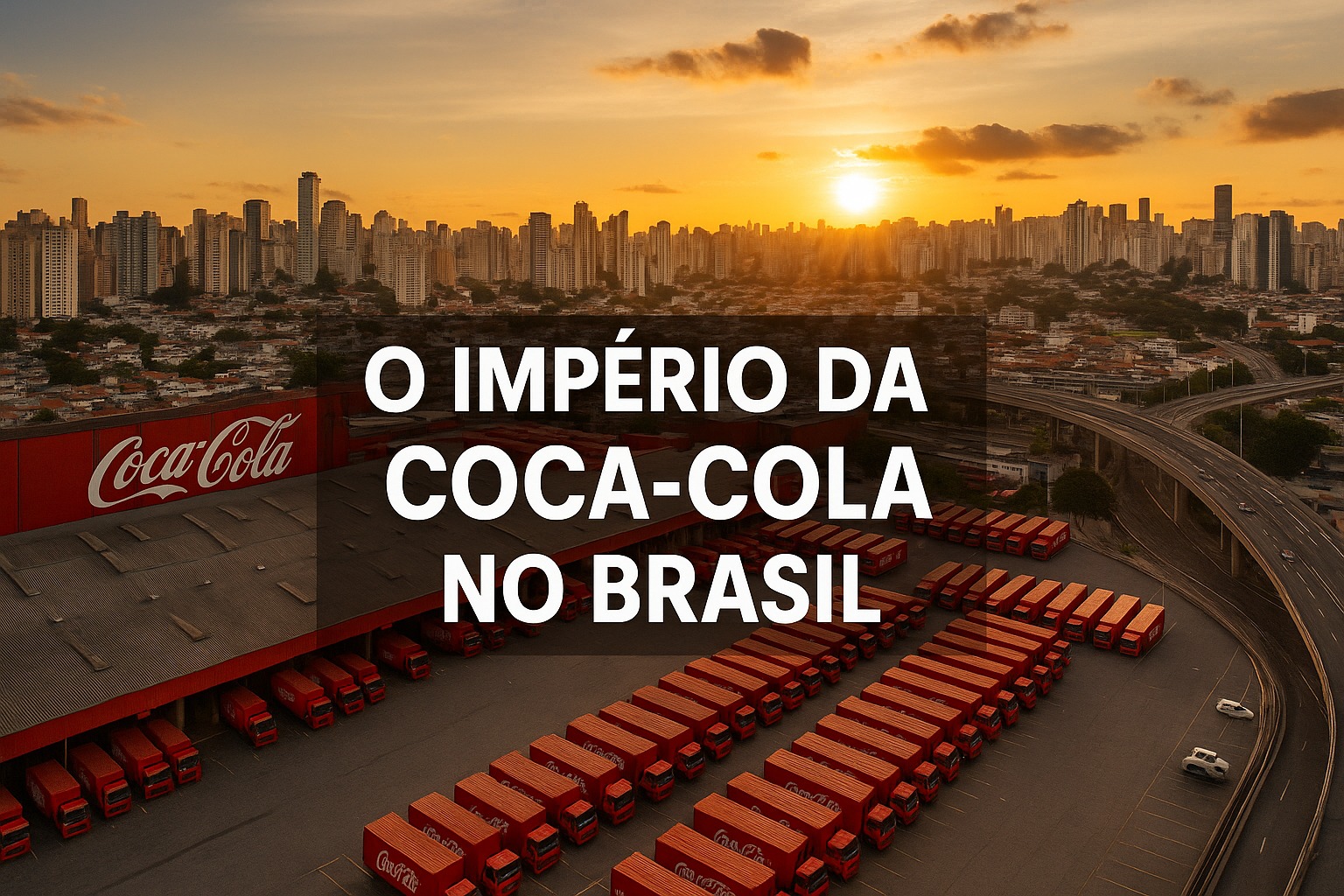


With a Presence in Over 1 Million Points of Sale, Coca-Cola Heavily Invests to Expand Production, Innovation, and Efficiency in Brazil
For over eight decades in Brazil, Coca-Cola has solidified its position as the absolute leader in soft drinks and a constant presence in consumers’ lives. The brand is in over one million points of sale, but still sees room for growth — so much so that it has invested R$ 11 billion in the last two years to strengthen its national operation. The information is from the portal Exame.
A System That Moves Billions
According to a survey by the consultancy Steward Redqueen, Coca-Cola Brazil generates R$ 87.5 billion annually in economic impact.
This amount represents 0.7% of the country’s Gross Domestic Product and shows the weight of the production system that goes from the field to retail.
-
Brazil’s 2026 Tax Refund: Record 9.58 Million Filers in Largest Payout Ever, But a Key Detail on Priority Recipients Draws Nationwide Attention

-
Itaú Alters Hybrid Work Model, Increasing Office Days from 2028, Prompting Employees to Adjust to New Routine
-
Facing Labor Shortage, Japan Plans to Invest $34 Million to Attract Foreign Workers in Construction, Healthcare, Industry, and Commerce

-
Brazilian City Makes Remarkable Leap, Becomes 4th Wealthiest in the Country with GDP of R$ 134.1 Billion



In total, the Coca-Cola system is responsible for 574,000 jobs — including 50,000 direct and over 520,000 indirect jobs.
The study also indicates that R$ 25.9 billion were paid in salaries and R$ 28.2 billion correspond to impacts on commerce.
In addition, the company moved R$ 14.6 billion in purchases of goods and services from Brazilian companies.
These numbers demonstrate the breadth of a network that connects farmers, industries, distribution centers, and retailers.
Luciana Staciarini Batista, CEO of Coca-Cola Brazil and Southern Cone, defines this reach as an essential part of the company’s “secret formula.” “It is the consequence of a very distributed system, with a strong local presence. This is part of our secret formula,” she states.
The Power of Every Real Spent
The study points out that for every dollar spent by consumers on Coca-Cola products, another US$ 0.94 is generated for the Brazilian economy.
This multiplier effect occurs because the operation is integrated into a broad chain of partners.
Luciana highlights that the impact goes beyond beverage production. “Our business model allows us to operate as a robust economic engine, promoting jobs, income, and direct impact on the lives of thousands of families,” she said.
Continuous Investment to Maintain Momentum
With R$ 7 billion planned for 2025 and another R$ 4 billion already spent in 2024, Coca-Cola considers Brazil one of its main engines for global expansion.
Therefore, it inaugurated 14 new production lines during this period, expanding factory capacity and diversifying categories.
Part of the investments is directed towards returnable packaging, seen as a sustainable and cost-effective alternative.
Other lines cater to the growth of segments like juices, sports drinks, and mineral water.
According to the executive, Brazil offers opportunities that have already been exhausted in more mature markets.
“Even when we compare with other countries in terms of consumption, we see significant room to continue growing. This has been happening, so much so that Brazil has been cited in corporate reports as one of the company’s growth levers.”
Expansion and Logistical Efficiency of Coca-Cola
The increase in production required reinforcement in the distribution structure. Coca-Cola invested in opening new logistics centers, expanding fleets, and acquiring refrigeration equipment for points of sale.
The company also monitors changes in Brazilian consumer behavior. The consumption of sugar-free beverages, for example, has been growing rapidly.
“The zero category is growing significantly in Brazil. Our role is to offer good options for all consumption profiles, with the best possible taste,” explains the CEO.
Even with the expansion of zero versions, the original flavor remains the flagship. “Coca-Cola Original remains the leader, but the sugar-free options are increasingly gaining ground,” she reinforces.
This transition reflects a cultural shift around health and moderation in consumption. The company has invested in technology and research to maintain the taste of zero versions similar to the traditional one, which took years of development.
A System Shaped by Regionalization
One of the differentiators of the Brazilian model lies in its decentralized structure. The Coca-Cola system in the country is composed of seven manufacturers and 33 factories distributed across different regions.
This format allows for local adaptations. In the Northeast, for example, Fanta Caju has become a success. In the South, mate production is growing strongly.
“This flexibility is what makes our model so efficient. We are 100% integrated with the country, operating with Brazilians at all stages of the chain — from the field to the industry, from logistics to commerce,” Luciana states.
Coca-Cola: A Deeply Rooted Presence in the Country
With over 80 years of history in Brazil, Coca-Cola maintains its relevance by combining innovation and local presence.
It is in over one million points of sale and sustains a network that generates more than half a million jobs.
The Brazilian model has become a reference within the company, serving as an example of integrated and adaptable operation. Therefore, the company reaffirms that it will continue to invest in the country.
“Brazil is a priority. We will continue investing in new categories, logistical efficiency, and innovation because we believe in the potential of this market,” concludes the CEO.
In a transforming consumption landscape, Coca-Cola reaffirms its leadership with robust investments, regionalized strategy, and an economic impact that already exceeds R$ 87 billion per year — establishing itself as one of the largest industrial and consumption forces in the country.
With information from Exame.