






 Portuguese
  Spanish


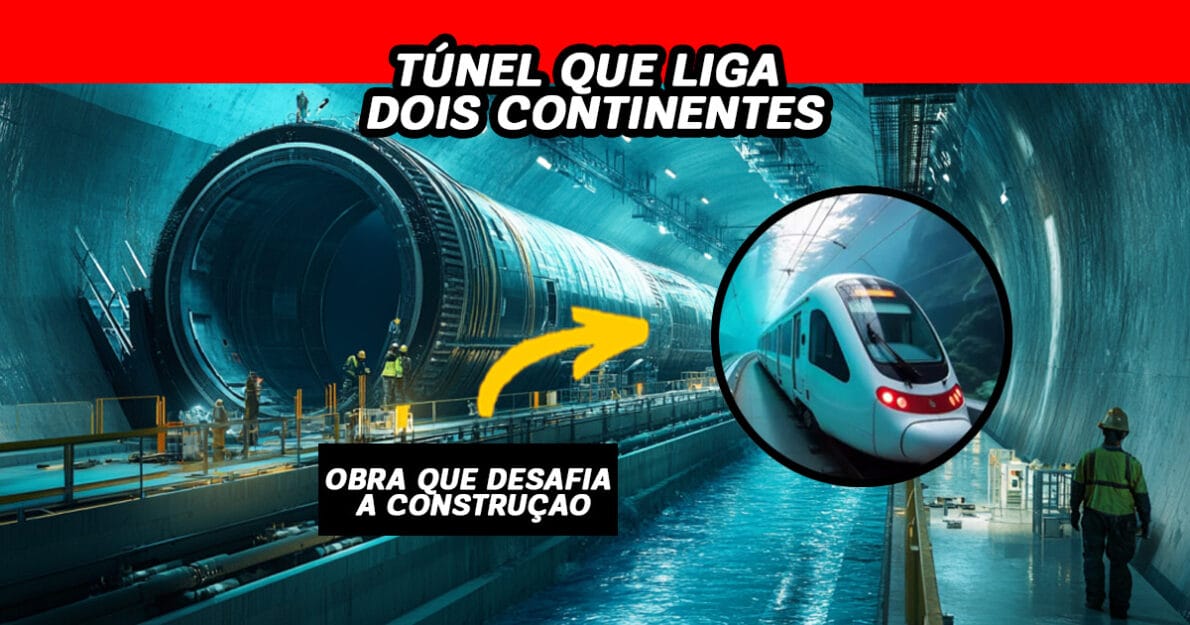

28 Km Submarine Tunnel Linking Europe and Africa at Over 470 Meters Deep Is About to Be Completed. With an Investment of 40 Billion, This Work Will Transform Transport Between Continents.
When we talk about infrastructure projects that challenge logic, this one certainly stands out.
The construction of a submarine tunnel connecting Europe to Africa promises not only to change transport between the continents but also to directly impact the economy and international cooperation.
The 40 billion megaproject, which already has a completion date set, will take modern engineering to a new level, overcoming geological and operational challenges that were, until recently, considered nearly impossible to conquer.
-
U.S. City Builds Tiny Home Village on Water Company Land to House 136 Homeless People: Inside the Social Housing Units

-
Woman Turns Shipping Container into Home, Embraces Rural Life to Cut Monthly Expenses to Just Over $330
-
France Revamps 530 Social Housing Units with Large Balconies and Glass Facades Without Demolishing Existing Buildings

-
Facing high rent, couple transforms parents’ garage into a fully functional apartment, creating a complete home at a fraction of the market cost.




The centerpiece of this colossal undertaking? A tunnel that will stretch 28 kilometers under the Strait of Gibraltar, connecting Spain and Morocco.
And, as if that weren’t enough, it will traverse one of the most seismic zones on the planet, the Azores-Gibraltar tectonic fault, plunging to an impressive depth of 475 meters below sea level.
The impact of this project is not only technical but also strategic, as it promises to transform the relationship between the two continents.
A Project That Started in 1930 but Gained Momentum in 1981
The idea of permanently linking Europe and Africa through a tunnel emerged nearly a century ago, specifically in 1930.
However, it was only in 1981, with the formal cooperation between Spain and Morocco, that this vision began to materialize.
The project, which finally took shape, is one of the most ambitious works of the 21st century and is expected to be completed by 2030, establishing itself as a landmark of global engineering.
With a gigantic budget estimated at 7.534 billion dollars, this tunnel will not only be a monumental work but also a key piece in strengthening trade relations between Europe and Africa.
The route will connect Punta Paloma in Spain to Malabata in Morocco, providing a new railway link for both passengers and goods.
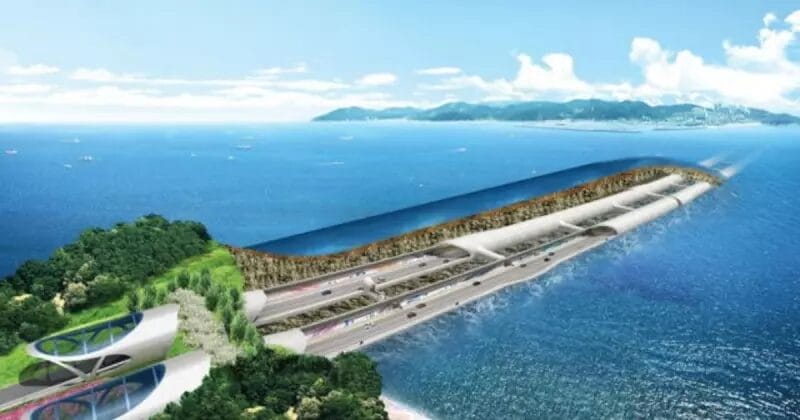
Tunnel Is a Landmark in Transcontinental Mobility
The project’s primary goal is to facilitate railway transport, with an estimated 12.8 million passengers and 13 million tons of cargo expected to pass through this tunnel annually.
The work, in addition to halving the travel time between Casablanca, Morocco, and Madrid, Spain – reducing from 12 hours by car to just 5 and a half hours by train – will also bring a series of commercial benefits to both continents.
For Spain and Morocco, this new route will not only open doors for new business opportunities but also strengthen cultural and economic ties, facilitating the exchange of goods and services between the countries.
A Boost for the 2030 World Cup
The construction of this submarine tunnel gained even more relevance with the prospect of the 2030 World Cup.
Both Morocco and Spain are part of the joint bid to host the event.
Thus, the tunnel is being treated as a priority and should become a symbol of transcontinental cooperation during the World Cup.
This infrastructure will allow for faster and more efficient logistics between the countries, and it will also serve as a showcase for what modern engineering can achieve.
The project’s completion by 2030 will be strategic, not only to facilitate the flow of fans during the Cup but also to establish the work as a hallmark of innovation and cooperation between Europe and Africa.
The Future of the Europe-Africa Relationship
When completed, the tunnel will not only be a new transport route but a true symbol of the partnership between two continents that, historically, have always been close in geographical terms but have maintained significant barriers regarding economic and cultural integration.
With the tunnel’s expected completion in 2030, mobility between Europe and Africa will never be the same, and the benefits of this union go far beyond infrastructure.
In short, this project not only highlights the power of modern engineering but also exemplifies how infrastructure works can completely transform global dynamics, uniting countries, boosting economies, and promoting cultural exchange.
Could a project of this level be carried out between continents in the Southern Hemisphere, like South America and Africa?









Mais viável é um túnel entre a China continental e a ilha de Taiwan. Com a tecnologia atual da China como ainda não pensaram nisso?
Eles pensaram, mas só que não querem
Eles estão sempre em guerra na fronteira
América do Sul e África…..
Uma p… viagem na maionese.