






 Portuguese
  Spanish
  4 min of reading
  0 comments


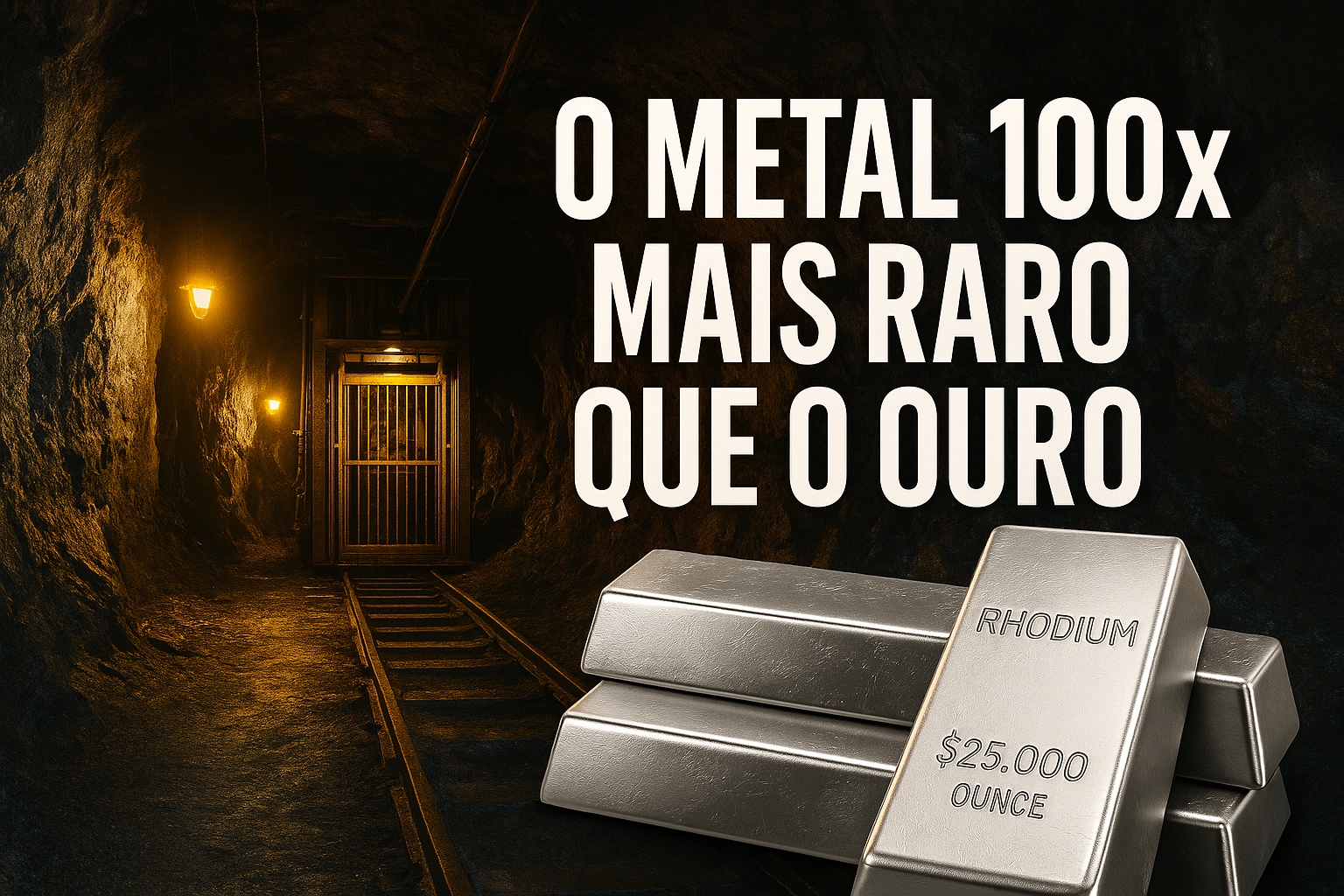
Rhodium, 100 Times More Rare Than Gold, Reaches US$ 25 Thousand Per Ounce and Requires Mining at 3 km Depth. Billion-Dollar Market Dominated by South Africa.
The global precious metals market has undergone a silent and highly technical transformation in recent years. Amid the volatility of gold and the strategic advance of lithium, a chemical element virtually unknown to a large part of the public has taken the place of the most valuable substance on the planet: rhodium. Extremely rare, highly resistant to corrosion, and indispensable in the automotive industry, rhodium has reached historical values that surpassed any other legally traded metal, reaching US$ 25 thousand per troy ounce, according to records from Johnson Matthey and the London Metal Exchange.
Although the peak was recorded between 2020 and 2021, demand remains high, supported by stricter environmental standards, the need for more efficient catalysts, and the natural scarcity of the metal, which is found only in specific rocks of the platinum group.
Below is a detailed and technically precise analysis of why this material, 100 times more rare than gold, has become the protagonist of one of the most complex production chains in modern mining.
-
China could reduce iron ore imports from 80% to 50% of consumption by 2030, while its share in global steel production falls from 52% to 46%, in a shift that could reshape the global market, says CMRG.

-
Brazil is sitting on one of the largest lithium reserves in the world, in the Jequitinhonha Valley, but national mining has almost become an appendage of China: 97% of the metal’s export goes to a single country, which also dominates refining.
-
Iron ore falls to 762 yuan in China as real estate sales decline and steel production hits lowest level since 2018
-
Brazil has minerals, clean energy, and a waiting market, but it could miss a billion-dollar opportunity if it doesn’t speed up the race for green minerals, while the steel industry seeks to reduce emissions.


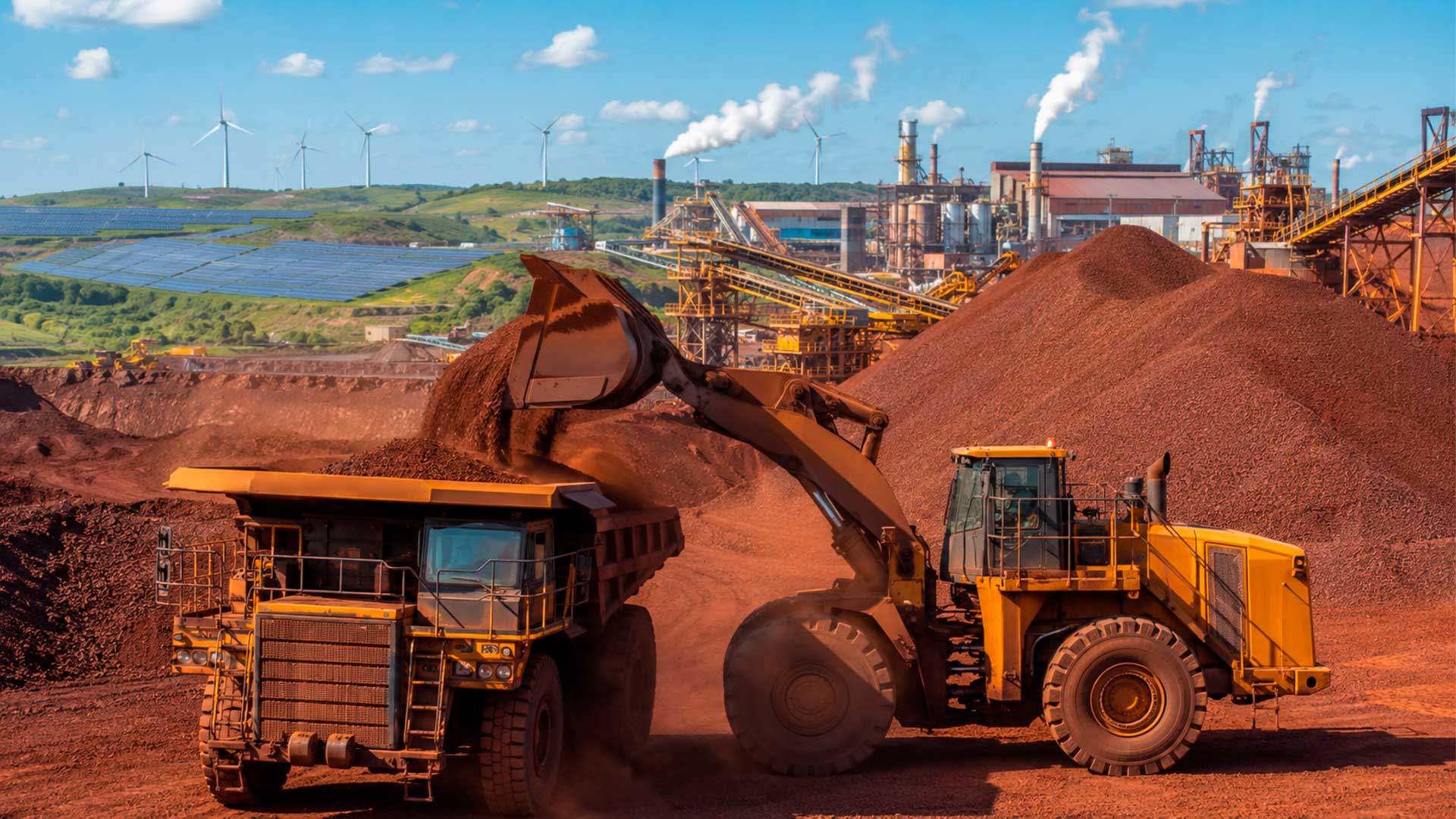
Rhodium Is 100 Times More Rare Than Gold and Extracted at Depths Over 3 Kilometers
The mining of rhodium is not simple, and this is one of the main reasons for its astronomical price. The metal is not found in its pure state, but as a byproduct of extracting platinum and palladium, primarily concentrated in the Bushveld geological belt in South Africa, which is considered the largest reserve of Platinum Group Metals (PGMs) on the planet.
The extraction process occurs in mines that reach 3.2 km in depth, where internal temperatures exceed 50°C and require powerful cooling systems. Anglo American Platinum and Impala Platinum, responsible for a large part of global production, report that only 1 gram of rhodium may require processing 100 tons of raw ore, explaining the rarity and high cost of the substance.
Moreover, the geological formations that concentrate rhodium are scarce: it is estimated that the total available global stock is less than a few dozen tons per year, an insignificant volume compared to the 3,000 tons of gold extracted annually.
Why Rhodium Is So Valuable: Growing Demand, Environmental Laws, and High Catalytic Efficiency
The main function of rhodium is in the manufacturing of automotive catalysts, essential devices for reducing emissions of toxic gases like NOx in gasoline-powered vehicles. The implementation of stricter standards, such as Euro 6 in Europe and equivalent regulations in the US, China, and India, has drastically increased the need for the metal.
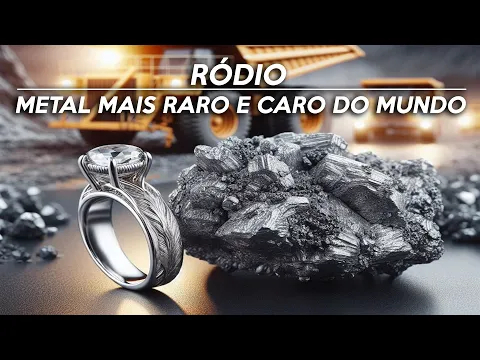

Rhodium has a unique characteristic: it is the most efficient of all PGMs in breaking down nitrogen oxides, extremely harmful molecules that require a high oxidation capacity. No other metal achieves the same performance, which makes rhodium irreplaceable in these applications.
This scenario creates an important paradox for the mining industry: although the transition to electric vehicles promises to reduce demand in the long term, the short and medium term still heavily depends on catalysts, pushing rhodium prices to historically high levels.
South Africa’s Dominance: Extreme Concentration and Global Vulnerability
South Africa accounts for over 80% of global production, followed by small operations in Russia and Zimbabwe. This concentration makes the market vulnerable to disruptions — strikes, energy instability, and fluctuations in mining capacity can drive prices up instantly.
In 2021, for example, prolonged strikes at major PGM mines reduced supply and contributed to record-high prices. The lack of geographical diversification makes rhodium one of the most sensitive markets to any political or operational event in its main producing territory.
Billion-Dollar Market and Complex Refining Chain: From Ore to Pure Rhodium
Rhodium undergoes a laborious chemical separation process that involves:
- advanced crushing of the ore
- leaching with chemical agents
- isolation of the platinum group metals
- high-temperature purification stages
The final amount extracted is so small that mining companies treat rhodium as part of a package of precious metals — not as an isolated product — given the difficulty in obtaining substantial volumes. Even so, its value is so high that, even with minimal production, it represents a significant portion of mining companies’ profits.
Johnson Matthey estimates that the global rhodium market exceeds US$ 12 billion when prices are elevated, although the physical volume is very small.
The Future of Rhodium: Growing Scarcity and Transitioning Technology
Academic research from the University of Oxford and MIT reveals that replacing rhodium in catalysts is extremely difficult. Even when fully electric cars become the majority, sectors such as:
- industrial chemistry
- nitric acid production
- environmental sensors
- optical equipment
will continue to rely on it. Therefore, experts do not believe that rhodium will cease to be valuable — the expectation is that its function will change, not disappear.
Deep underground mining, in turn, is expected to become even more challenging as ore quality declines, requiring greater investment in automation, ventilation, and safety.
Rhodium is the ultimate symbol of extreme mining. Rare, technical, underground, costly, and indispensable, it represents one of the most sophisticated production chains in the global industry.
As the world seeks alternatives to reduce emissions and ensure energy efficiency, this metal will continue to play a strategic role, keeping South Africa at the center of a billion-dollar and technologically sensitive market.







Be the first to react!