






 Portuguese
  Spanish


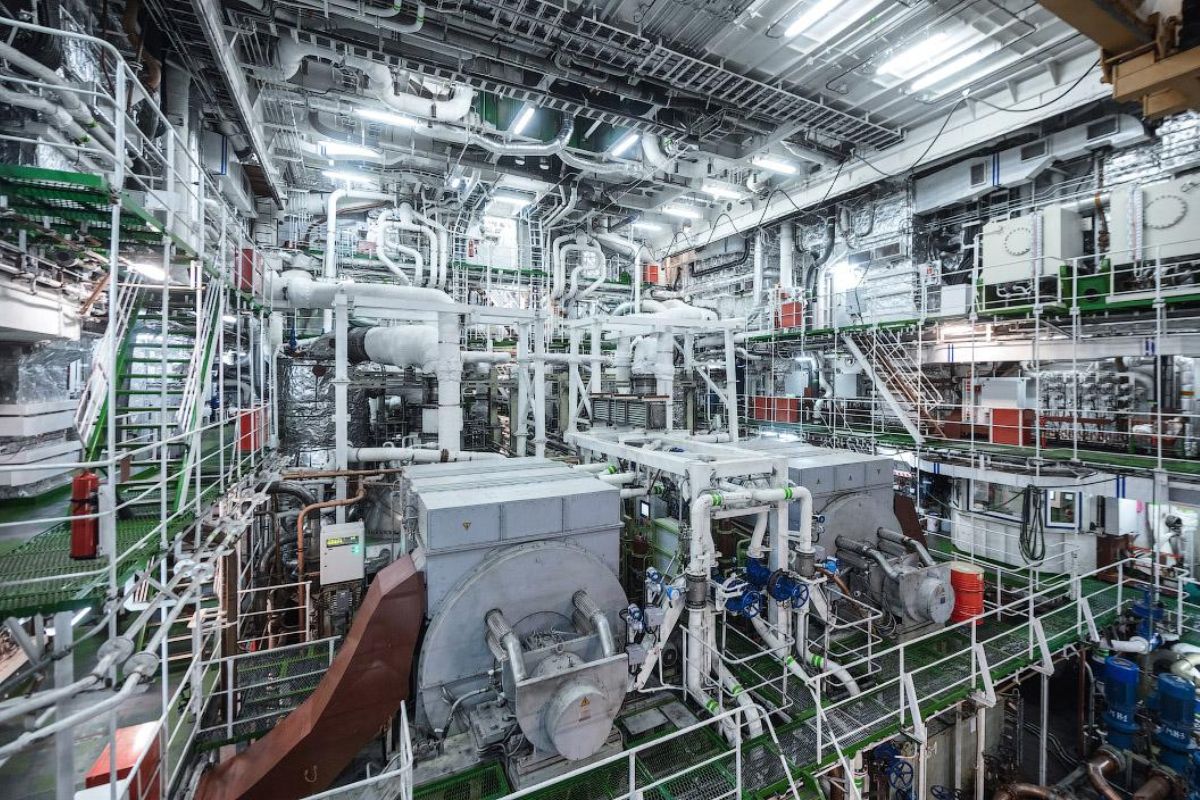


With Nuclear Propulsion That Generates The Equivalent Of 80,000 Horsepower, The Arktika Icebreaker Fleet Is The Key Piece Of The Russian Strategy To Control The Northern Sea Route
In the frozen waters of the Arctic, where ice can reach 3 meters thick, Russia operates an unparalleled machine. The Arktika, leader of the Project 22220 icebreaker class, is the largest and most powerful in the world, a true titan designed to ensure Russian dominance in the region. The key to its power lies not in weapons, but in its heart: the engine of the largest nuclear icebreaker in the world.
This propulsion system is not just an engineering marvel; it is the tool that allows Russia to exert control over the Northern Sea Route, a maritime route that global warming is transforming into one of the most valuable and contested commercial corridors on the planet.
The Engine Of The Largest Nuclear Icebreaker In The World And Its Integral Technology
The secret of the Arktika’s strength and that of its sister ships lies in its two RITM-200 nuclear reactors. Developed by Rosatom, Russia’s state atomic energy corporation, this reactor leaves behind the legacy of Soviet-era models thanks to a fundamental innovation: the “integral” design.
-
15-Year-Old Entrepreneur Malu Lira Publishes 20 Children’s Books on Financial Education, Earns $500,000, and Expands Her Project to the Amazon Rainforest

-
Entrepreneur Turns Rio Cemetery Canteen into a Successful Snack Chain Generating $4.9 Million Annually and Expanding to Metro Stations

-
Rare fox feared “extinct” found alive on Caribbean island after over two decades without official sightings

-
21-Year-Old Brazilian Student Turns Homemade Popsicle Hobby into $100,000-a-Month Business





In this format, key components, such as steam generators, are contained within the main pressure vessel of the reactor. This makes the system 50% lighter and 45% more compact than its predecessors, while being 40% more powerful. The fuel used is low-enriched uranium, allowing the reactor to operate for seven continuous years before needing to be refueled.
From Nuclear Energy To Brute Force, The System Of The Engine Of The Largest Nuclear Icebreaker In The World
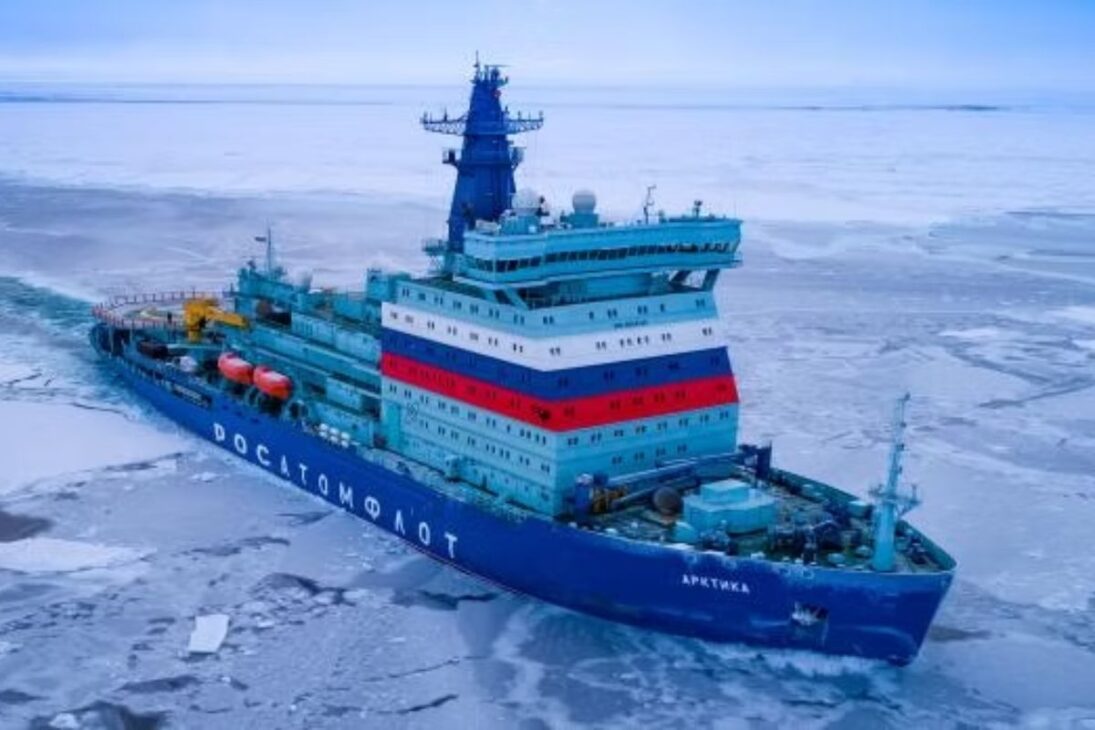
To move the 33,000-ton giant, the energy conversion process is powerful and ingenious. First, the two RITM-200 reactors generate, together, 350 megawatts of thermal energy. This heat boils water in a secondary circuit, producing high-pressure steam.
The steam, in turn, drives two enormous turbogenerators that convert thermal energy into 72 megawatts of electricity. This electricity powers three electric motors that deliver a combined power of 60 megawatts (about 80,000 horsepower) directly to the ship’s three propellers. This colossal force is what allows the icebreaker to continuously advance over the most resistant ice.
The Design To Crush 3-Meter Ice
All this power, however, would be useless without an equally brilliant hull design, specifically engineered for the task of crushing ice. Unlike the wedge-shaped bows of older icebreakers, the Arktika class has a rounded bow, in the shape of a “spoon”. This design allows the ship to slide over the ice layer and use its immense weight to crush it from above.
Another key innovation is the capability of double draft. The ship can fill or empty ballast tanks with thousands of tons of water, changing the depth at which it floats. This makes it versatile enough to operate both in the deep Arctic sea and in the shallow estuaries of Siberia’s major rivers, where Russia’s main gas and oil terminals are located.
The Project 22220 Fleet In 2025: Four Giants In Operation
Russia’s bet on the Arctic is clear and continuous. By mid-year, the Project 22220 fleet already has four nuclear icebreakers fully operational: the Arktika (commissioned in 2020), the Sibir (2021), the Ural (2022), and the newest, the Yakutiya (2024).
In addition, three more ships of the same class are already in different stages of construction at the Baltic Shipyard, with deliveries scheduled for 2026, 2028, and 2030. The goal of this fleet is clear: to keep the Northern Sea Route navigable throughout the 12 months of the year, something essential for Russia’s natural resource exploration projects.
The Strategic Weapon, The Military Role, And The Icebreaker Gap
Although its primary mission is commercial, the engine of the largest nuclear icebreaker in the world also propels a tool of military power. These vessels are essential to ensure the mobility of the powerful Northern Fleet of the Russian Navy, including its ballistic missile submarines, which form the backbone of the country’s nuclear deterrence.
The serial construction of these giants has created what analysts call an “icebreaker gap.” By 2025, Russia operates a modern and expanding fleet, while Western powers, such as the United States and Canada, struggle to build a single new ship. This disparity is not only numerical; it represents decades of advantage in industrial capacity and the sustained political will to dominate the planet’s most hostile environment.






A MÁQUINA RUSSA NÃO USOU AS MELHORES ARMAS CONTRA A UCRÂNIA MAIS É A MAIOR SUPER POTÊNCIA MILITAR DO MUNDO, QUEM RUIM NÃO TEM JEITO TEM QUE ATURAR.
A Rússia é, sem sombra de dúvidas, a Rainha do Ártico!
Essa vanguarda tecnológica lhe confere uma vantagem estratégica e comercial praticamente impossível de ser alcançada!
Rússia rules, ****!