Portuguese
  Spanish



Ten Years After Gaining Its Independence, The Youngest Country In The World Struggles To Consolidate Peace, Strengthen Its Institutions And Face One Of The Worst Humanitarian Crises In Africa
In 2011, the world witnessed the birth of a new nation: South Sudan. After decades of war, the country achieved its independence on July 9 and became the newest member state of the United Nations.
The date was marked by celebrations and promises of international support. Ten years later, the reality proves to be much more challenging than the promised dream of freedom.
Institutional Progress Marks The Birth Of The Country
Since independence, South Sudan has sought to build a solid political structure. The government reconstituted national legislation, appointed 550 new members, and formed a task force to coordinate judicial reforms.
-
Chinese Nuclear Submarine Launches Simulated Warhead Missile in Pacific, Heightening Regional Tensions Amid Naval Drills with Russia Near Qingdao; New Zealand and Papua New Guinea Warn of Persistent Chinese Military Presence

-
Ayatollah Ali Khamenei’s Funeral Draws 15 to 20 Million in Tehran, Calls for Revenge Against Trump After Joint Israel-U.S. Attack

-
U.S. Establishes Permanent Embassy in Jerusalem, Reigniting International Debate Over Israel’s Capital
-
The world has nearly 12,000 nuclear warheads, with the majority held by the United States and Russia; see the figures for China, France, and the United Kingdom.


It also initiated the process of drafting a new constitution based on an inclusive national dialogue.
According to the head of the United Nations Mission in the Republic of South Sudan (UNMISS), Nicholas Haysom, this constitutional effort is vital. “Drafting a national constitution is a fundamental act of sovereignty. It expresses the highest aspirations of a nation and its most cherished values,” he stated.
Peace Still Distant After The 2018 Agreement
Despite these steps, the path to stability is still long. The Revitalized Peace Agreement, adopted in 2018, has not yet been fully implemented.
Among the pending issues are the formation of the Council of States and the appointment of the president of the Legislative Assembly.
The fragility of governance institutions continues to affect the country. Entire regions face insecurity and intercommunal violence, making it difficult to consolidate peace.
Humanitarian Crisis Aggravated By Displacement And Hunger
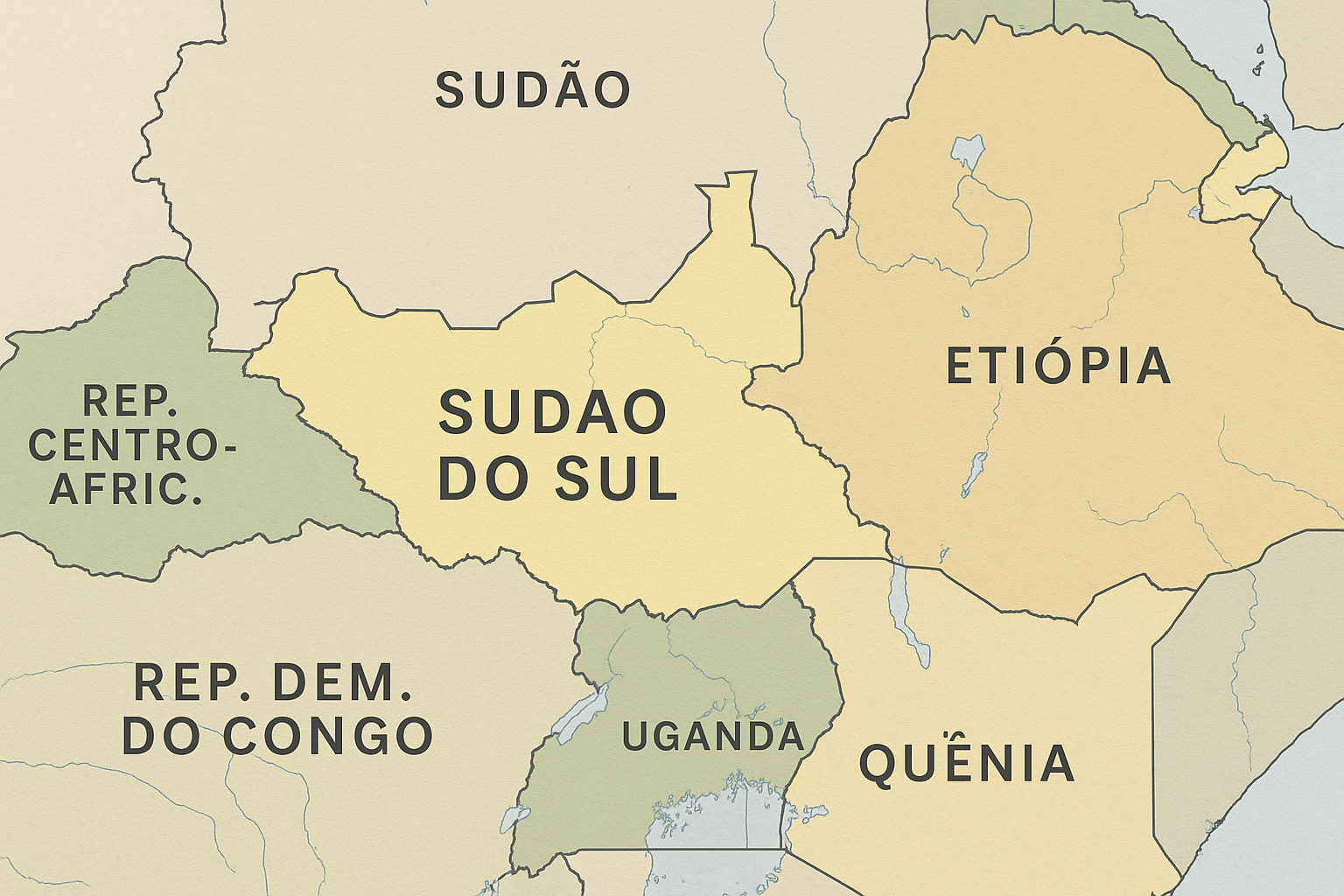
According to the UN agency for Refugees (UNHCR), the country has experienced more wars than periods of peace in the last decade. Ongoing conflicts have generated one of the largest displacement crises in Africa. About 2.2 million people have fled to neighboring countries, such as Ethiopia, Sudan, and Uganda. Another 1.6 million remain internally displaced.
Additionally, 7.2 million people, equivalent to 60% of the population, suffer from food insecurity. For Haysom, international commitment to South Sudan remains “as important and urgent today” as it was on the day of independence.
With information from Brasil.UN.