






 Portuguese
  Spanish
  5 min of reading
  15 comments


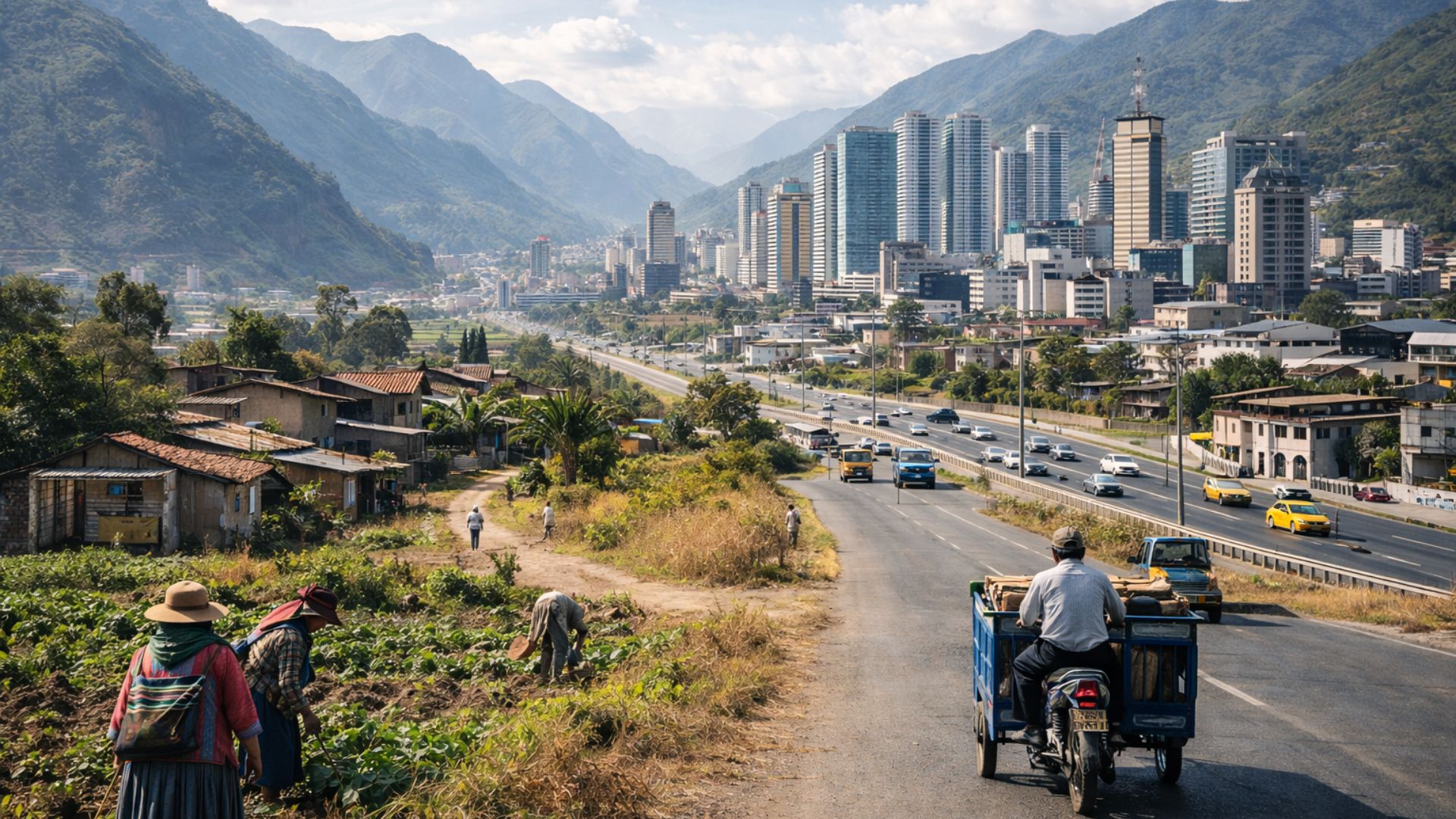


Accelerated Poverty Fall Put Andean Country on the International Radar by Combining Economic Growth, Fiscal Stability, and Changes in the Labor Market, According to Analyses by Multilateral Organizations That Monitor Social and Economic Indicators of Latin America.
Between 2004 and 2019, Peru reduced the share of the population below the national poverty line from 58.7% to 20.2%, according to data consolidated by the World Bank.
In the same period, the extreme poverty rate fell from 16.4% to 2.9%, according to the country’s official methodology, based on per capita household consumption and poverty lines that vary according to geographical location and rural or urban condition.
These numbers are found in the poverty diagnosis prepared by the World Bank, which analyzes the social and economic trajectory of Peru over more than a decade and a half, highlighting the period of greatest economic growth.
-
Brazilian Joins Homeownership Consortium, Faces Decade of Dual Payments Totaling $141,000, Surpassing Traditional Mortgage

-
Land Rover to Halt Production in July, Putting 371 Jobs at Risk, as Chinese Automaker Negotiates to Convert Factory to 100,000 Vehicles Annually by 2027

-
Mexican Pest Threatens U.S. Cattle Herds at Historic Lows, Potentially Boosting Brazilian Beef Exports as Burger Prices Soar

-
Brazilian Freight Bill Progresses in Congress with $5,000 Minimum Wage, 70% Advance Payment, and Fines Up to $1 Million, as Agriculture and Industry Warn of Rising Costs and Legal Uncertainty


Period of Greatest Social Advancement
According to the report, the most intense reduction of poverty occurred between 2004 and 2013.
During this interval, the indicator fell by 34.8 percentage points, from 58.7% to 23.9%.
In the following years, between 2013 and 2019, the decline was more moderate.

There was an additional reduction of 3.7 percentage points, reaching 20.2%, indicating a slowdown in the pace of social improvement before the pandemic.
The same dynamic is observed in extreme poverty.
It showed a sharp decline between 2004 and 2013, from 16.4% to 4.7%.
Subsequently, it declined more slowly until it reached 2.9% in 2019.
Economic Growth and Commodity Cycle
According to the World Bank, this performance was associated with a prolonged cycle of economic growth.
The report points out that the period was favored by positive external conditions and macroeconomic policies that sustained the expansion of output and income.
During this interval, growth was accompanied by an increase in the well-being of low-income groups.
This behavior is described in the document as relevant to explain the intensity of poverty reduction during the years of greatest economic dynamism.
In addition to the decline in poverty indicators, the data show a reduction in inequality during part of the analyzed period.
Nonetheless, the report itself highlights significant differences between urban and rural areas.
Comparison with Latin America

In the regional context, the World Bank notes that while Latin America recorded an average annual growth of 3.6% in real GDP between 2004 and 2013, Peru achieved higher rates.
In the same period, Peru’s GDP per capita doubled, in values reported in the diagnosis.
This trajectory is attributed, according to the document, to the combination of high commodity prices in the international market, attraction of foreign direct investment, and maintenance of policies considered stable in fiscal and monetary terms.
Even after the weakening of the commodity supercycle, the country maintained economic growth above the regional average for several years.
Nevertheless, this growth occurred at a slower pace than that observed in the previous decade, according to World Bank records.
Role of Labor Income
Detailing the factors associated with the fall in poverty, the diagnosis points to labor income as the main explanatory component for social advancement between 2004 and 2015.
The presented decomposition indicates that the increase in labor income had a greater weight than other sources of income.
Transfers also played a relevant role, especially in rural areas and among specific population groups.
The report registers an increase in real median income in both urban and rural areas during the analyzed period.
Despite this, a significant differential remained between these two spaces.
Rural income continued to be lower than urban income, even with proportionally faster growth in the countryside.

Changes in the Labor Market
Changes in the composition of employment are also highlighted in the diagnosis.
There was an expansion of job positions in sectors such as commerce, government services, transportation, construction, and manufacturing.
This data is based on household surveys used by the World Bank.
This context helps explain why the reduction of poverty was more intense during the years of highest economic growth and labor absorption.
The scenario was marked by an increase in real income and family consumption.
Methodology and Regional Differences
The World Bank emphasizes that Peru’s official poverty lines are defined based on the cost of a minimum consumption basket.
This calculation is adjusted by region and by rural or urban area.
This characteristic makes the measurement sensitive to the territorial differences of the country.
The report highlights that this methodology differs from the international lines commonly used in global comparisons.
For this reason, the document recommends caution when comparing Peruvian indicators with those of other countries.
Impact of the Pandemic and Slowdown
Despite the downward trajectory until 2019, reports register that the Covid-19 pandemic interrupted social advancement in the short term.
According to the World Bank’s Poverty and Equity Brief, the poverty rate in Peru rose from 20.2% in 2019 to 30.1% in 2020.
This data highlights the vulnerability of economies with a high degree of informality to external shocks.
The diagnosis also points out that the slowdown in poverty reduction was already perceptible before the pandemic.

This movement indicates structural challenges related to productivity, the labor market, and the quality of public services.
Persistent Regional Inequalities
Regional differences remain a central point of analysis.
The World Bank records significant disparities between the country’s natural regions and between the capital, Lima, and other areas.
According to the report, Andean areas have higher poverty rates than coastal regions.
This data reinforces that the national average does not reflect the local reality homogenously.
The Peruvian experience has begun to be analyzed in international reports for combining a prolonged period of economic growth with a significant reduction in poverty.
At the same time, the subsequent slowdown allows for evaluation of the limits and bottlenecks of a model influenced by favorable external conditions.
Note on gaps: the documents used provide consistent national data and decompositions for specific periods.
However, they do not offer complete and uniform series for all indicators at the provincial level throughout the entire interval between 2004 and 2019.
Which of these factors, in your assessment, had the greatest impact on the reduction of poverty in Peru: the economic growth cycle, the expansion of the labor market, or the macroeconomic stability maintained over the years?





O ciclo de crescimento económico.onde teve abrajemento
No Brasil, primeiro para os políticos e judiciários, depois oara a sociedade.
Já conhecemos a demora para aprovação do salário dos funcionários públicos e do salário mínimo. Demora… o que faria mais poder de compras, como foi no Peru…
Para aumentar o salário dos políticos e judiciário fazer em uma madrugada. Absurdo!
São 8 bilhões gastos em super salários uma realidade triste do nosso país
Ha mas coisas
Moeda estável
Inflacion baixa e estável
Desertos agora são produtivos
Principais Sócios comercial China, EEUU, Europa.
Sou peruano