






 Portuguese
  Spanish
  3 min of reading
  0 comments


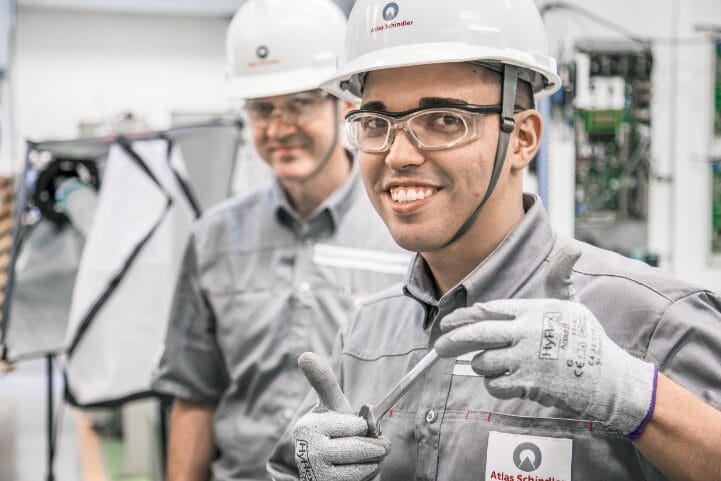
Signed by Alessandra Morais | Technical Director of Safety and Quality at Atlas Schindler
In an increasingly verticalized world, elevators and escalators have become essential elements for daily transportation. More than 2 billion people use elevators daily worldwide, and this number is only expected to grow. Although the industry invests in advanced technologies, ensuring safe use of equipment does not rest solely with manufacturers, installers, or maintenance companies, but also with passengers.
Data from the Brazilian Association of Technical Standards (ABNT) from 2022 indicate that about 20% of elevator incidents in Brazil are caused by misuse. This means that 1 in every 5 could be avoided if passengers followed safe usage practices. The indicator highlights the importance of educational campaigns and awareness actions to promote safety in the country. Adopting simple measures makes all the difference, such as:
1. Attention to Warnings and Instructions: Read and follow the signage and guidance on the equipment. It is also advisable to observe the queue and wait your turn for both the elevator and the escalator.
-
Bothered by millions of bricks discarded every year in Norway, a company cuts old pieces into thin slices, secures them with a metal system, and transforms demolition into a new 1,800 m² facade.

-
While cigarette butts appear on sidewalks, beaches, and sewers, researchers tested the waste in clay bricks and calculated a 10% savings in burning with just 1% in the mixture.
-
Mother of two who couldn’t leave her village in India takes a 20-day masonry course, starts a company with other women, receives a large production order, and changes her financial situation.
-
Instead of plastering the wall, Argentine architects left ordinary bricks exposed, without traditional mortar, without finishes, without paint, and created a perforated pavilion that looks like an art installation.



2. Respect the Maximum Capacity Indicated: Be aware of the load limit indicated, whether on the elevator or the escalator, to avoid sudden stops of the equipment.
3. Always Use the Elevator: if you are carrying any items such as boxes, luggage, baby strollers, or shopping carts, never use the escalator.
4. Be Careful when Boarding and Disembarking: Wait for people to exit before entering the cabin or when people are on the step above you on the escalator. This avoids possible trips or falls.
5. Responsible Behavior: Avoid risky behaviors on these devices; it can be dangerous at any age.
6. Elevators Are Not Toys: Adults are responsible for children. It is their role to guide the little ones in the correct use, avoiding play that can be dangerous. Furthermore, children under 10 should not use the elevator or escalator alone.
7. Communication in Case of Problems: Upon detecting any unusual situation, immediately press the emergency button or contact the maintenance team. Do not attempt to resolve the issue on your own.
8. Do Not Interrupt Door or Step Closure with Unpermitted Objects: Call the elevator or wait patiently on the escalator, contributing to operational efficiency and a smooth flow of passengers.
In situations where passengers are trapped in the elevator, building managers and doormen can follow the recommended procedures:
- Calm the passengers, informing them that rescue or maintenance professionals have already been called.
- The elevator cabin is safe and has air exits; it does not allow passengers to exit without assistance.
- Wait for the technician or Professional Firefighter from the Military Police to arrive.
- In situations of power failure, avoid making technical interventions on the equipment.
In addition, investing in quality periodic maintenance and modernization at the right time is crucial to ensure user safety. These practices, besides preventing accidents and failures, increase the useful life of the equipment, reduce costs and energy consumption, improve performance and aesthetics, enhance property value, and contribute to sustainability.
Therefore, the safety of elevators and escalators is a shared responsibility. By following the indicated practices, passengers aim for a safer and more efficient environment.





Be the first to react!