Portuguese
  Spanish


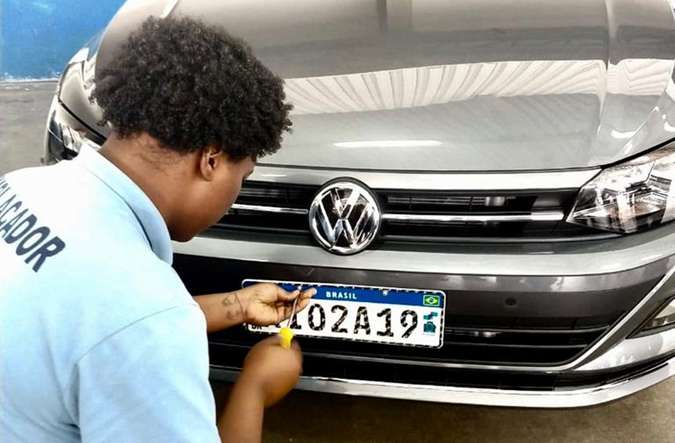

Detran-SP Will Fully Take Over the Licensing Process for New Vehicles in the State of São Paulo.
Starting July 1st, the process for licensing vehicles will have a new flow in the state of São Paulo. The goal of the change is to increase transparency and security by directly involving the Department of Motor Vehicles (Detran-SP) in the authorization for the installation of the Vehicle Identification Plate (PIV).
How the New Model Will Work
Before the change, the owner would directly request authorization from the stamping company to install the vehicle’s plate. Now, it will be Detran-SP that will issue the Authorization for Stamping of the Vehicle Identification Plate (Aepiv).
The new stage aims to give more control to the agency, allowing for better monitoring of each step. The cost of the authorization has already been set at R$ 37.02 for the year 2025, according to a decision from the Department of Finance and Planning (Sefaz).
-
Kia K4 Launches in Portugal with 7-Year Warranty, Targets Volkswagen Golf with 1.0 Turbo Engine, Unavailable in Brazil

-
Uber Women Expands Across Brazil: Female Riders Can Now Choose Women Drivers, Schedule Rides, and Set Automatic Preferences

-
Brazil Plans to Launch Ethanol-Fueled Hybrid Cars in 2026 as an Alternative to Fully Electric Vehicles

-
Hyundai HB20S 2026 Surpasses Onix with Turbo Engine, Fuel Efficiency of 15.2 km/l, and Over 750 km Range, Leading Compact Sedan Sales in Brazil with 5,205 Units Sold.



For individuals, only the CPF will be required for payment. Companies will be able to use the CNPJ and even make bulk payments, benefiting mainly large fleet owners such as rental companies, dealerships, insurance companies, and banks.

Faster Digital Transfer
The change also impacts the Digital Vehicle Transfer (TDV). Now, both the stamping authorization and the respective fee will be included right at the beginning of the property transfer process, exactly at the moment of the initial payment of the vehicle transfer fee.
According to Vinicius Novaes, director of Motor Vehicles at Detran-SP, this change meets the demand for more efficiency and transparency. “By separating the costs of each phase of licensing, we will have greater transparency and equity in the market,” says Novaes.
Installation with More Flexibility
After obtaining authorization from Detran-SP, the owner should seek a stamping company accredited by the agency. The complete list of these companies is available on the official Detran website. At the chosen location, it will be necessary to present the vehicle registration and the authorization received.
Another novelty is that the installation can be done not only by the vehicle owner but also by an authorized representative or even by the establishment where the vehicle was purchased, provided the owner has given authorization. The payment related to the manufacturing of the plate will continue to be made directly to the stamping company.
Attention to Plate Conservation
Used or second-hand vehicles with damaged plates or from another municipality must have their plates replaced. Driving with a plate in poor condition is considered a serious violation under the Brazilian Traffic Code (CTB), resulting in a fine of R$ 295.23, seven points on the driver’s license, and possible vehicle seizure.
Detran-SP emphasizes that taking care of the condition of the plates is essential to avoid legal issues and ensure safety on the roads.
Digital Transformation of Detran-SP
Currently, Detran-SP is working on the digital transformation of its services to simplify customer service. Out of 109 available services, 76 can now be completed entirely online, without the need for users to travel.
With more than 35 million registered vehicles and over 25 million licensed drivers in the state, Detran paulista is the largest traffic executive agency in the country, responsible for 28% of the national fleet.
The expectation is that the new licensing model will streamline processes and provide an even more efficient and transparent service to citizens.