






 Portuguese
  Spanish


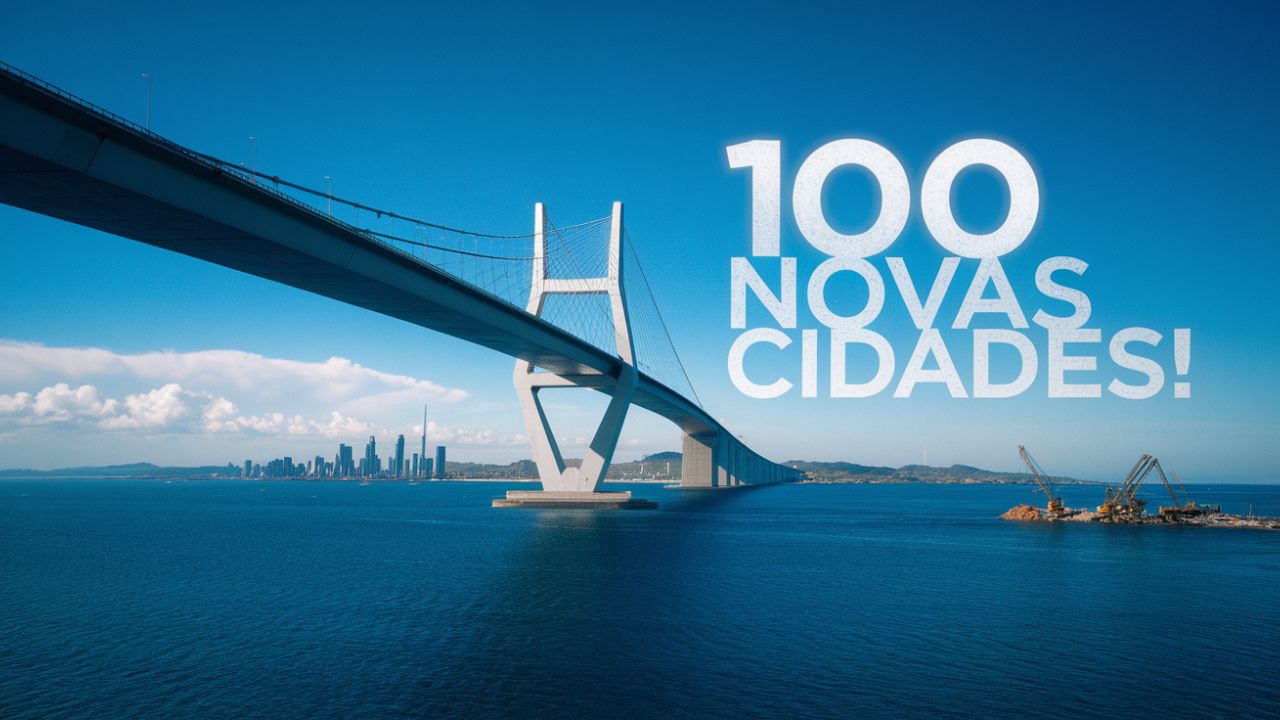


With a 32 km bridge connecting Africa and the Middle East, the plan foresees the daily transport of 150 thousand people and the construction of 100 futuristic cities that promise to revolutionize the economy and regional development.
A bridge so long that connects two continents and also serves as a starting point for the construction of 100 new cities? This is the ambitious plan of Sheikh Tarek Bin Laden, brother of Osama Bin Laden, which aims to transform entire regions of the Middle East and Africa with the Al-Noor project.
But does this monumental plan have a chance of coming to fruition? Let’s dive into the details of this proposal that could change the game for several nations.
The Visionary Behind The Project: Sheikh Tarek Bin Laden
The Al-Noor project envisions the construction of fully planned cities, nicknamed “Light Cities.” These cities would be built in strategic locations on either side of the bridge, starting in Djibouti and Yemen.
-
U.S. City Builds Tiny Home Village on Water Company Land to House 136 Homeless People: Inside the Social Housing Units

-
Woman Turns Shipping Container into Home, Embraces Rural Life to Cut Monthly Expenses to Just Over $330
-
France Revamps 530 Social Housing Units with Large Balconies and Glass Facades Without Demolishing Existing Buildings

-
Facing high rent, couple transforms parents’ garage into a fully functional apartment, creating a complete home at a fraction of the market cost.




The idea is for these cities to be centers of economic development and innovation, with modern infrastructure to attract investments and create jobs. They would just be the first of a total of 100 planned cities over the coming years.
Horn Of Africa Bridge: Connection Between Africa And The Middle East
The Horn of Africa Bridge is the heart of the plan. With an extension of 32 kilometers, it would be the largest suspended bridge in the world, connecting Djibouti in Africa to Yemen in the Middle East. In addition to roadways for 100,000 people daily, it will feature railway lines to transport up to 50,000 passengers per day.
This bridge is not just a monumental construction but also a symbol of unity between continents, linking economies and cultures.
How The Horn Of Africa Bridge Will Transform The Region
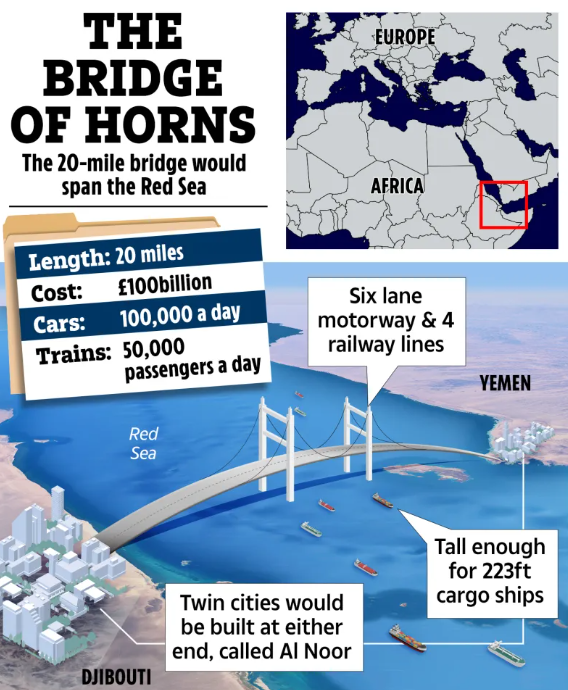
Djibouti, strategically located in the Horn of Africa, has already reserved land for the construction of one of the first cities. The local economy, which gained relevance after Eritrea’s independence, could benefit enormously from this project.
For Yemen, a nation amid conflicts, the bridge could represent a new hope for economic reconstruction and regional integration.
Imagine shortening distances between two continents and transporting goods and people quickly and efficiently. The bridge promises a revolution in mobility, facilitating trade and encouraging tourism.
Future Expansion: Construction Of 98 More Cities On The Horizon
In addition to Djibouti and Yemen, other countries such as Egypt, Sudan, and Syria are considered possible locations for future cities. These regions have the potential to become economic hubs, attracting companies and residents seeking better opportunities.
As impressive as the construction may sound, it faces significant challenges such as political instability, financing, and environmental issues. The project has been on the drawing board since 2008 but has yet to take its first concrete steps.
Economic And Geopolitical Benefits Of The Construction Of 100 New Cities
With state-of-the-art infrastructure, the cities could transform local economies, creating jobs, increasing GDP, and improving the quality of life for residents.
The project has the potential to promote cooperation among nations, reducing historical tensions through economic partnerships and sustainable development.
What Needs To Happen For The Project To Advance?
For the project to truly move forward, it will be necessary to ensure political stability and attract large international investors. Support from local and regional governments will be essential.
The Al-Noor project is undoubtedly an ambitious vision that challenges the imagination. If realized, it could become a historic milestone for humanity.
With the plan to construct 100 new cities, the world watches with curiosity and skepticism. Could this visionary project be the beginning of a new era for the Middle East and Africa? The answer may be closer than we think.






AL-NOOR: MEGA PROJETO MIRABOLANTE DE QUASE US$ 127 BILHÕES, PROPOSTO DESDE 2008 PELO DO IRMÃO TAREK DO TERRORISTA MILIONÁRIO OSAMA BIN LADEN: CONSTRUIR A PONTE DOS CHIFRES (32 km) SOBRE O MAR VERMELHO, LIGANDO ÁFRICA AO ORIENTE MÉDIO E CONSTRUIR 100 NOVAS CIDADES (em vários países).
***
A ideia base é fazer a mega PONTE DOS CHIFRES (32km) sobre o Estreito de BAB-AL-MANDEB (Babelmândebe), para ligar, por via rodoviária, o DJIBOUTI (país da Costa Leste africana) ao YÊMEN, no Oriente Médio, na região conhecida como **** DA ÁFRICA.
***
(Situado entre o Iémen, a Nordeste, e o Djibuti e a Eritreia, a Sudoeste, o ESTREITO DE BAB-AL-MANDEB é a área mais próxima entre a Península Arábica e o **** de África e liga o Mar Vermelho ao Golfo de Áden. Fonte: repositório.com.br).
***
GEOPOLÍTICA:
1. DJIBOUTI, (1,3 milhão hab; 22 mil km2): um país pobre e primitivo da África, já sob a órbita da CHINA, que ali construiu uma extensa ferrovia e ganhou licença para instalar uma base militar da Marinha chinesa.
2. YÊMEN, (35 milhões hab; 528 mil km2), um país pobre, com uma sociedade tribal, ainda
engolfado em guerras intermitentes e que abriga o grupo terrorista dos HOUTHIS, no sul da Costa Oeste da Península Arábica.
***
Com os parâmetros acima e devido aos crescentes conflitos militares e ações terroristas é pouquíssimo provável que esse delírio de ARQ.ENG.URB (da família do mais famoso terrorista do mundo) consiga produzir um PROJECT FINANCE viável e fazer as complexas e demoradas negociações transnacionais imprescindíveis.
***
Compartilhando e editando
Ronald Almeida, arquiteto
SLZ-MA 29DEZ2024
*****
REPORTAGEM CPG
O PROJETO AMBICIOSO DE US$ 126,79 BILHÕES: A construção de 100 novas cidades para [ligar e] transformar a ÁFRICA e o Oriente Médio