






 Portuguese
  Spanish


Diplomatic Crisis Between Brazil and the United States Coincides With Military Tension in Venezuela and Mobilizes Attention of the Brazilian Armed Forces. Commanders Assess Impacts on Strategic Cooperation, Migration Flow, and Military Equipment Supply.
The Brazilian Navy is monitoring the crisis in Venezuela amid the threat of American military action. There are no plans for an immediate troop reinforcement.
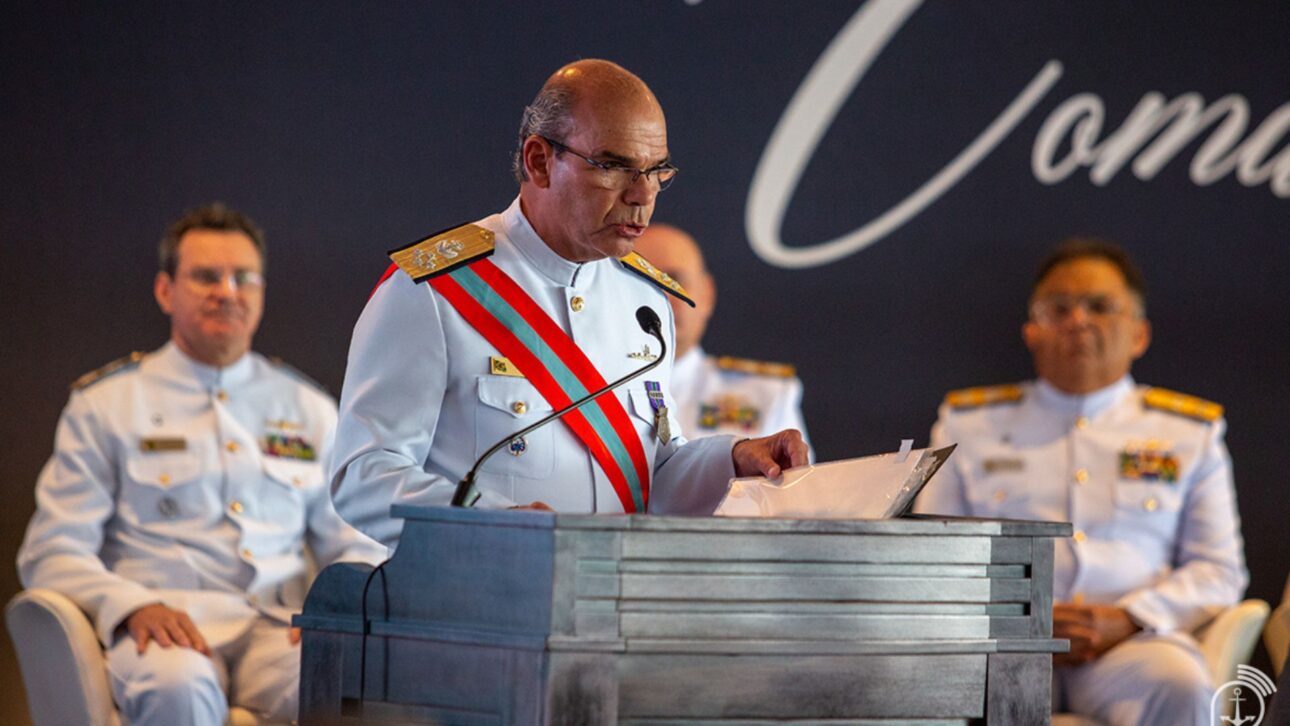
The commander of the Force, Admiral Marcos Sampaio Olsen, stated that a diplomatic rift between Brazil and the United States “would create difficulties,” he declared in an interview with the newspaper O Globo this Thursday (21).
Crisis in Venezuela Under Military Observation
The possible employment of U.S. military personnel against the government of Nicolás Maduro has placed the northern border back on the Forces’ radar.
-
U.S. Military Intervention Risk in Brazil Raises Alarm, Highlights National Sovereignty Amid Tensions Over Washington’s Terrorist Designation of PCC and Comando Vermelho

-
Brazilian Air Force’s Sole KC-30 Aircraft Completes Strategic Mission to Spain for 105mm Anti-Tank Ammunition for Leopard 1A5 Tanks

-
Brazilian Air Force Seeks to Acquire More Gripen Fighter Jets
-
U.S. Air Force Launches Air-to-Air Missile Project with Range of Up to 1,850 km for Indo-Pacific Operations

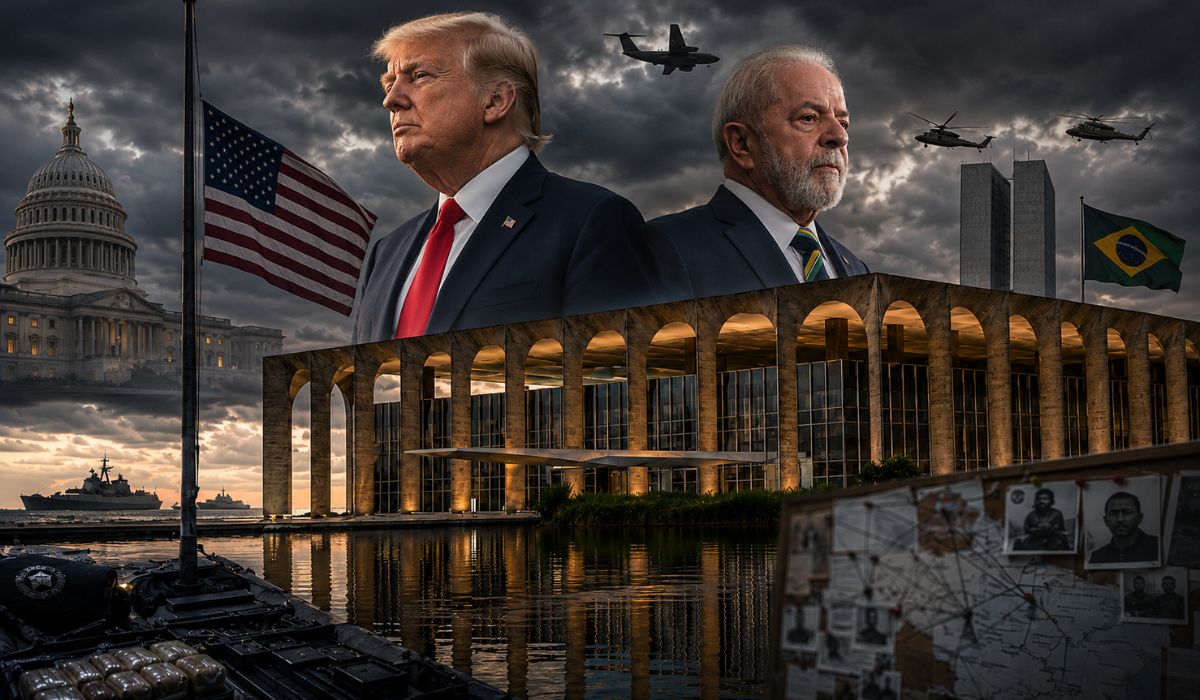


As reported by O Globo, the monitoring is ongoing and involves exchanging information with other state agencies.
Nonetheless, there is no order for additional deployments of naval or marine units, and the planning remains at an operational routine level.
Brazil-U.S. Rift and Defense Risks
For Admiral Olsen, any distancing between the governments would impact joint exercises, intelligence sharing, training, and access to strategic technologies.
“The relations between the Brazilian Navy and the U.S. Armed Forces stem from a strategic alignment that has lasted for centuries,” he said.
He then warned that a cooling of relations “would create difficulties and sensitive impacts for both parties’ interests and the proper fulfillment of the Forces’ responsibilities, which is undesirable.”
Border Control and Migration Flow
The assessment within the Forces is that any tension in Venezuela could pressure the migration flow to Brazil. The strategy, however, does not foresee, at this moment, extraordinary reinforcements of personnel.
The guidance is to monitor indicators along the border and prepare coordinated responses with civilian agencies in case of a sudden increase in entries, without overt military mobilization.
Army Dismisses Immediate Reinforcement at the Border
In the Army, high-ranking officers affirm that they are not considering the possibility of now increasing contingents and armaments at the border with Venezuela. There are no approved plans for such.
In the event of a change in the situation, the directive is to maintain normality at the garrisons and avoid measures that could be interpreted as escalation.
External Statements Increase Tension
While the Navy focuses on developments in the Caribbean, public statements keep the tension high.
A Republican senator stated that Maduro should “sleep with one eye open.” A Colombian leader warned of the risk of regional escalation.
Commercial Frictions and Bilateral Sanctions
The current state of relations between Brasília and Washington is described as tense, due to American trade measures — referred to in Brazil as a “tariff shock” — and sanctions against authorities.
According to O Globo, this environment may affect purchases, maintenance, and support for equipment with American-origin technology, as well as hinder joint training that is part of the cooperation calendar.
Position of Lula’s Government and Foreign Policy
Despite concerns over the escalation in Venezuela, the guidance from President Luiz Inácio Lula da Silva’s administration is to maintain distance from rhetorical confrontations and prioritize diplomatic channels.
The same stance applies to the political and commercial dispute with the U.S.
The assessment, shared with the Defense, is that stable dialogue reduces risks to regional security and to the operational capacity of the Forces.
Diplomacy as the First Guideline
According to a high-ranking military official, in case of escalation, the order is to seek diplomatic understanding and coordinate actions with Itamaraty, the Civil House, and border agencies.
Resorting to military means would be evaluated only in light of objective needs, such as protecting border communities, humanitarian support, or ensuring critical infrastructures.
Military Purchases in Washington
The military ties with Washington remain structural for Brazilian Defense since World War II.
Procurement commissions from the three Forces operate in Washington, with Brazilian military personnel on permanent missions.
In the Army, there are 120 personnel designated for acquisition activities, technical evaluation, and interface with suppliers.
Possible diplomatic hurdles tend to raise costs, delay, or limit purchasing, validation, and technology transfer processes.
Navy Routine in Times of Alert
For now, the Navy is not preparing reinforcements in the Atlantic or the Caribbean.
In parallel, intelligence and staff areas are updating scenarios regarding maritime routes, supply chains, and protection of offshore infrastructures, should the crisis advance and generate collateral effects in the South Atlantic.
Possible Consequences of a Rift
A rift with the U.S. may reduce Brazil’s participation in multinational exercises, access to courses, and simulation platforms, and hinder maintenance of systems with parts and software from the U.S.
Additionally, interoperability agreements and standardized procedures may lose momentum, which delays readiness.
Although there are alternative partnerships, the replacement of established flows does not occur immediately.
Supreme Court and Institutional Attention of the Forces
Internally, military commands emphasize the institutional role of the Forces. At the moment, they are focusing attention on the trial of those involved in the coup plot at the Supreme Federal Court.
Former president Jair Bolsonaro and seven others are on the agenda, including military personnel. The analysis is set to begin on September 2, to take place in the in-person plenary of the First Panel.
Open Question: International Cooperation
With the crisis in Venezuela and the trade tensions between Brazil and the United States, how can the country preserve international military cooperation while also ensuring autonomy in its strategic decisions?






The English translation is 60% nonsense, unfortunately. It appears to be a well-sourced article and I’m sure it has excellent information to convey, but the Google Translation is not adequate.