Portuguese
  Spanish


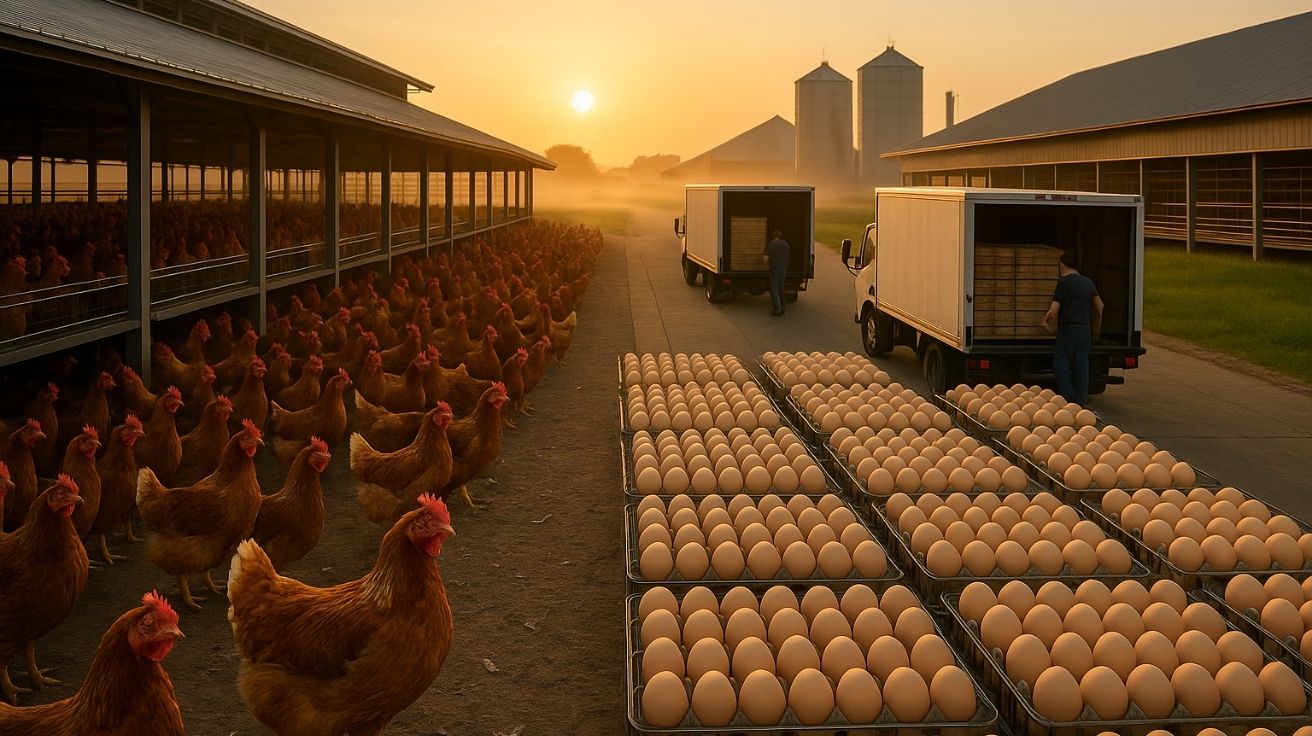

Sector Driven By The Rise Of Alternative Proteins And International Demand Elevates Brazil To The Top Of The Poultry Agriculture, With Three Companies Among The 30 Largest In The World And Growing Production In The Main Producing Regions
Brazil reached a record mark of 4.67 billion dozen eggs produced in 2024, consolidating its position as the fifth largest producer in the world. The growth was driven by the rise in prices of other proteins and the advance of large companies in the sector.
According to data from IBGE, the country recorded a 10% increase in the production of chicken eggs compared to 2023. The increase was observed in 25 of the 26 federal units participating in the survey. The state of São Paulo maintained national leadership, accounting for 26% of production, followed by Paraná, Minas Gerais, and Espírito Santo.
This growth is directly linked to the expansion of the poultry agriculture, the increase in international demand, and the substitution of more expensive meats in the domestic market. Meanwhile, the presence of large chicken farms specialized in large-scale industrial operations has sustained egg production even in challenging scenarios.
-
Brazilian Farmers with Basic Education Create Backyard Machines That Win National Invention Contest, Beating 242 Projects

-
Brazilian Farm Innovates with Cage-Free Chickens, Producing 3,300 Odorless Eggs Daily

-
From Selling Unsold Saplings to Creating Brazil’s Most Awarded Olive Oil Brand with 330 Accolades and a $12 Million Goal by 2026
-
China Builds 400-Hectare Irrigation System in Tanzania to Aid 1,000 Families Dependent on Rainfall



Three National Giants Stand Out In The Global Egg Production Ranking
Brazil has also established itself as a business powerhouse in the sector. According to the World’s Top 30 Egg Producers report by WATT Global Media, three Brazilian companies appear in the global ranking of the largest producers. Mantiqueira Brasil occupies the 10th position in the world, with 16.5 million laying hens and an annual production of 4 billion eggs.
In January 2025, the meat giant JBS announced the acquisition of 50% of Mantiqueira, in a move that expands its operations in the animal protein segment and strengthens the internationalization of Brazilian egg production. The partnership was considered strategic for access to new markets and expansion of production capacity.
Granja Faria, with 16.2 million birds and 5.2 billion eggs produced annually, ranks next. Founded in 2006, the company also operates in foreign trade, exporting to 18 countries, including Japan, the United Arab Emirates, and Germany. In 2024, its founder, Ricardo Faria, was included in the list of billionaires by Forbes Brasil.


From Family Tradition To National Leadership In Egg Production
Closing the national trio in the ranking is Granja Yabuta, with 10 million birds distributed across units in São Paulo, Mato Grosso, Mato Grosso do Sul, and Tocantins. The company produces everything from common eggs to free-range eggs, quail eggs, and enriched with omega-3 and vitamin E, showcasing diversification as a market strategy.
In addition to business structure, advancements in agricultural technology and improvements in farm management have contributed to this leap. Intensive and well-distributed rural production across the national territory helps meet the growth of domestic demand, which increased from 82 eggs per capita in 1997 to 242 eggs per inhabitant in 2023, according to ABPA.
Even with good numbers, the sector faced market pressures. In 2024, egg prices soared in Brazil and the United States. In Brazil, the increase was due to producers controlling supply, a situation expected to adjust after Lent, according to the Ministry of Agriculture.