Portuguese
  Spanish


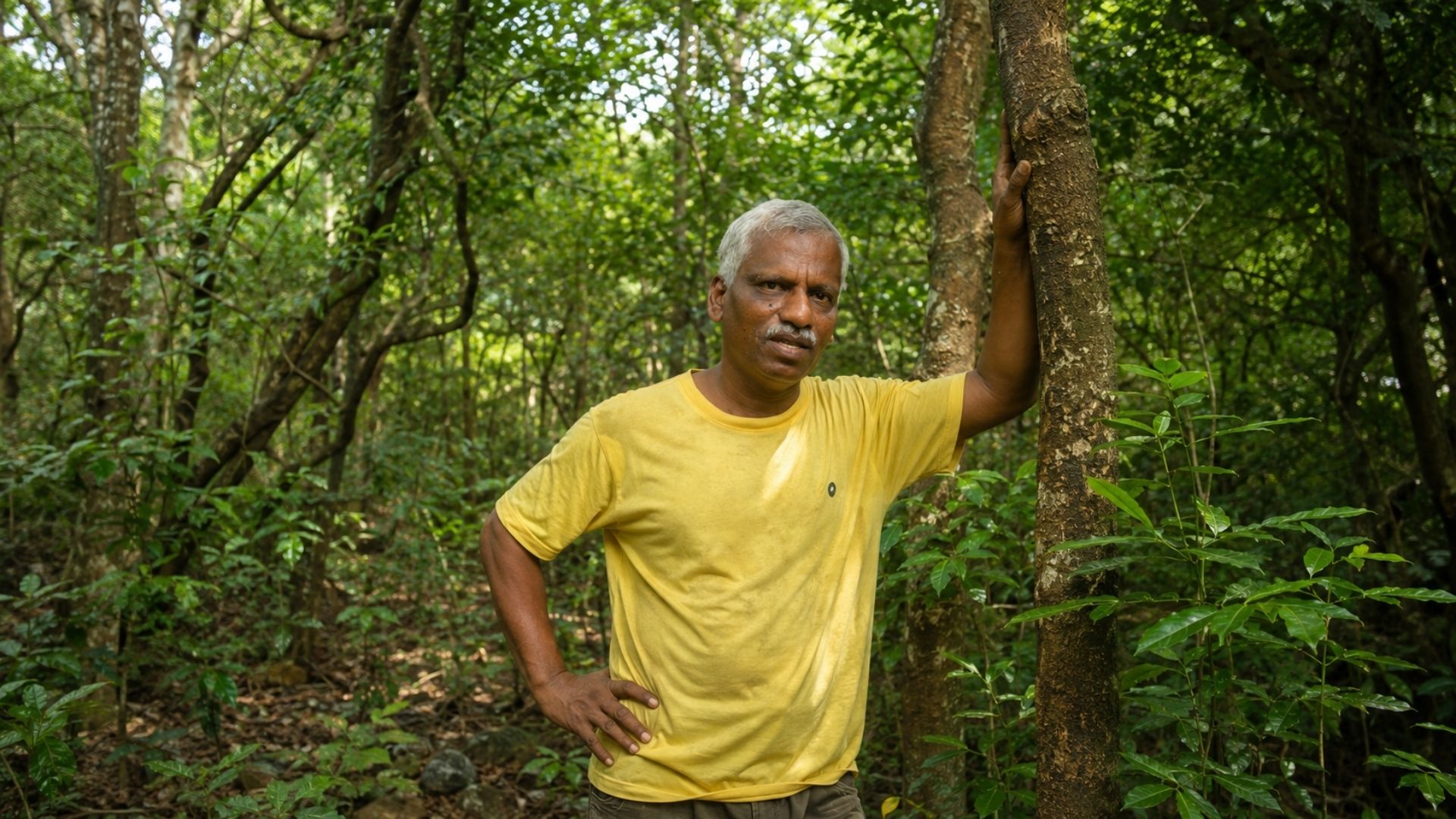

With only a high school education, Indian D. Saravanan dedicated about three decades to transforming 40 hectares of arid land in India into a native forest. According to reports, the site gathers 35,000 to 40,000 trees and hundreds of plant species, in a rare biodiversity sanctuary.
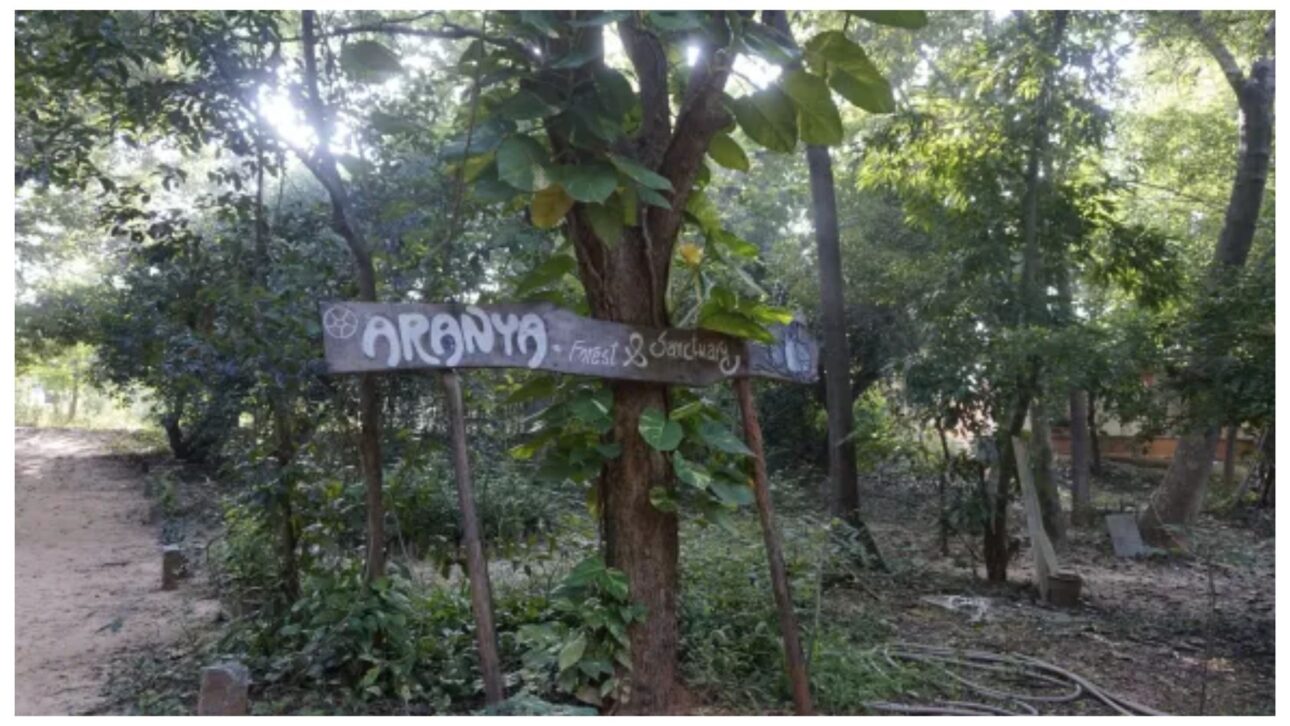
Where there was once dry, cracked, and abandoned ground, there is now a dense forest full of life. In the state of Tamil Nadu, in southern India, farmer D. Saravanan, who studied only up to high school, dedicated about three decades to transforming 40 hectares of arid land, or 100 acres, into a dense native forest, now known as Aranya Forest and Sanctuary. The story was told by Down To Earth.
The numbers, gathered from reports in the early 2020s, are impressive even with the necessary caveats. The grove he created houses, according to the Indian press, more than 35,000 trees, or one crore, and something between 700 and 900 species of native plants, depending on the source. Whatever the exact number, what no one disputes is the magnitude of the achievement.
More impressive than the quantity is the origin of it all. It was not a government, a company, or a research institute that raised this forest, but rather an ordinary man, without a biology degree, who learned in practice to read the soil, the seeds, and the water. It is this combination of simplicity and giant results that makes Saravanan’s story travel the world.
-
After Two Years of Water Scarcity, Brazilian Farmer Finds Well on Her Land, Boosting Mango and Passion Fruit Production in Central Brazil

-
Cashew Becomes Billion-Dollar ‘Superfood’ in Ivory Coast: 1.6 Million Hectares of Monoculture Encroach on Forests as Families Trade Food for Nuts

-
In Rural Brazil, José Sirval Operates a Water-Powered Mill Grinding 125 Kilograms of Corn Daily Using His Great-Grandfather’s Century-Old Monjolo
-
From Market Stall to Agribusiness: Patagonian Fruit Grower Owns 550 Hectares and Processes 18 Million Kilos of Pears and Apples Annually, Exporting Directly to Brazil


From arid land to native forest: the turnaround that seemed impossible
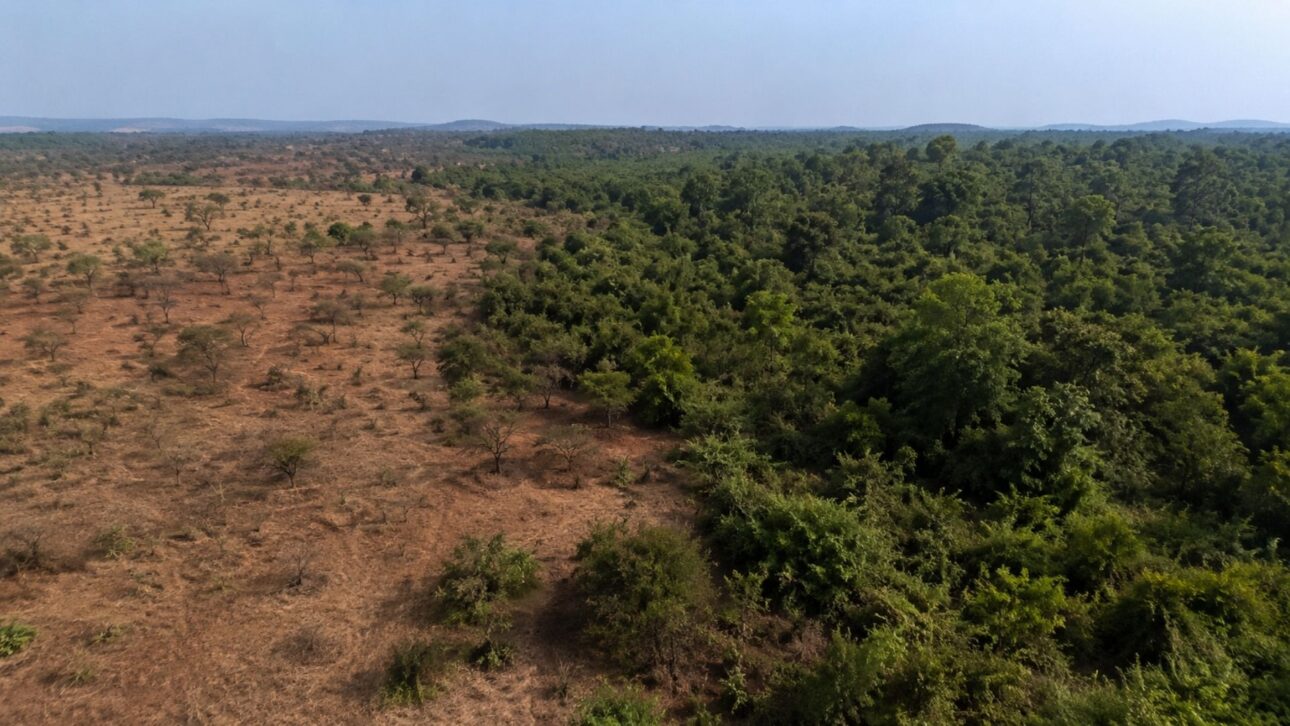
The starting point was to turn away. The area in Poothurai, in Tamil Nadu, was a piece of arid and degraded land, with impoverished soil and little water, the type of place most people consider lost. It was precisely this difficult ground that Saravanan chose to prove that even the most battered soil can once again support an entire forest.
The transformation did not come in months, but rather in decades of continuous work. Year after year, he leveled the ground, brought water, nourished the soil, and planted seedlings of native species until the vegetation closed in on its own and began to sustain itself. What was once arid land turned into the Aranya Forest and Sanctuary, a green grove in the middle of a landscape that was once dry and sun-exposed.
This is the heart of the story: the patient reversal of abandonment. Recovering arid land and transforming it into native forest is a slow process that requires understanding the cycle of each plant and respecting the time of nature. It was Saravanan’s organized persistence, combined with a method learned day by day, that made the difference where many had already given up.
Today, those who visit the place find it hard to imagine the original scenario. The difference between before and after is so great that the forest serves as living proof that the recovery of degraded areas is possible, even without large budgets. It took a lifetime dedicated to a single goal: returning the forest to that land.
Who is D. Saravanan, the self-taught man who became a master of the forest
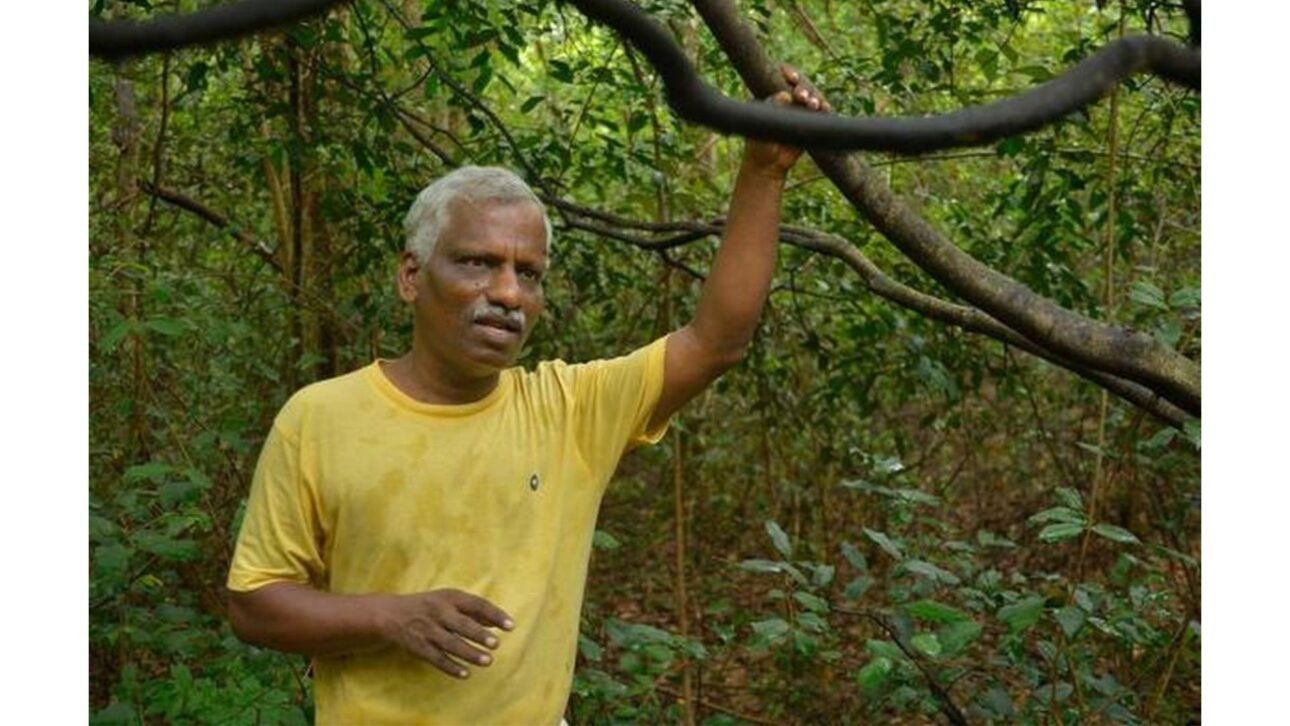
The most surprising thing is the protagonist’s background. Saravanan studied only up to high school and comes from a family of small farmers near Villupuram, in Tamil Nadu. He is neither a botanist nor a forest engineer, but over the years, he learned to manage the region’s native flora with a depth that many trained specialists would envy.
The environmental vocation was born early and has a date. As a teenager, at 14, he participated in a long march of the “Save the Western Ghats” movement, in defense of the mountains and forests of western India, an experience that, according to him, forever marked his path. The seed of the environmental cause was planted there, long before the first seedling went into the ground.
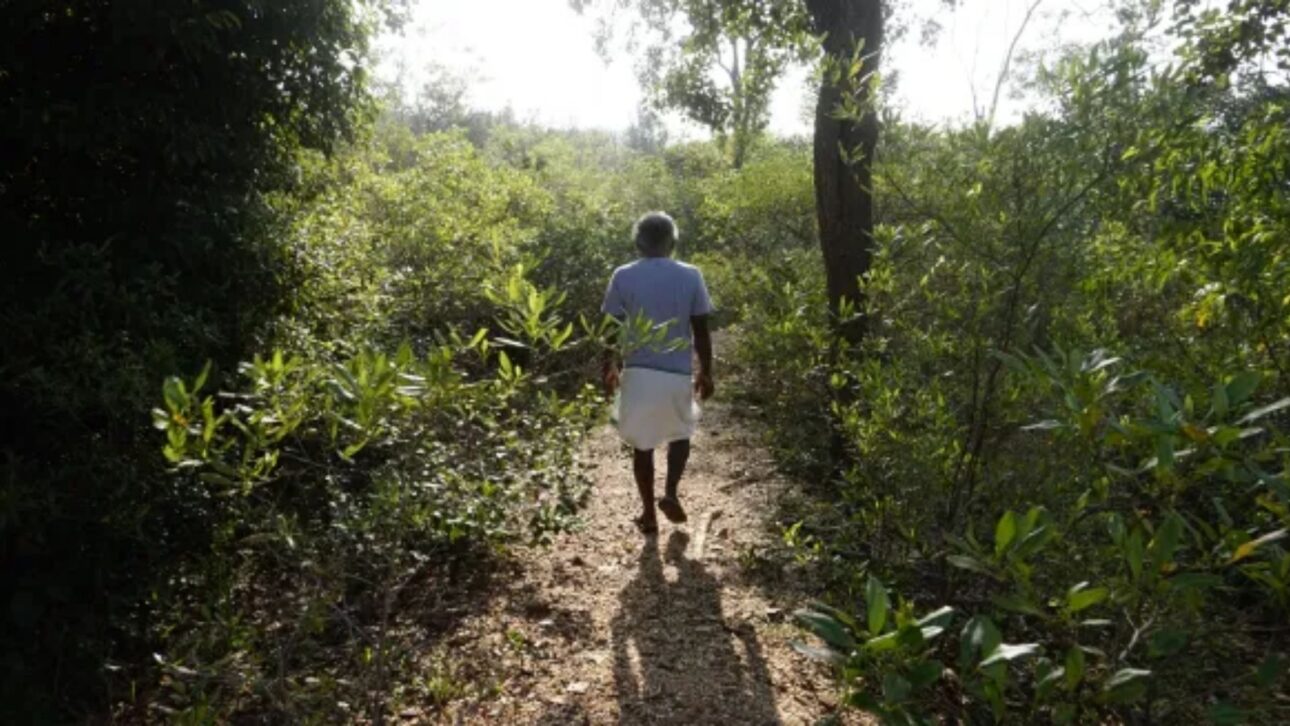
Without a laboratory or manual, he turned error into a school. “The failures of others did not stop me. Their mistakes became my learning curve,” stated Saravanan, in a testimony quoted by the Indian press. This learning through trial and observation explains how a man with basic education came to master hundreds of plant species.
It is worth mentioning that little formal education does not mean little knowledge. Saravanan accumulated immense practical knowledge about soils, seeds, climate, and fauna, the kind that can only be built with decades in the field. His story dismantles the idea that restoring a forest is an exclusive task for those with a diploma and shows the value of the knowledge of those who work the land.
Auroville and the truth about “almost alone”
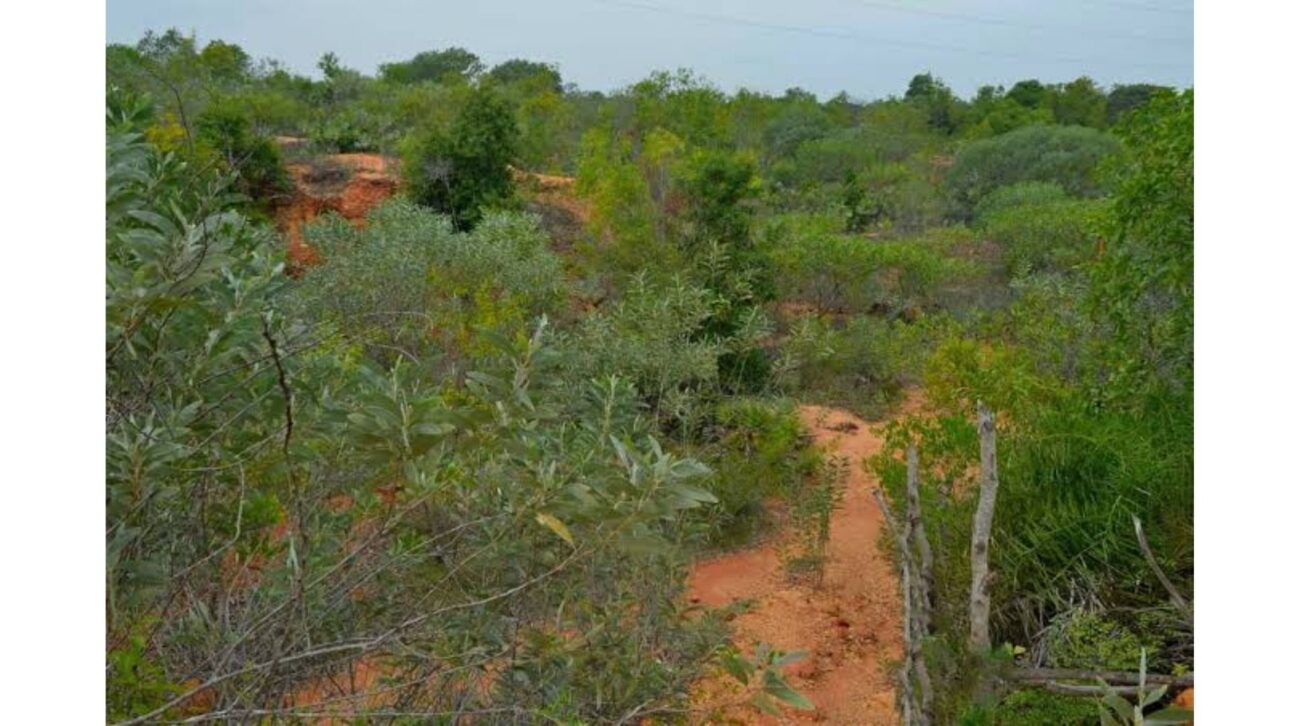
It’s necessary to contextualize the achievement with honesty. Although headlines often say that Saravanan created the forest “alone,” the Aranya area was born linked to Auroville, a community in southern India famous for restoring degraded ecosystems since the 1960s. It was in this environment, focused on environmental recovery, that the project took shape.
The turning point in his life came in 1994. That year, he began working on the reforestation effort linked to Auroville and was given the responsibility to care for and develop the Aranya area, which would become the work of his life. From then on, he was the one who managed the project day-to-day, giving face and sweat to the forest that would grow in the following decades.
Saying “almost alone” is fairer than “alone.” According to Down To Earth, Saravanan had the help of residents, students, and the local community along the way, even though he was the central and most constant figure of the project. The merit is no less for that: leading such a long transformation requires a dedication that few would sustain.
This context, far from diminishing the story, enriches it. It shows that great environmental recoveries often arise from the meeting between a determined person and a supportive network. Saravanan’s forest is, at the same time, the result of a life dedicated and a community that embraced the idea of bringing life back to arid land.
Three years just to collect seeds: the patience method
Before planting anything, it was necessary to gather the raw material. Saravanan spent about three years just collecting seeds of native species, traveling through sacred groves, remaining forests, and regions like the Jawadhi Hills in Tamil Nadu and neighboring areas. Without native seeds, there would be no real forest, just another artificial plantation.
The care had the rigor of a scientist, even without the title. He created a kind of seed calendar, noting when each species bore fruit, and went out every month in search of the right varieties at the right time for collection. This meticulous mapping was what allowed him to gather the enormous diversity that the forest exhibits today, species by species.
Searching in the sacred groves was no accident. In India, these fragments preserved by religious tradition hold native plants that have disappeared from the rest of the landscape, functioning as true living genetic banks. By resorting to them, Saravanan rescued rare species and returned part of the original flora that existed there in the past to his arid land.
Betting on the native, not the exotic, was the most strategic decision of all. Instead of filling the area with a few fast-growing species, as often happens in commercial plantations, he prioritized the local flora, recreating something close to the region’s natural forest. That’s why Aranya became a reference for recovery with biodiversity, not just shallow reforestation.
How to recover arid land: the step-by-step of the forest
The recovery followed a logical order, dictated by nature itself. First came the hard work with the soil and water: leveling the land, containing erosion, and ensuring moisture, without which no seedling would survive. For this, six artificial water bodies were created, and ravines were utilized, key pieces to hold the rain and recharge the land.
Then came the strategy of layered planting. Recovering a native forest is not just about planting trees, but rather reconstituting a system, from grasses and shrubs to large trees, respecting the natural succession in which one species prepares the ground for the next. This arrangement is what gives strength and permanence to the grove, instead of a fragile and fleeting green.
Saravanan also used the fauna itself as an ally in planting. “The grass is to attract birds, and the bird droppings basically work as fertilizer,” he explained to the press, describing how he attracted birds that, while feeding, spread seeds and fertilized the soil for free. It’s called assisted regeneration, where humans give the initial push and let nature do the rest.
None of this happened without heavy obstacles. According to Down To Earth, the challenges included bringing water to the land, nourishing the soil, collecting rare seeds, planting thousands of trees, and even facing hunters who threatened the wildlife that was beginning to return. Each of these fronts required years of persistence, and abandoning any of them would have jeopardized all the rest.
35,000 to 40,000 native trees and up to 900 species: the numbers and what they are worth


The numbers of the forest are breathtaking, and therefore require context. According to reports, the forest houses 35,000 to 40,000 trees, or a crore in the count cited by the Indian press, and something between 700 and 900 species of native plants, including Diospyros melanoxylon and Gloriosa superba. These are figures released by the media over the years, and not official closed measurements.
Diversity is by far the most valuable data. More important than the number of trees is the variety of species, because it is this that defines the true wealth of a forest, its biodiversity. Hundreds of types of plants form a complex ecological web, capable of resisting pests, droughts, and time much better than a plantation of few species.
The success rate also reinforces the magnitude of the feat. According to the published material, about 80% of the planted seedlings thrived, a high rate for a recovery work in arid land, where it is normal to lose a good part of what is planted. Transforming hand-collected seeds into a dense forest, with this yield, is the work of someone who deeply understands the subject.
It is important to treat these data with due caution. The numbers of trees and species vary according to the report and have not undergone a known independent scientific audit. This does not erase the achievement, but it is advisable to present it as what it is: a robust estimate of what is seen in the field, and not a precise laboratory measurement.
The forest that brought back water and climate
The greatest gift of the forest was, ironically, invisible: water. With the vegetation standing and the soil protected, the region’s water table, once found only about 150 feet deep, approximately 45 meters, is said to have risen to near 40 feet, about 12 meters. In practical terms, water has returned to be much closer to the surface and within reach of life.
This effect explains why forest and water go hand in hand. The roots and vegetation cover make the rain infiltrate the soil instead of running off, recharging the underground reservoirs that supply wells and springs. Recovering the forest, therefore, is not just a matter of landscape, but of water security for the entire region around the former arid land.
The forest also started to cool the environment. Measurements cited by the press indicate that the area covered by the forest is 1 to 2 degrees cooler than the surroundings, creating a milder microclimate amidst the heat of southern India. It is concrete proof that recovering vegetation brings benefits that range from water to the local climate, benefiting even those who live nearby.
The return of wildlife was the final seal of success. With the mature forest, the area began to host, according to reports, hundreds of bird species, as well as butterflies, reptiles, and mammals attracted by food and shelter. This explosion of animal biodiversity is the best indicator that the ecosystem, once dead, has returned to full function, from the smallest plant to the largest animal.
A living legacy: education and the tradition of India’s “forest men”
The story didn’t end when the forest was completed. Today, Saravanan acts as an honorary forest ranger of the Aranya Forest and Sanctuary and dedicates much of his time to planting more trees and protecting what he has built. The work of a lifetime has also become a permanent responsibility to care for the grove against threats.
Perhaps the most beautiful chapter is the transmission of knowledge. He welcomes students and residents to teach, in practice, the importance of native forests and the recovery techniques he mastered on his own. Thus, the knowledge that took decades to accumulate does not die with him but spreads to a new generation of people willing to restore degraded lands.
Saravanan is also not an isolated case in India. The country has already honored figures like Jadav Payeng, the “forest man” of Assam, who planted a massive forest along a river over decades. These stories form a kind of tradition of ordinary citizens who, without position or fortune, have restored entire forests to regions ravaged by degradation.
What unites them all is a powerful lesson. They show that environmental recovery does not depend solely on expensive technology or large state programs, and that the persistent action of one person, supported by the community, can change the landscape in a lasting way. It is a message of hope in a world that witnesses, every year, the advance of deforestation.
What Brazil can learn from Saravanan’s story
For Brazil, the inspiration is direct and urgent. The country faces vast degraded areas, abandoned pastures, and semi-arid regions, like the northeastern sertão, which suffer from poor soil and lack of water, in a situation similar to the arid land Saravanan faced. His example shows that this type of land does not need to be considered lost.
The method also resonates with the Brazilian reality. Here, there are already networks for collecting native seeds, like those that supply restoration in the Amazon and Cerrado, and assisted natural regeneration techniques very similar to those he used. Valuing native seeds, respecting species succession, and recovering soil water are principles that apply both in India and in the caatinga.
There is also a lesson about who can lead this change. Saravanan’s journey shows that small farmers and local communities, not just large institutions, can be protagonists in forest recovery. Investing in field knowledge, technical assistance, and incentives for those who plant natives can multiply stories like his throughout Brazil’s interior.
In the end, the message is that a forest is rebuilt with patience and purpose. At a time when Brazil is discussing how to recover millions of degraded hectares and meet environmental goals, the case of Tamil Nadu proves that biodiversity can return to an arid land, as long as someone is willing to care for it long enough. It is a reminder that every recovered area begins with a single seed.
And you, do you think this can be repeated here?
D. Saravanan’s journey proves that education and money aren’t everything: with only a high school education and about three decades of dedication, he transformed 40 hectares of arid land in Tamil Nadu, India, into a native forest that, according to reports, gathers 35,000 to 40,000 trees and hundreds of plant species, returning water, mild climate, and biodiversity to a region that seemed doomed.
And you, do you believe that projects like this, to recover arid land with native forest, could succeed in the degraded areas and semi-arid regions of Brazil? Share in the comments if you know any place near you that needs to be reborn like Saravanan’s forest, and what you think is most needed for this to happen here.