






 Portuguese
  Spanish


On an oil platform, electric power comes from treated associated gas burned in turbines, while residual heat helps with potable water. The structure operates far from the coast, supports onboard workers, and shows why redundancy, emergency generators, and maintenance prevent stoppages that can cost millions per day offshore.
On an offshore oil platform, the electric power that keeps everything running can come from associated gas that rises along with the oil extracted from the seabed. This system powers turbines, drives generators, aids processes related to potable water, and supports workers isolated about 300 km from the coast.
In a video released by the Gabe Oliveira channel on YouTube, published on June 5, 2026, the topic shows how the structure operates every day, without relying on cables from the mainland or a nearby power plant. The process occurs during the platform’s normal operation, where about 200 people can work, sleep, eat, shower, and complete long shifts in an environment that needs to generate power continuously.
A structure in the ocean consumes energy like a city
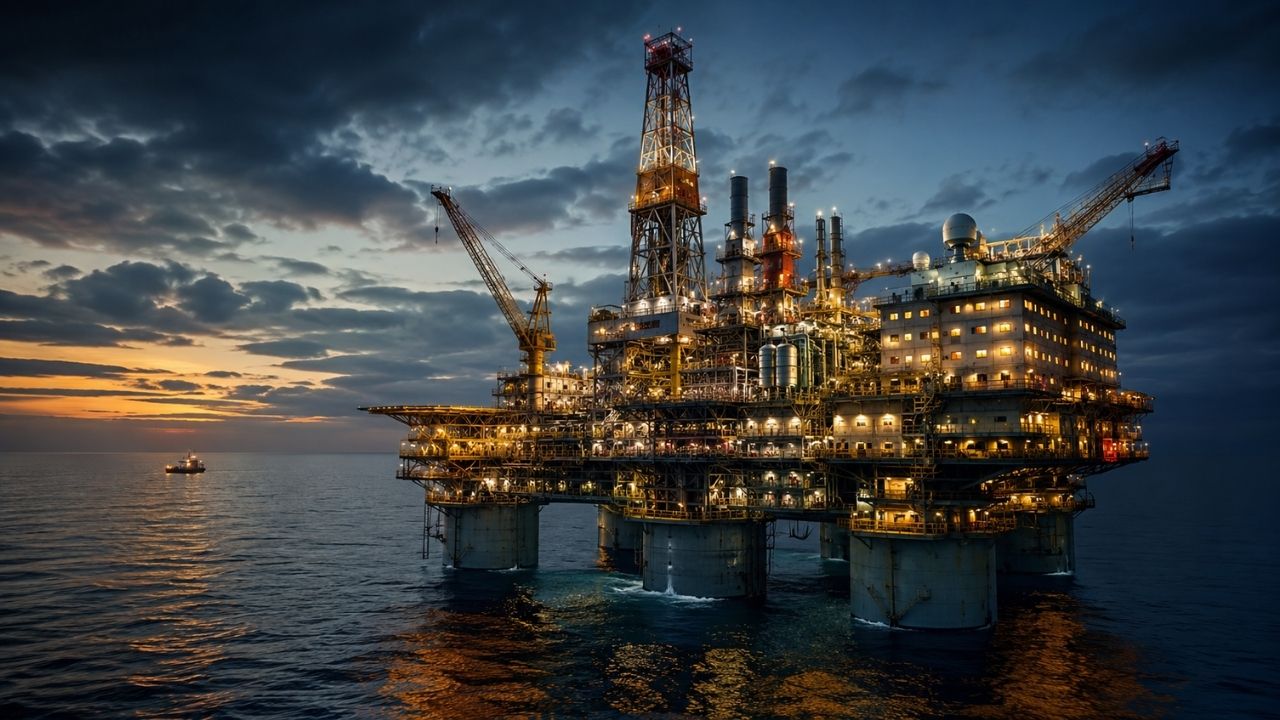
A large oil platform does not function like a regular building in the sea. It comprises industrial systems, accommodations, kitchen, laundry, control rooms, pumps, lighting, ventilation, safety, sewage treatment, and potable water production. All of this needs to operate simultaneously, without interruption.
-
Argentinian Students Transform Cigarette Butts into Eco-Friendly Bricks, Cutting Cement Use by Over 50% and Halving Costs

-
For the First Time, Scientists Extract Ancient Human DNA from Cave Art, Revealing Insights into Prehistoric Cave Dwellers

-
Australian Teen Invents Device to Simultaneously Purify Water and Generate Electricity Using Sunlight

-
Indian Student Designs Bamboo Houses with Floating Blocks and Recycled Bottles for Flood-Prone Areas; University of Texas Project Aims for Sustainable Housing in Vulnerable Communities



According to the source used, a large platform can consume between 40 and 100 MW of electric power, depending on its size and operation. For comparison, this consumption can approach the demand of a city with tens of thousands of inhabitants. The difference is that this “city” is isolated in the ocean.
Within this structure, electric energy is not just comfort. It keeps active the systems that monitor pressure, temperature, gas leaks, and safety conditions. It also supports pumps that move oil, well controls, operational computers, cranes, and fire-fighting systems.
If the energy fails, the operation doesn’t just lose lighting or air conditioning. It can compromise critical equipment and require a controlled shutdown. On a platform, an interruption can represent operational risk, production delay, and high loss.
The gas that rises with the oil becomes fuel on board
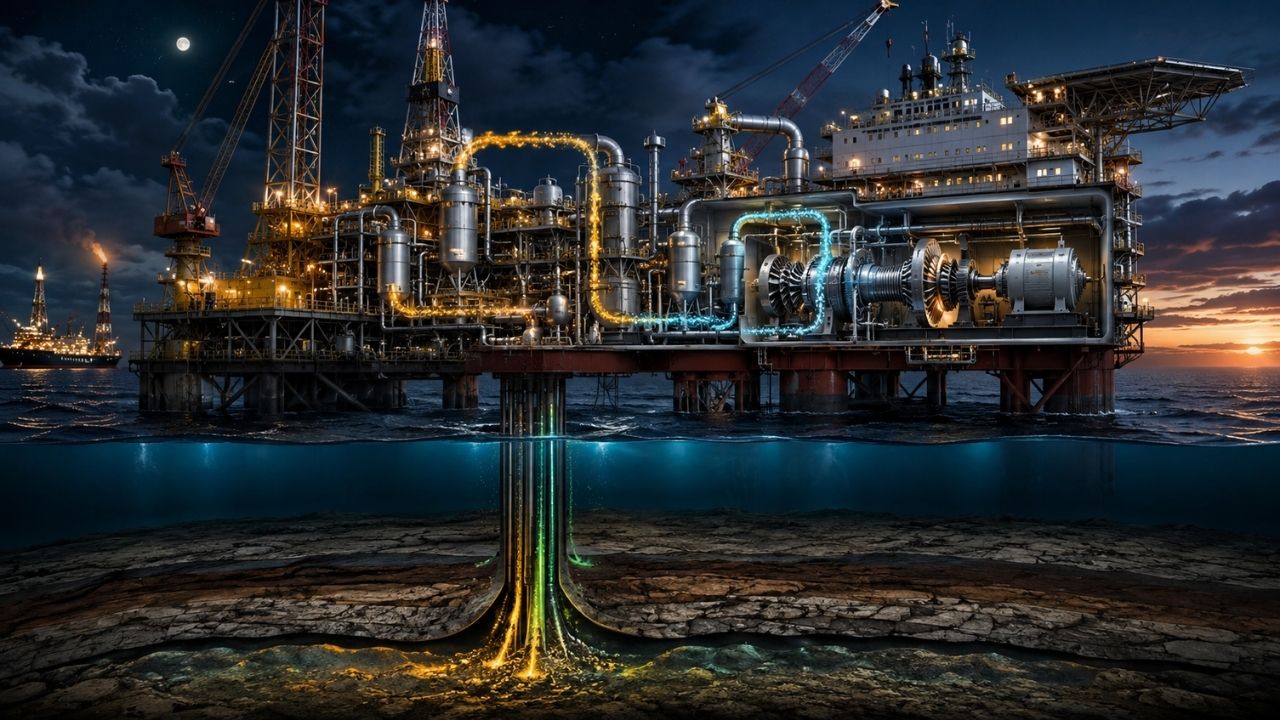
The answer to the origin of the energy is in the production process itself. When the oil comes out of the reservoir, it doesn’t reach the surface alone. Along with the oil, the so-called associated gas also rises, which was dissolved under high pressure in the reservoir.
When the pressure changes upon reaching the platform, this associated gas separates from the oil and can be utilized. Part of it can be used as fuel to generate electricity, while another part can be sent for reinjection into the reservoir or export, depending on the operation.
Before feeding the turbines, the gas needs to undergo conditioning. It has moisture removed, impurities filtered, and pressure adjusted to meet the equipment requirements. Gas out of specification can reduce efficiency, impair combustion, or damage components.
This treatment of the associated gas is essential because energy generation on an oil platform cannot rely on improvisation. The fuel needs to reach the turbines with suitable characteristics, in sufficient volume and with stability to keep the structure operating day and night.
Turbines transform gas into electric energy
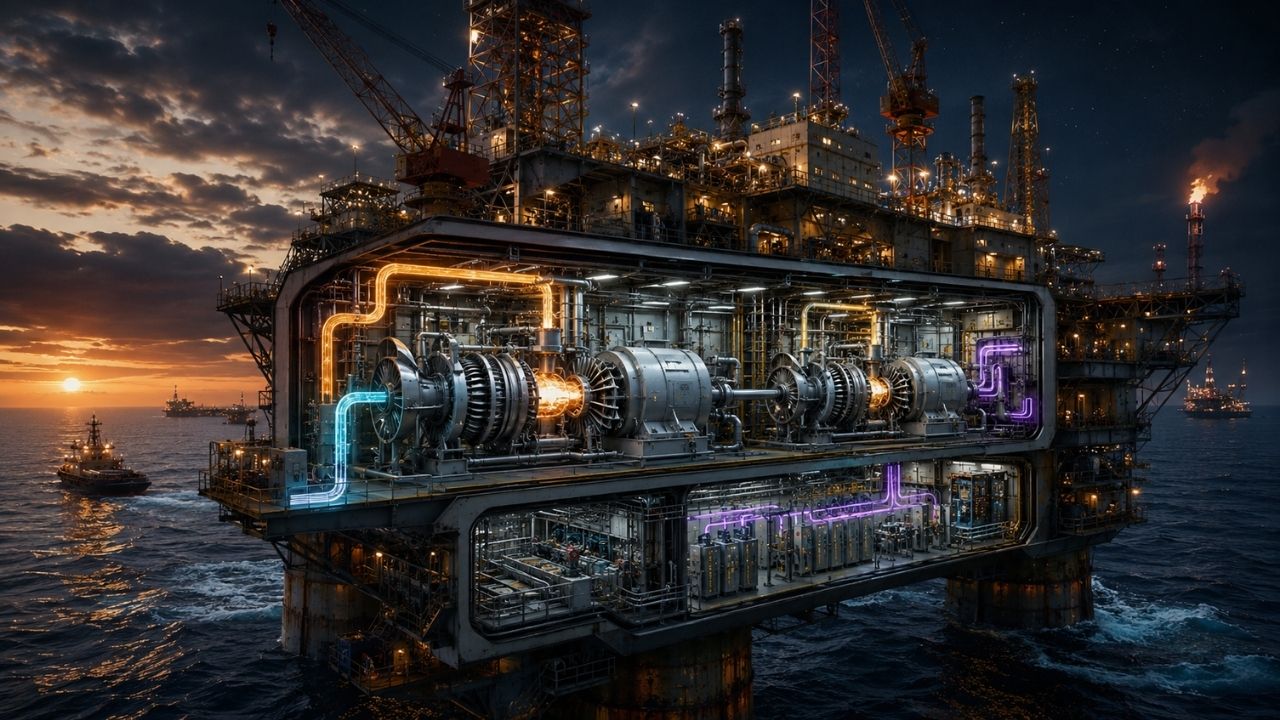
After treatment, the gas feeds turbines. The principle is reminiscent of the operation of aircraft engines adapted for industrial use: air enters, is compressed, receives fuel in the combustion chamber, and the burning generates hot gases that move the turbine blades.
This turbine is coupled to a generator. When it spins, the generator produces the electrical energy distributed by the platform. In large-scale units, a single turbine can generate several megawatts, and the structure usually operates with more than one turbine at the same time.
The goal is to ensure sufficient power and redundancy. An oil platform cannot rely on a single piece of equipment to power everything. Therefore, several turbines can operate together, without each one needing to work at maximum capacity all the time.
This architecture allows the load to be redistributed when a turbine goes out for maintenance or experiences a punctual failure. In many cases, the perceived impact may be small, like a quick fluctuation, while the system adjusts the energy distribution.
Turbine heat also helps with potable water
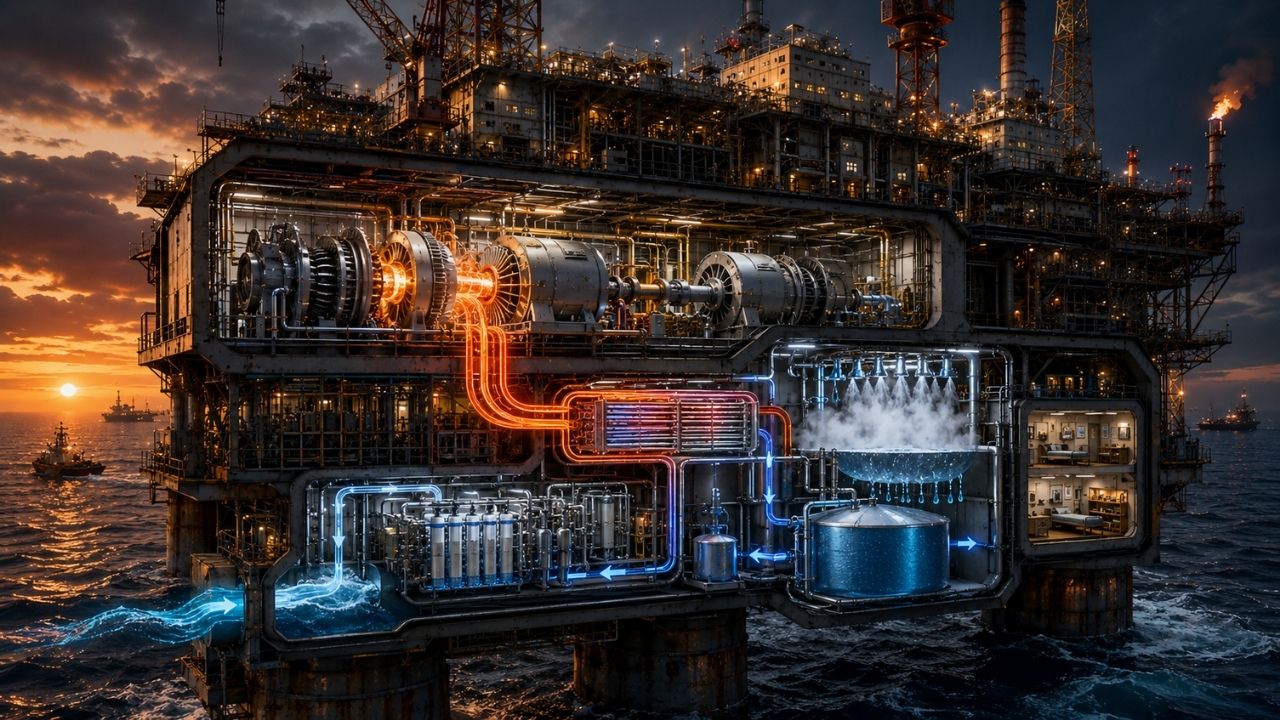
Besides electrical energy, the turbines generate a large amount of heat. Instead of wasting this heat in the exhaust, the platform can utilize it in other internal processes, including systems related to potable water production.
This reuse is important because fresh water does not arrive via an urban network. At sea, the potable water used by the crew can be produced from seawater, through processes like distillation and reverse osmosis, depending on the structure.
In distillation, the heat helps to evaporate the saltwater, separating the salt and allowing the vapor to be condensed again. Thus, the heat generated in energy production can contribute to another system essential for survival on board.
This integration is known as cogeneration. In practice, the same process delivers electrical energy and allows residual heat to be used for another purpose. It’s a way to increase efficiency in an environment where fuel, space, safety, and autonomy need to be carefully managed.
The platform cannot rely on a single source
The main generation is important, but it is not the only protection. An oil platform needs to be prepared for failures because the offshore environment requires a quick response and strict control. Therefore, the system usually has layers of redundancy.
If one turbine fails, others can absorb part of the load. If the main system faces a bigger problem, emergency generators come into play. These generators are independent, usually powered by diesel, and are ready to operate automatically.
In addition to them, critical systems rely on batteries and uninterruptible power supplies to cover the seconds between the failure and the activation of the generators. This hierarchy prevents security equipment from losing power during the most delicate interval of the occurrence.
The logic is to prevent a failure from becoming a collapse. First, the main turbines are activated; then, if necessary, the emergency generators; and, in the shortest moment, batteries keep vital systems running until stabilization.
A shutdown can cost millions per day


Even with redundancy, a complete failure is treated as a serious event. If the main generation fails, the operation may need to be interrupted in a controlled manner to preserve safety, equipment, and workers. In a structure of this size, stopping is neither simple nor cheap.
The source report indicates that a stopped platform can represent a cost of millions of dollars per day. This explains why turbines, generators, batteries, electrical panels, and control systems receive constant maintenance.
The priority is to prevent a small failure from growing. For this, there are preventive plans, frequent tests, continuous monitoring, and trained teams to respond to emergency scenarios. Nothing can depend solely on luck in an operation of this size.
When a partial outage occurs, electrical, instrumentation, and operation technicians need to identify the cause, stabilize the system, and restore the main generation. The procedure is trained to reduce risk and response time.
Isolated microgrid at sea anticipates real-world challenges
The system of an oil platform also helps to understand energy challenges outside the offshore sector. In practice, these structures function as isolated microgrids, capable of generating, distributing, and controlling energy without relying on an external network.
This logic appears in islands, remote communities, military bases, hospitals, data centers, and projects that need reliable supply. The principle is the same: generate energy locally, maintain backups, leverage available resources, and reduce vulnerabilities.
Cogeneration also aligns with the pursuit of energy efficiency in various sectors. Utilizing heat that would be lost is a way to reduce waste and extract more utility from the same fuel or industrial process.
Therefore, understanding how a platform generates energy is not just a technical curiosity. It is observing an extreme solution to a problem that many regions still face: how to keep essential systems running when external infrastructure does not exist.
Routine makes the extraordinary seem common
For those who work offshore, energy becomes an invisible part of the day. The person wakes up, takes a shower, turns on equipment, uses computers, eats in the cafeteria, and goes to their shift. Everything seems normal, although each of these actions depends on a complex chain of electrical generation.
The most impressive thing is that this routine happens far from the coast, on a structure surrounded by the sea, where there is no market, pharmacy, utility pole, urban cable, or quick solution coming from outside. The platform itself needs to concentrate everything that keeps life and operations running.
Over time, the extraordinary becomes routine. The turbine spins, the generator delivers energy, heat aids in internal processes, potable water reaches the faucets, and the operation continues 24 hours a day.
But just observe the system behind to understand the scale of the engineering involved. An oil platform is, at the same time, a factory, power plant, residence, logistics base, and isolated city in the middle of the ocean.
Do you find it more impressive that a platform generates its own energy in the middle of the ocean or the level of redundancy created to prevent everything from stopping? Leave your opinion in the comments.


