






 Portuguese
  Spanish


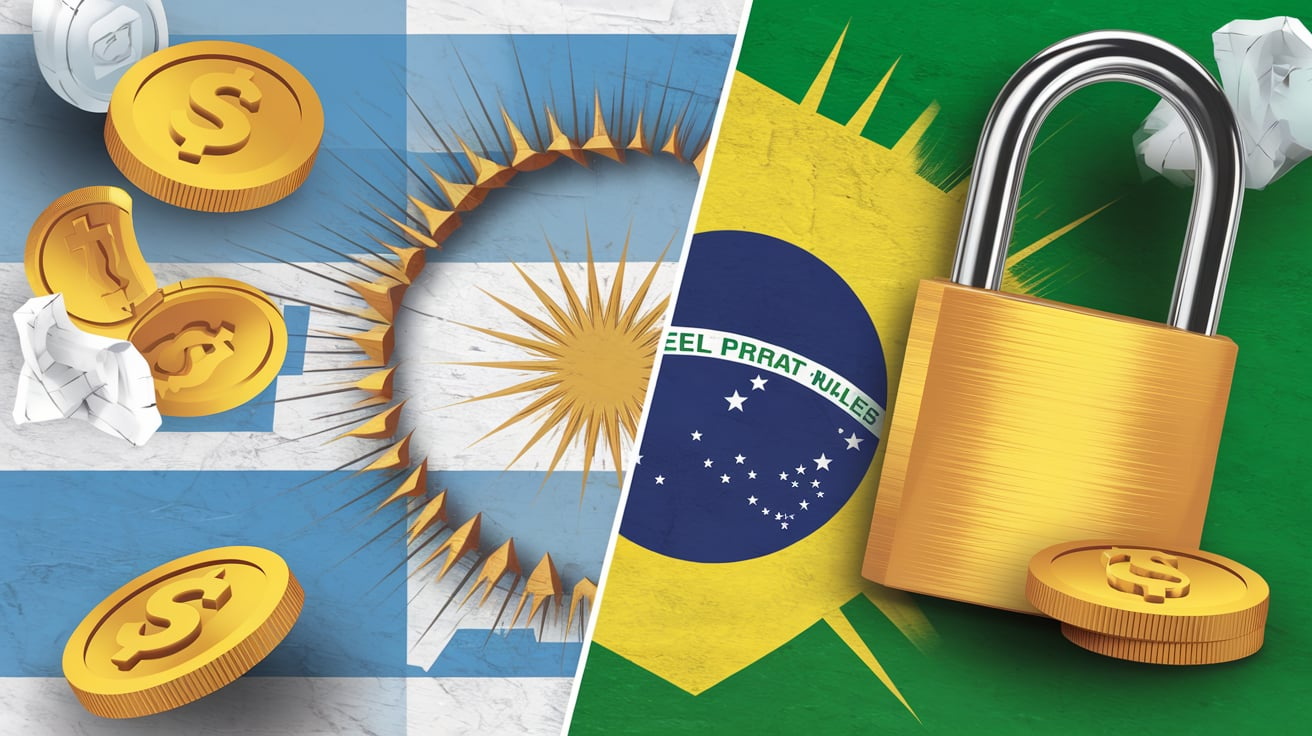


Under The Leadership Of Javier Milei, Argentina Implemented Neoliberal Reforms That Resulted In A Record Trade Surplus And The Appreciation Of The Argentine Peso. Meanwhile, Brazil, Under Lula’s Government, Faces A Deficit And The Depreciation Of The Real.
While Brazil stumbles through its own economic challenges, one of its neighbors is accelerating full-speed toward a more promising scenario.
The Argentina, under the leadership of President Javier Milei, has implemented drastic changes that are shaking up Latin America and bringing surprising results.
But what is behind this movement that has put the “hermanos” ahead in yet another requirement?
-
Couple Sold Their Home to Save Business, Now Run Platform Handling $180 Million Monthly and Managing Over 51 Million Listings

-
Brazil’s 2026 Tax Refund: Record 9.58 Million Filers in Largest Payout Ever, But a Key Detail on Priority Recipients Draws Nationwide Attention

-
Itaú Alters Hybrid Work Model, Increasing Office Days from 2028, Prompting Employees to Adjust to New Routine
-
Facing Labor Shortage, Japan Plans to Invest $34 Million to Attract Foreign Workers in Construction, Healthcare, Industry, and Commerce





With an Aggressive Neoliberal Approach, Milei’s “Chainsaw Plan” Is Already Starting To Yield Visible Fruits.
The mega-package of reforms includes the privatization of state-owned companies, changes to labor laws, and a broad deregulation program.
These efforts have resulted in a record trade surplus of nearly US$ 19 billion in 2024, putting the Argentine economy in the spotlight on the global stage.
The Argentine Peso And The Real: Opposites In Performance
One of the most symbolic factors of the Argentine advance has been the performance of its currency.
In 2024, the Argentine peso stood out as the world’s strongest currency, contrasting sharply with the Brazilian real, which was one of the currencies that lost the most value during the same period.
According to analysts, the performance of the Argentine peso reflects international confidence in the economic reforms implemented by Milei.
On the other hand, Brazil faced a challenging scenario. Under President Luiz Inácio Lula da Silva, the country recorded a deficit of R$ 66.8 billion through November 2024.
Despite a slight improvement in the structural fiscal deficit, announced by the Ministry of Finance, the numbers still worry specialists and investors.
Policy Comparison: Milei Vs. Lula
The difference in strategies adopted by the two countries could not be more evident.
While Milei bets on shrinking the state and liberalizing the economy, Lula’s government has faced criticism for the lack of significant progress in its economic policy.
Measures like income redistribution programs and stimulating domestic consumption have yet to reverse the negative indices.
Furthermore, the absence of a clear strategy to curb the depreciation of the real concerns the market.
According to specialists, exchange rate volatility and fiscal instability are among the main challenges Brazil needs to face to regain the confidence of international investors.
The Impacts Of Argentine Reforms
Argentina has not only reaped financial results from Milei’s reforms but also strengthened its position in international trade.
The trade surplus of nearly US$ 19 billion in 2024 was boosted by a range of factors, including increased agricultural and industrial exports, as well as reduced operational costs for local and foreign companies.
Experts state that the privatization of state-owned companies and labor flexibility have increased the country’s economic efficiency.
However, critics warn of the potential side effects of these changes, such as increased social inequality and the precariousness of working conditions.
Is Brazil Going Against The Grain?
While Argentina moves forward with neoliberal reforms, Brazil seems to be heading in the opposite direction.
The Lula government has prioritized social protection policies and increasing the minimum wage but faces difficulties in balancing public accounts.
The structural fiscal deficit, although showing a slight improvement in 2024, remains a significant obstacle to sustainable economic growth.
Another point of concern is Brazil’s competitiveness in the international market.
With a devalued currency and economic policies deemed unattractive for foreign investors, Brazil risks losing ground in strategic sectors such as agribusiness and the technology industry.
What To Expect For The Future?
The economic trajectory of Argentina and Brazil in the coming years will depend on a range of factors, including the global market conditions, the internal policies adopted, and the ability of both governments to tackle structural challenges.
While Milei bets on the continuation of liberal reforms, Lula will need to find innovative solutions to stimulate growth without compromising fiscal stability.
Question For Reflection
Do you believe that Brazil should adopt measures similar to those of Argentina, even with the social risks they may bring? Share your opinion in the comments!







Brasil teria tudo para ir mais para frente
Porém à direita e seus apoiadores tanto acredita em fake News. Sempre consegue estragar os benefícios para os menos afortunados. E causa grandes prejuízos ao país. Enfim os grandes empresários e o Agro sempre tentando atrasar o país por ganancia.
Você para mim está fazendo uma analise superficial só levando um fator para discussão. Cadê os outros fatores econômicos para vermos e tirarmos nossas conclusões.
Por favor: ” …em mais um QUESITO.”
“REQUISITO”, do verbo requisitar????