






 Portuguese
  Spanish
  3 min of reading
  0 comments


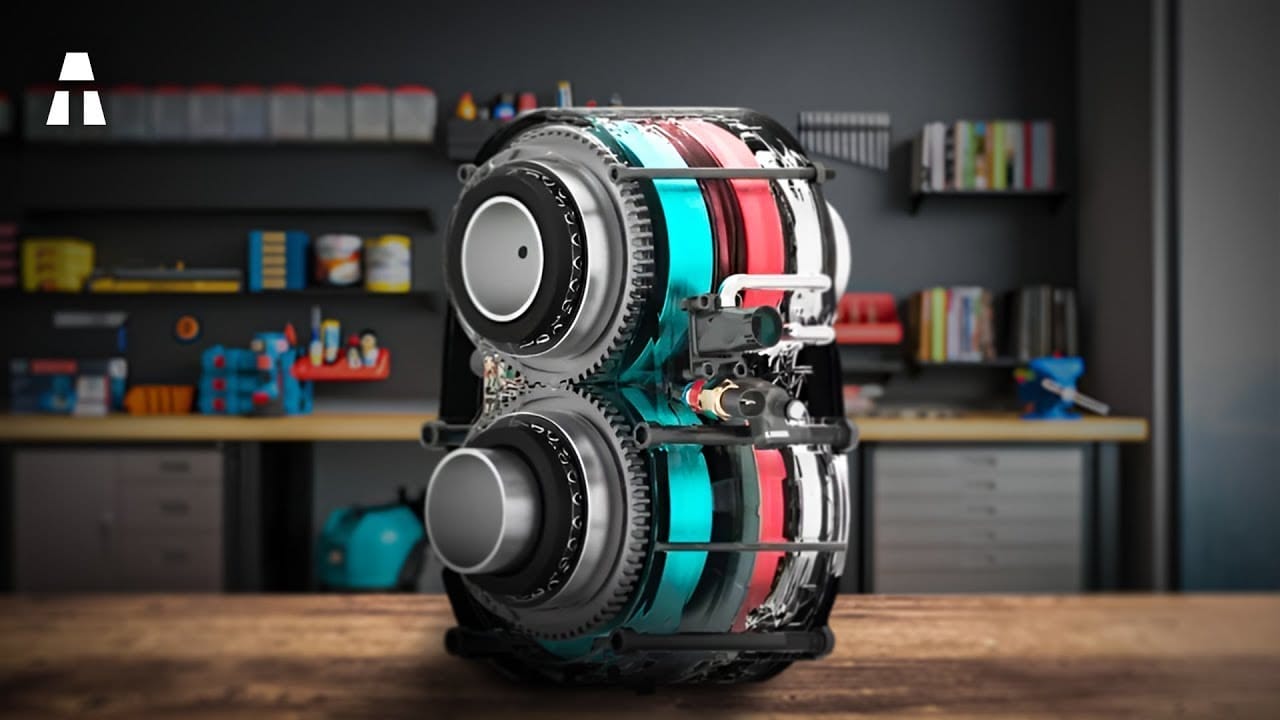
American Startup Develops New Engine Called Omega 1. This 15 kg Rotary Engine Promises to Revolutionize the Global Automotive Industry.
Since the dawn of the automotive industry, the internal combustion engine has been the driving force behind countless vehicles, operating through a process in which the combustion of the air-fuel mixture releases thermal energy, generating pressure that drives the pistons and, consequently, the vehicle. As we evolve into an era of innovation and sustainability, the revolutionary Omega 1 engine emerges with the promise of transforming the dynamics of the automotive industry. Discover how this innovation can change the future of vehicles.
Meet the Revolutionary Omega 1 Engine


A startup located in a small town in Kansas, United States, called Astron Aerospace, recently launched what it classified as “a new revolutionary engine with a wild design.” However, the announcement can be considered bold, as it is a new internal combustion engine (ICE) model launched at a time when many automakers are focusing their attention towards an entirely electrified future.
But the news doesn’t stop there, as the new engine, named Omega 1, was designed in the same rotary form as the Wankel engine, developed in 1924 by the engineer of the same name, and considered the greatest failure in automotive history, being used only by the Japanese Mazda, which retired it in 2012.
-
Drivers with licenses nearing expiration received an unexpected reprieve on the calendar, but the Contran extension only applies to those within specific dates.

-
Fiat’s forgotten family SUV offers 7 seats, a 2.4 engine with 172 hp, automatic transmission, trunk space of up to 580 liters, and the presence of a large utility vehicle for a price below many new compacts: meet the Fiat Freemont Precision 2015.

-
German sedan with rear-wheel drive flaunts a 1.6 turbo engine with 156 hp, automatic transmission, 480-liter trunk, premium status, and executive cabin in the range of fully equipped compact zero km: meet the Mercedes-Benz C180 Avantgarde 2015.
-
Suzuki launches “hybrid family van” with 8 seats, sliding rear door, Toyota Noah-like design, 1.8 electrified engine, and a price equivalent to about R$ 124,000 without taxes, below 7-seater SUVs sold in Brazil: meet the Landy in Japan.





The Omega 1, which already has a functional prototype at Astron Aerospace, promises to run on various fuels. Furthermore, the automaker assures that the engine produces anything from extremely low to zero pollutant emissions, being capable of functioning as a definitive range extender (auxiliary power unit).
New Engine Delivers 160 Horsepower and Can Be an Alternative to Electric Cars
To ensure such performance, Astron developed a unique design, in which the four strokes of an engine were divided into two independent chambers, with a pre-chamber between them, separating the cold intake air from the hot exhaust gases.
The assembly uses four rotors mounted on two primary shafts operating in vertical pairs, coupled with synchronization gears that rotate at the same RPM, but in opposite directions.
In terms of power-to-weight ratio, the Omega 1 prototype weighs only 15.9 kg and delivers an impressive 160 horsepower and 170 lb-ft of torque. The operation around a single power axis makes this new engine the first in the world with active linear power transfer. Another innovation is the lack of rotary seals, given that the RPMs are so high that there is no chance of air leaking.
Mazda Returns with Rotary Engine to Unlock Automotive Industry
Despite the previous failure of the rotary engine, Mazda is bringing this engine back, but in a somewhat different form. This new version comes with several notable improvements that make it a promising power source for the modern era of electric vehicles.
The new Mazda MX-30 REV features a single rotor rotary engine, representing a significant change from the old two-rotor version, which was known for its performance in the RX-8 model and promising to put an end to electric cars.
This design change may come as a surprise, as enthusiasts have become accustomed to the power and ready-to-rotate nature of the two-rotor engines. However, Mazda’s approach to the new rotary engine, which promises to undermine electric vehicles, is driven by a focus on efficiency and sustainable mobility.
The implementation of direct fuel injection into the chamber is a notable improvement. As it ensures better fuel optimization and combustion, resulting in better efficiency and lower emissions.





Be the first to react!