Portuguese
  Spanish



The New Electric Bus Technology Comes as a Revolution in Public Transport, Contributing to the Environment by Reducing Carbon Emissions in the Atmosphere
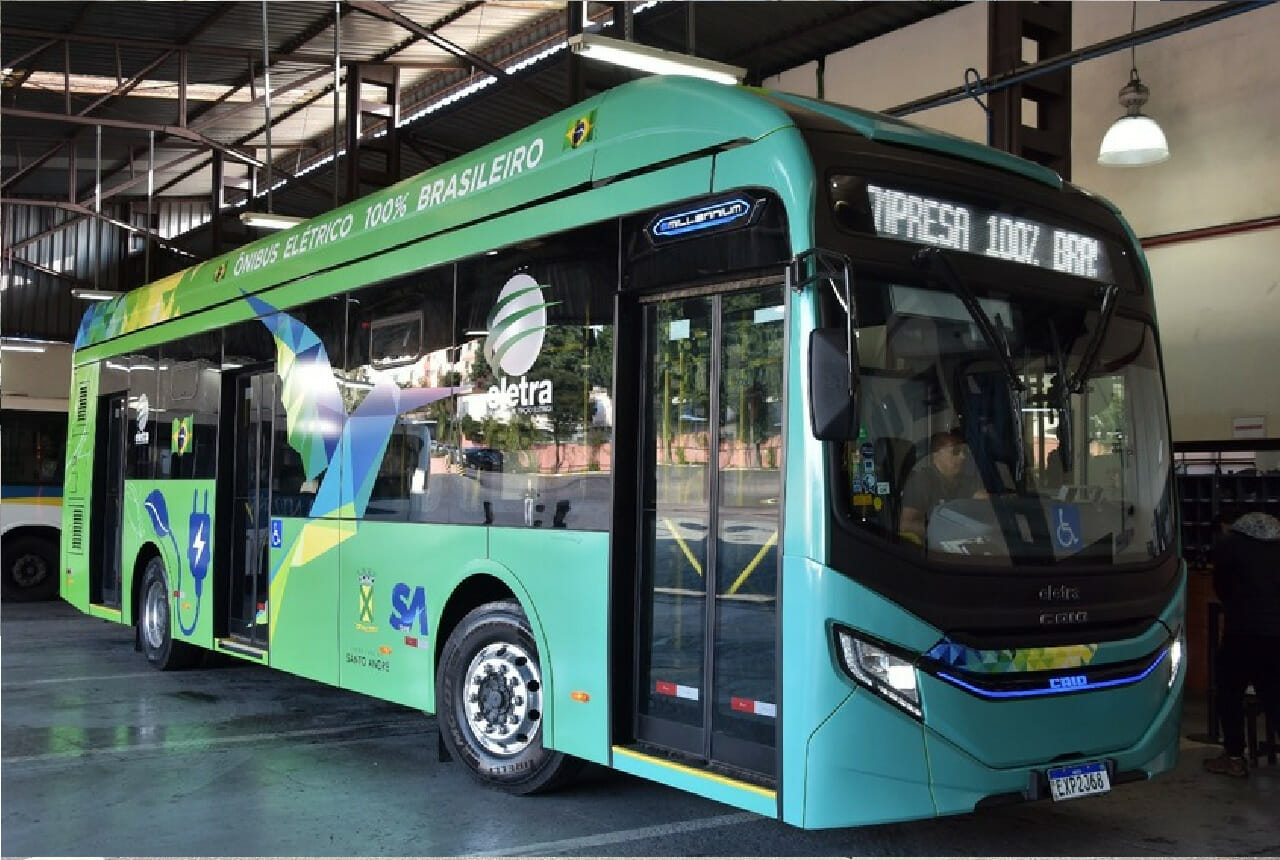
The city of Santo André, located in the state of São Paulo, has taken an important step towards sustainability in public transport. On Monday (7/3), the city hall presented a new technology, the first 100% Brazilian electric bus to operate in the municipality. The vehicle, which features Eletra’s electric traction technology, Caio’s e-Millennium body, and WEG’s batteries and electric motors, is equipped with a chassis manufactured by Mercedes-Benz in São Bernardo do Campo, according to the Repórter Diário website.
Mayor Paulo Serra oversaw the inspection of the electric bus at the Guaianazes Transport Company, located at Avenida Guaianazes, 381, in Vila Homero Thon. The event was attended by representatives of Eletra, the transport operator, and other local authorities.
In this initial phase, the electric bus technology will conduct tests without passengers on one of the routes served by the Guaianazes Transport Company, responsible for municipal public transport. The objective is to analyze the specific road conditions for this type of vehicle, as well as to conduct studies on capacity and sizing of the batteries needed for operation on the system’s routes.
-
Rolls-Royce Turns Heads with 30-Inch Floating Wheels, 6.6-Liter V12 Engine, and 563 Horsepower

-
2019 Kia Sportage EX: A Spacious and Cost-Effective SUV with 2.0 Flex Engine and Panoramic Roof
-
Fiat Strada Becomes Top Seller in June, Surpassing Onix, Polo, Hilux, and T-Cross with 107 HP Engine and 732 km Range.

-
Suitcase-sized hydrogen engine spins at 25,000 rpm, nearly doubling the efficiency of conventional cars and replacing exhaust smoke with water vapor


Sustainable Urban Mobility with the New Technology
The initiative of the Santo André city hall to adopt the national electric bus represents a significant advancement for sustainable urban mobility. In addition to reducing the emission of polluting gases, electric technology provides a quieter and more efficient operation, contributing to the improvement of quality of life for residents.
The partnership with Brazilian companies, such as Eletra, Caio, WEG, and Mercedes-Benz, reinforces the country’s potential in the development and production of electric vehicle technology. This initiative for the electric bus not only boosts the national industry but also encourages the adoption of sustainable solutions in other municipalities across Brazil.
The Technology of Electric Buses and the Contribution to Mobility
The results of the tests conducted in Santo André will be fundamental for assessing the viability and effectiveness of electric bus technology in the urban context of the city. Based on these analyses, the city hall will be able to define actions for expanding this fleet and implementing a cleaner and more modern public transport system.
The introduction of electric bus technology in the municipality of Santo André is an important step towards sustainable mobility. This initiative of electric buses demonstrates the city’s commitment to reducing its carbon footprint and promoting cleaner and more efficient public transport. It is hoped that, with the success of the tests and the expansion of this technology, other cities in the country will follow the example and adopt more sustainable solutions in their public transport fleets.