Portuguese
  Spanish


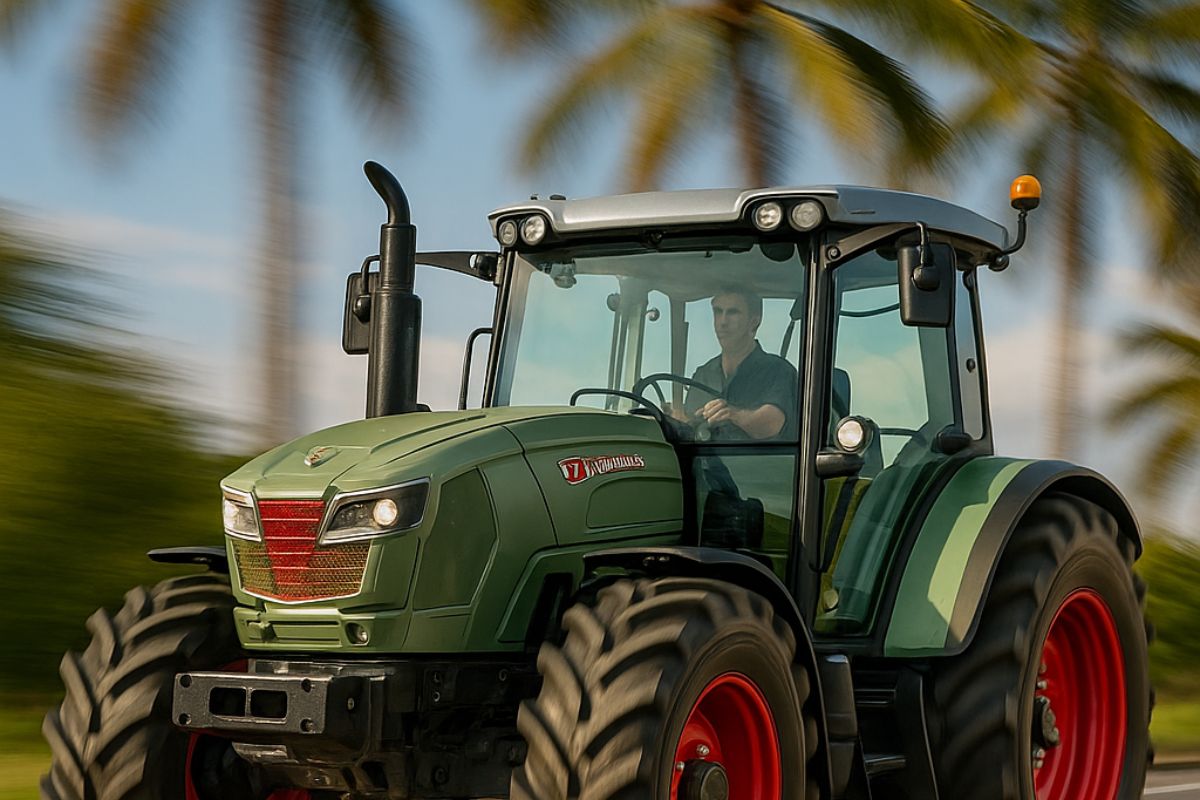

Discover the History of Hurlimann, Swiss Tractor Brand, and Understand the Factors That Built Its Reputation for Impeccable Quality, Durability, and Consequently, High Value.
Switzerland is known for precise watches and refined chocolates, but also for robust machines like Hurlimann tractors. Although less known outside agricultural circles, the brand has built an impeccable reputation, being nicknamed the “Rolls-Royce of the fields” for its quality and durability.
Understand the journey of Hurlimann, from its founding by a young visionary to becoming a global reference. You will see how Swiss engineering and a commitment to excellence justify the high cost and prestige of these tractors.
Hans Hürlimann and the Pursuit of Swiss Perfection
In the early 20th century, agricultural mechanization was in its infancy in Europe, especially in Switzerland, with its mountainous terrain and small farms. Hans Hürlimann, born in 1901 in the Canton of St. Gallen, grew up witnessing the effort of farmers. With a talent for mechanics, he dreamed of creating a Swiss tractor adapted to local conditions, rather than just fixing foreign machines.
-
California’s Almond Industry Consumes Over 4 Trillion Liters of Water Annually Amid Drought, Relies on Trucked-In Bees for Pollination

-
India’s Sugar Export Cuts and Ethanol Shift Amid El Niño Threat Could Impact Global Prices and Stocks

-
Quarantine Pest Threatening Palm Trees Puts Brazilian Authorities on Alert, Prompts Monitoring at University of Taubaté and Potential Control Measures Across São Paulo
-
Global Alert: Report Finds 159 Pesticides in Coffee Beans Sold in Europe, Posing Serious Risks to Millions of Farm Workers



In the 1920s, working as a sales representative for equipment, Hans noticed the difficulties Swiss farmers faced with imported tractors, which were expensive and ill-suited to rugged terrain. In 1929, he founded his own workshop in Wil, with limited resources but a clear idea: quality above all. His first model, the 1K8 with 8hp, compact and durable, was a revolution for local farmers.
The Pillars of Hurlimann Tractor Construction

The 1930s brought challenges with the Great Depression and World War II. While many manufacturers faced difficulties, Hurlimann thrived due to its independence and innovation. Hans Hürlimann decided to internally produce most of the components for his tractors, ensuring quality and safety in times of crisis and difficulties in imports.
This strategy allowed Hürlimann to continue delivering machines while other companies ceased production. In-house manufacturing of engines, clutches, transmissions, and hydraulic systems, as seen in the iconic D90 from 1959, maintained total control over quality, a crucial factor for the brand’s impeccable reputation.
How Hürlimann Stayed at the Technological Forefront
Hürlimann was not satisfied with just robustness; innovation has always been a differentiator. A milestone was the launch, in 1939, of its first direct injection diesel engine, more economical, powerful, and with more torque, ideal for mountainous terrain. During the war, with diesel scarce, the company adapted tractors to run on coal gas, proving its creativity.
In the 1970s, to face competition and high Swiss production costs, Hurlimann launched synchronized transmissions with six gears and more efficient hydraulic systems. In 1972, it introduced its first turbocharged tractor and 4×4 models, catering to farmers in hilly areas. Even after being acquired by SAME, it continued to innovate with the Master series (powershift and electronics) and adapting to environmental standards with more efficient engines and precision agriculture technology.
The Reputation for Durability and the “Price of Precision” of Hurlimann Tractors
After World War II, Hurlimann tractors gained international fame, being exported to various countries, including South America. The nickname “Rolls-Royce of tractors” arose from the perception that they were machines for a lifetime, made with the best materials and Swiss precision engineering. Their durability was such that the Swiss army began to use them.
This precision and quality came at a cost: Hurlimann tractors were not cheap. Farmers justified the investment by the extremely low maintenance costs, excellent resale value, and unquestionable performance. The idea was that one acquired equipment to last generations, a gold standard of Swiss engineering.
The SAME Era and Maintaining Prestige
In the 1960s and 1970s, European agriculture modernized, but global competition and high production costs in Switzerland pressured Hurlimann. In 1979, the company was sold to the Italian SAME, a giant in the agricultural sector. For many, it was the end of an era, but this acquisition saved the brand, providing more resources for research and development.
Under SAME’s leadership, the production of Hurlimann tractors began to be shared with other brands in the group, such as Lamborghini and Deutz-Fahr. Although they lost some exclusivity, they maintained their premium identity and constructed prestige, continuing to offer models like the H series and, in the 1990s, the Master line with advanced technologies.
The Legacy of Hurlimann Tractors


Even with modernization and changes in ownership, the essence of Hurlimann tractors remained: Swiss precision and exceptional durability. The striking visual identity, typically red since the curious story with Circus Knie, continued to be a signature. The brand also diversified, creating the Prince line for small properties and expanding the range with the XT and SX series for large farms.
Today, collectors dedicate themselves to restoring classic models from Hurlimann, and tractors over 50 years old are still seen operating perfectly. Whether in the older models or in the current ones equipped with GPS and telemetry, what has never changed is the reputation that placed them at the top of the agricultural world: an investment that truly spans generations.