Portuguese
  Spanish


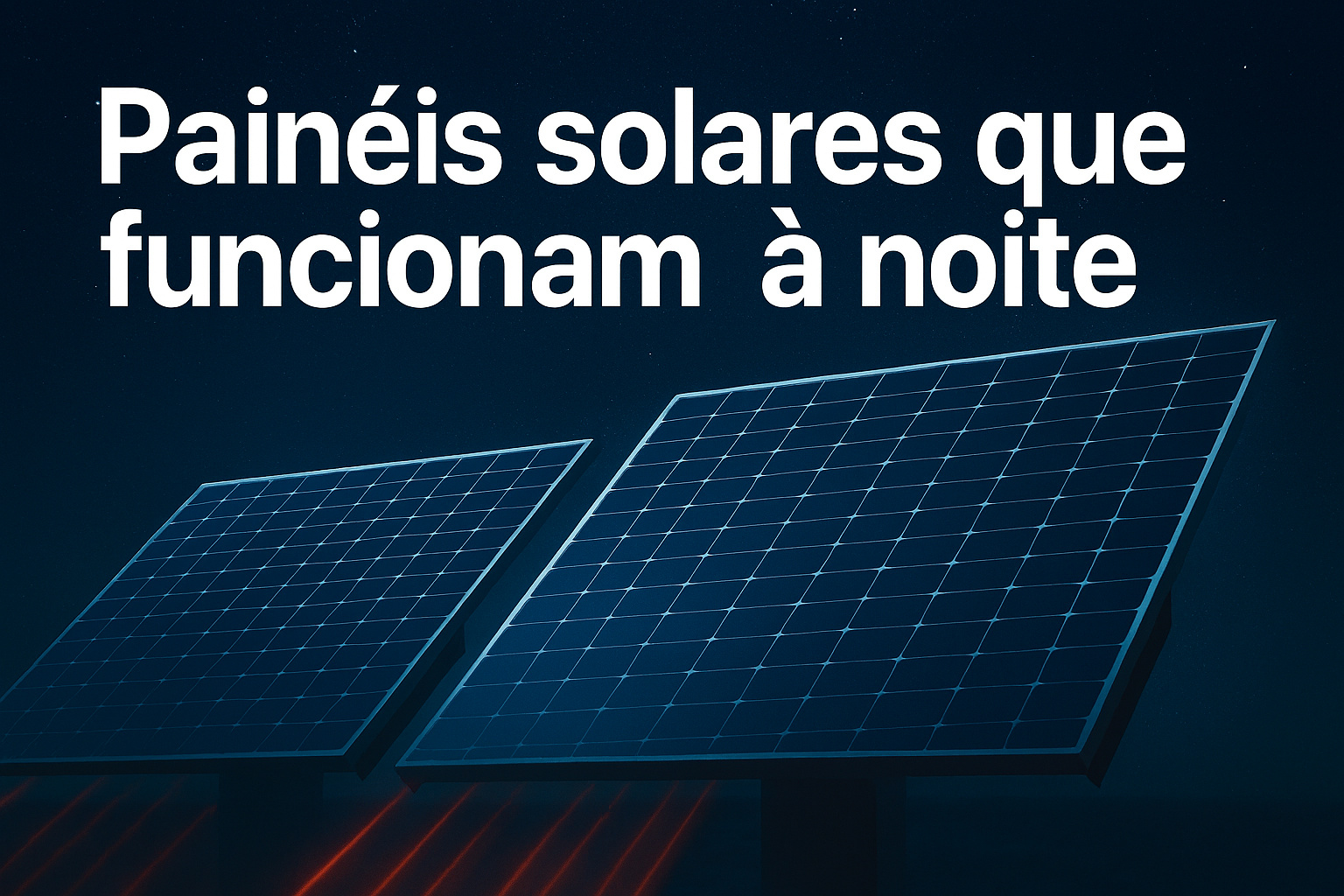

Solar Panels That Work At Night Could Become A Reality: Technology Uses Radiative Cooling To Generate Continuous Energy Even In The Dark.
The solar energy revolution may be entering a completely new phase. Researchers from universities such as Stanford, UCLA, and UC Davis have been developing, in recent years, a technology capable of doing what seemed impossible until recently: generating electricity at night, even when there is no sunlight. The proposal, still in the experimental phase, utilizes a physical principle known as radiative cooling, a natural process by which the Earth releases heat into space after sunset.
The result is a prototype panel that, although still has limited power, represents an unprecedented conceptual leap: the possibility of continuous energy production, day and night, without relying on batteries to store everything that was captured during the day. This concept is already mobilizing researchers and investors because it suggests a future where solar energy could become an even more stable, predictable, and, most importantly, available source 24 hours a day.
The Phenomenon That Allowed “Creating Energy In The Dark”: How Radiative Cooling Works
To understand these new panels, it is necessary to understand the natural phenomenon that makes them possible. All bodies emit thermal radiation and, during the night, the Earth’s surface releases heat in the form of infrared radiation, which escapes into space, where the temperature is close to absolute zero.
-
Solar energy can increase property value by up to 10% and become a selling point.

-
Solar and wind energy surpass natural gas for the first time in the world and accelerate energy revolution

-
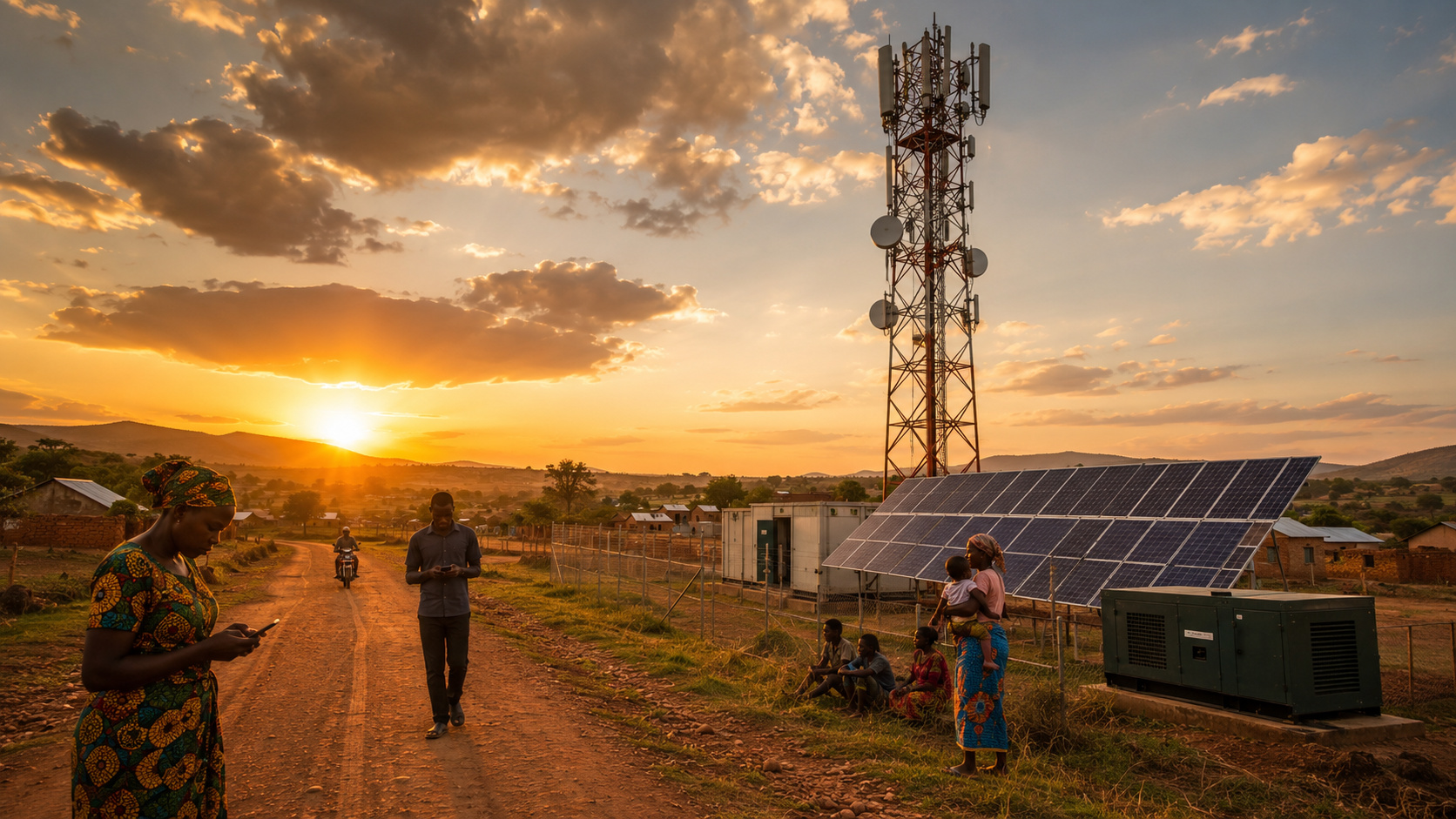
Africa has about 500,000 cell towers and most still burn diesel to operate, while companies rush to cover antennas with solar energy and avoid signal blackouts.
-
Farmers swapped diesel for solar panels in Pakistan, powered irrigation pumps almost cost-free, expanded rice fields, and now groundwater has become a red alert in the countryside.


This temperature difference creates a sufficient gradient to move electrons in specific devices called thermoradiative cells. Instead of converting light into electricity, like traditional panels, these devices convert heat flow into electrical energy.
In 2022, a team from Stanford released a prototype capable of generating about 50 mW per square meter during the night, a still modest number but enough to power small LED lights or battery-free remote sensors. Researchers from the University of California, Davis, are advancing in cells that can surpass this level, although they are still restricted to the laboratory.
For scientists, the great achievement is not in the current power but in the proven physical principle: it is indeed possible to create electrical energy using only the heat dissipated by the Earth in absolute darkness.
Why This Technology Matters For The Future Of Solar Energy
Although conventional solar energy is one of the fastest-growing sources of electricity in the world, it still depends on a fragile point: the total interruption of production at night. To get around this, battery systems are used to store the excess produced during the day.
With the new technology, this scenario could change. Even though production is still far from commercial levels, the prototypes indicate that, in the future, it would be possible to:
- generate small amounts of continuous energy 24 hours a day, reducing total dependence on batteries;
- power remote sensors, ground satellites, agricultural devices, and low-powered infrastructure during the night;
- increase the overall efficiency of hybrid systems that combine conventional panels and night panels;
- reduce maintenance costs in extreme environments where batteries have a limited lifespan.
The idea is not to replace traditional technology but to complement it, taking advantage of the nighttime period to maintain a constant flow of electricity.
The Scientific Advancement: What Already Exists And What Still Needs To Be Developed
The most advanced research comes from the team led by Professor Shanhui Fan from Stanford, who published articles detailing the structure and thermal behavior of night panels. They demonstrated that specific materials can emit infrared radiation at controlled levels and generate stable electric current.
Other groups, such as those from UCLA and UC Davis, are working on creating thermo-radiative cells with semiconductor materials that allow for increased efficiency. The current limitation lies in the low energy density, still insufficient for residential or industrial applications.
However, renewable energy experts say that the evolution is likely to be rapid. Traditional solar energy itself spent years as a prototype before reaching competitive costs. The expectation is that within a decade, these panels could have specific large-scale applications.
Beyond The Prototypes: Where This Technology May Be Used First
The first environments that are expected to adopt night panels will not be homes or businesses but rather:
- remote weather stations;
- agricultural sensors spread across fields and forests;
- environmental monitoring systems;
- telecommunication equipment in isolated areas;
- IoT devices in extreme climate regions;
- equipment that currently depends on short-lived batteries.
The advantage is clear: these new panels can operate without maintenance, as they do not require constant battery replacement and can continue functioning even during long winter nights.
The Next Chapter Of Solar Energy
Experts say that the discovery is especially important because it opens the door to a new branch of energy engineering, the ability to convert nighttime thermal emissions into electricity, something that was previously just a theoretical hypothesis.
If power rates increase in the coming years, this technology could integrate roofs, facades, and hybrid systems around the world.
Even in the experimental phase, night panels are already provoking debates about what the future of electrical grids and household consumption will look like. The combination of daytime panels with night devices could transform solar energy into a practically uninterrupted source, something that would drive the global energy transition.